




Those sworn in include Murwanashyaka Damien, appointed Minister of Infrastructure; Kajangwe Antoine Marie, appointed Minister of Trade and Industry; Col Bizimungu Claudien, appointed Minister of State in the Ministry of Infrastructure; and Zingiro Armand, also appointed Minister of State in the Ministry of Infrastructure.
The Head of State also received oaths from other newly appointed leaders, including Mbabazi Judith, who was appointed Deputy Ombudsman in charge of preventing and fighting injustice within the Office of the Ombudsman.
Others include Uwizeye James, appointed Deputy Director General of the National Intelligence and Security Service (NISS), and CP Theos Badege, appointed Deputy Commissioner General of the Rwanda Correctional Service (RCS).
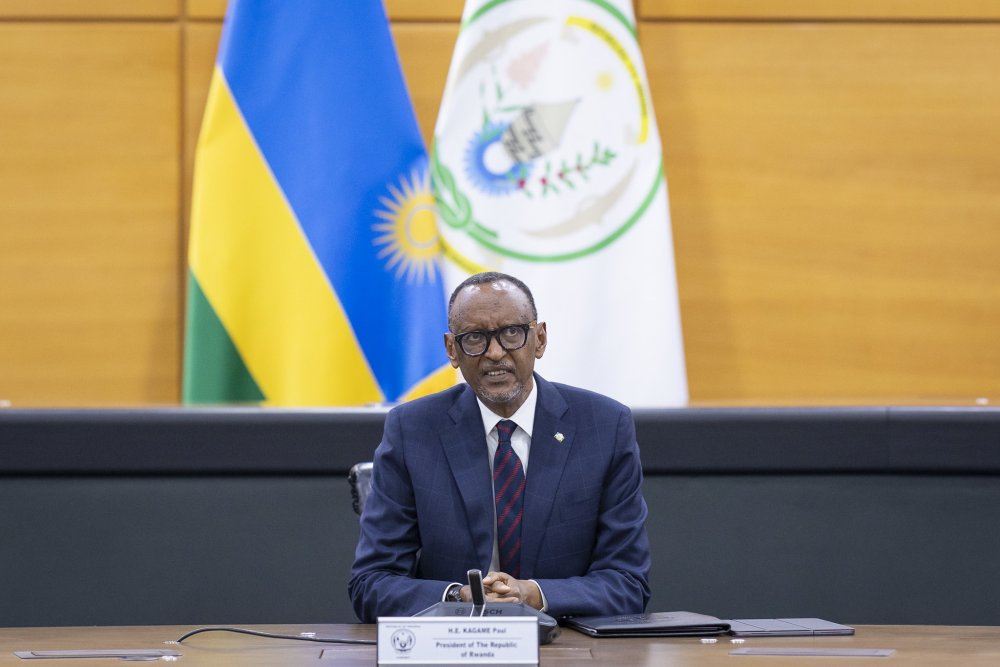
President Kagame called on the officials to clearly understand the responsibilities entrusted to them and to always view them from a national perspective rather than a personal one.
“Being a leader in these public institutions is, first and foremost, about serving citizens and working for their well-being. Each of you has been appointed to these roles because of the capacity you have shown, or what others have observed in you in your previous responsibilities,” he said.
He added: “But you should also constantly ask yourselves why you, among many other Rwandans who could do the same work, were chosen. That reminder helps you make a meaningful contribution.”
The President warned that poor leadership practices create serious problems for citizens, who ultimately bear the consequences even when they are not responsible. He emphasized that the public should be the primary beneficiary of government work, not officials themselves.
He said: “Often you find people prioritizing their own interests, including self-importance and what has almost become a habit. Many even act with arrogance, forgetting that we serve the country, not in competition with one another. National interest must always come first. When you serve the country well, you too benefit—you are part of that success.”
President Kagame reminded the officials of Rwanda’s journey, referring to the liberation struggle led by the Rwandan Patriotic Army (RPA) in July 1994, noting that had it been driven by self-interest, the country would not have reached its current progress.
“At that time, what people were thinking about was the possibility of losing their lives. […] Compared to that level of sacrifice, what we do today should not be difficult if we truly understand it. These are not jobs that require us to give our lives on the battlefield, not knowing whether we will return safely,” he stated.
The President noted that the history of the liberation struggle should guide public servants in their daily duties—working through challenges collectively with others, whether subordinates or colleagues in other institutions, and where issues cannot be immediately resolved, allowing time and resources for proper follow-up.
President Kagame also told the newly sworn-in officials that their responsibilities are part of normal life and should be treated as such.
“These are achievable tasks; there is nothing extraordinary about what we do. It is normal life. When you choose to make it normal and good, it works. But when you mix it with unnecessary complications, it often becomes short-lived,” he said.
Loading comments...
Leave a comment