



The discovery was announced by the country’s Tourism and Antiquities Ministry on Saturday and comes from excavations at the Dakhla Oasis in the western New Valley region.
Experts say the settlement dates to the fourth century, when Egypt was part of the Byzantine Empire, and preserves a rare snapshot of daily life, economic activity, and city planning.
The site features a clearly organized street network, with north-south roads intersecting east-west routes. Officials described the layout as “forming open squares and public spaces,” according to Hisham el-Leithy of the Supreme Council of Antiquities.
At the heart of the city stands a basilica church dating to the mid-fourth century, alongside watchtowers that likely protected the settlement’s outskirts. Archaeologists also identified heavily fortified buildings, vaulted-roof homes, and a structure believed to be the house of Tisous, a church deacon that may have functioned as an early house church.
Excavations have also revealed bread ovens, kitchens, grinding tools, and a range of artifacts that reflect everyday economic activity. These include well-preserved bronze and gold coins bearing imperial imagery, as well as around 200 pottery fragments, or ostraca, inscribed with records of trade, correspondence, and administrative life.
The Ministry of Tourism and Antiquities said the discovery highlights the historical importance of the Dakhla Oasis, which lies on UNESCO’s Tentative List, as Egypt continues to promote heritage tourism as a key source of foreign currency.
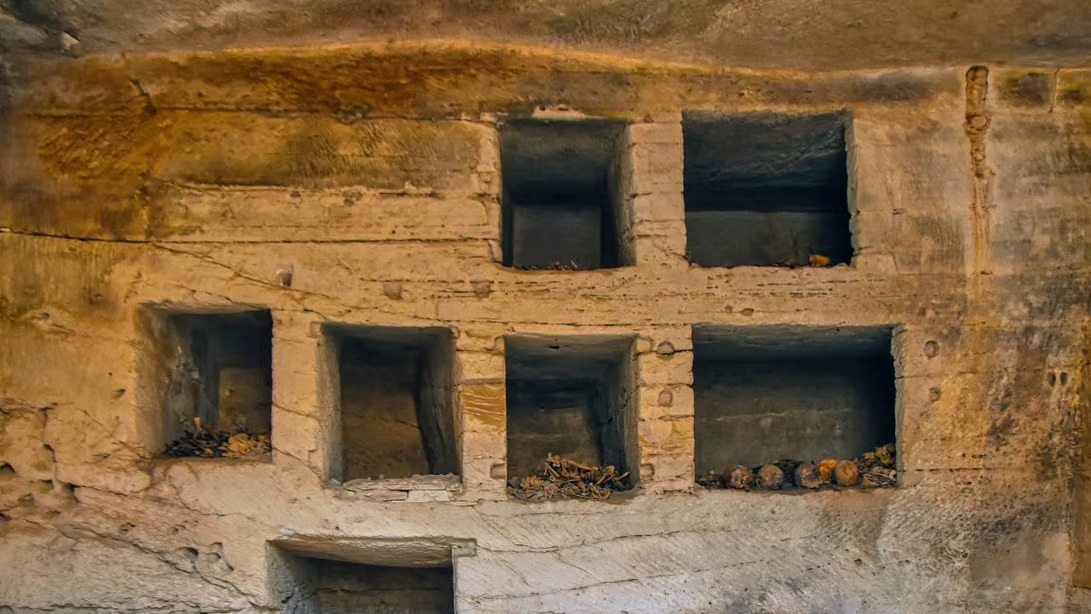
In a separate excavation at Marina el-Alamein near Alexandria, archaeologists also uncovered 18 additional ancient tombs, bringing the total at the site to 48. Finds included pottery vessels, limestone basins, and a granite sarcophagus with skeletal remains, underscoring the continued richness of Egypt’s archaeological record.
Loading comments...
Leave a comment