



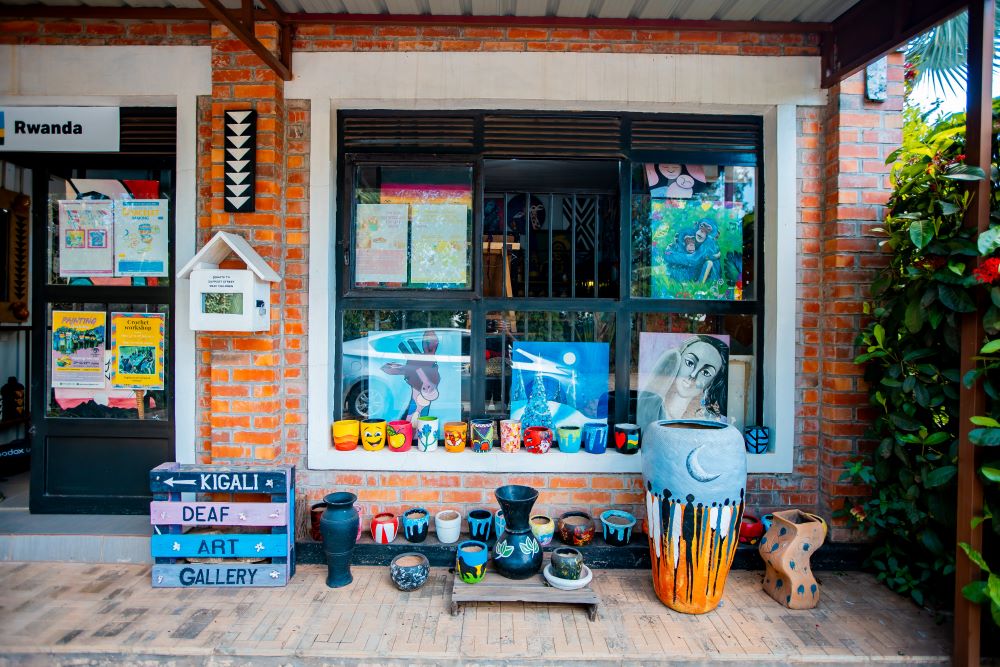
Located in Kimironko, Gasabo District, the art space provides a platform where people with hearing and speech impairments use their creativity and skills to produce unique artworks while building their livelihoods.
The gallery was founded by Nahimana Prince, an entrepreneur living with a combined disability that affects his ability to hear and speak.
Despite these challenges, Nahimana pursued his education, graduated from university, and turned his passion for art into a successful business venture.
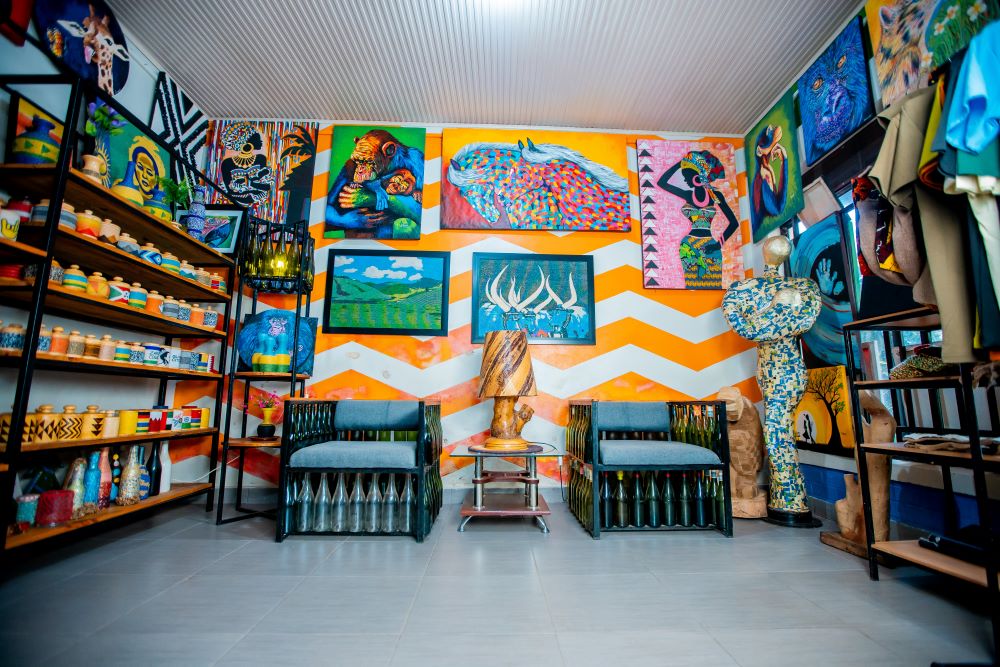
Today, Kigali Deaf Art Gallery showcases a variety of handmade artworks, with some pieces valued at up to Rwf1 million.
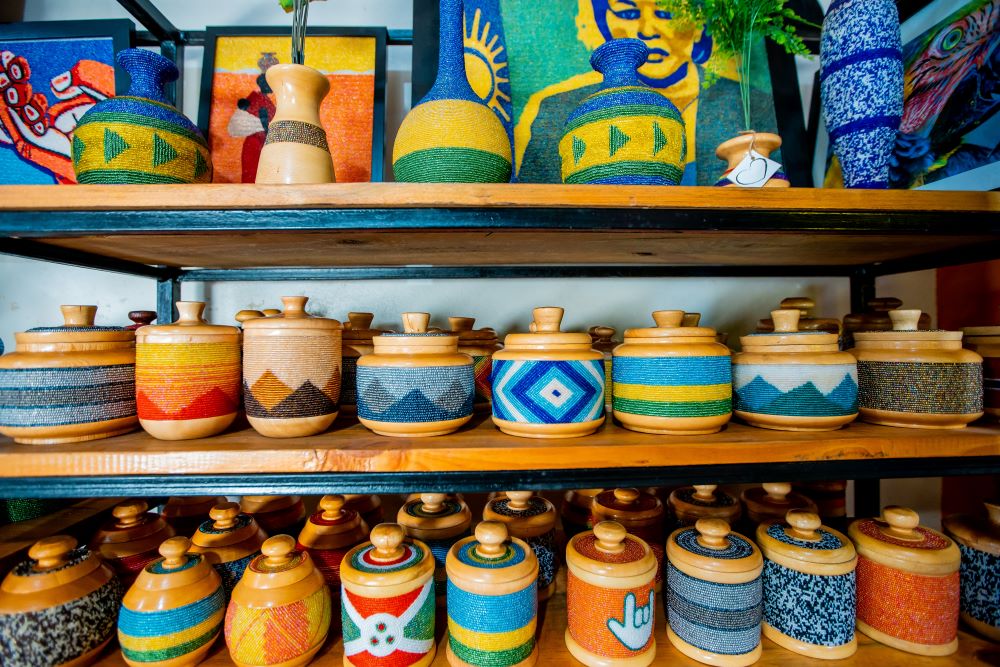
Among the gallery’s most expensive creations is a piece made from beads, whose high price is attributed to the cost of the materials used. Nahimana explained that the beads are imported from abroad, making the final artwork more valuable.
Speaking to IGIHE, Nahimana shared his journey of establishing the gallery and creating opportunities for other people with hearing and speech impairments to showcase their talents.
After completing a three-year university course in art in Uganda, Nahimana returned to Rwanda in 2018 and began applying the knowledge and skills he had gained. He started producing different artworks and later received authorization from the Rwanda Development Board (RDB) to operate his business officially.
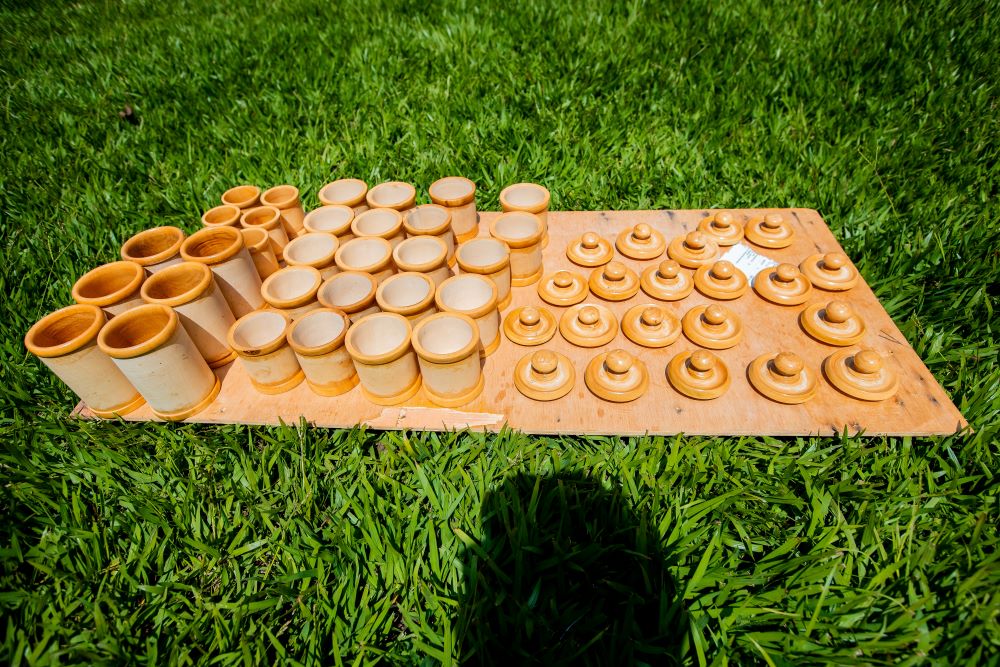
At Kigali Deaf Art Gallery, artists create a wide range of products, including paintings, bead artwork, necklaces, handbags, accessories, and other creative items. They also transform old materials that many people consider useless into new and valuable products.
The artworks are sold at different prices depending on their design and materials, with some costing hundreds of thousands of Rwandan francs and others reaching Rwf1 million.
“Our bead artworks are the most outstanding because the materials we use are imported and expensive. This is why some pieces can cost more than Rwf1 million. Other products are sold at more affordable prices,” Nahimana said.
Nahimana said he decided to work with people who have hearing and speech impairments because many of them have exceptional talents that match the type of creative work done at the gallery.
However, he noted that many talented people with disabilities face challenges, including limited opportunities to showcase their abilities and difficulties communicating with the wider community.
Through Kigali Deaf Art Gallery, Nahimana aims to provide them with a supportive environment where they can work together, improve their skills, gain confidence, and become financially independent.
One of the gallery’s employees, Muhorakeye Hawa, said joining the initiative helped her develop her talent because she found herself among colleagues who share similar experiences.
“When I joined Kigali Deaf Art Gallery, it became much easier for me. I have been able to improve my talent because the work we do matches my abilities. The advantage is that the people I work with also have hearing and speech impairments, which makes communication much easier,” she said.
Muhorakeye also studied tailoring in Uganda, but she said working at the gallery helped her gain additional skills that contributed to improving her creativity.
Another employee, Ganza Eric, said the gallery has helped him acquire new skills and encouraged parents to support children with disabilities by helping them discover and develop their talents.
He criticized parents who prevent children with disabilities from attending school because of misconceptions about their abilities, saying education and support can help them achieve their goals.
Established in 2019, Kigali Deaf Art Gallery currently employs 14 people, including nine men and five women, all living with hearing and speech impairments.
Nahimana urged parents to understand their children, identify their talents, and provide them with opportunities to grow. He emphasized that people with disabilities have different ways of expressing themselves, including through writing and other forms of communication.
Despite its achievements, the gallery still faces challenges, especially in attracting customers due to communication barriers. Nahimana called for more efforts to promote sign language so that more people can learn it and improve communication with people who are deaf or have speech impairments.
For Nahimana and the artists at Kigali Deaf Art Gallery, disability is not a limitation but a motivation to prove that talent, determination, and opportunity can transform lives.


Loading comments...
Leave a comment