



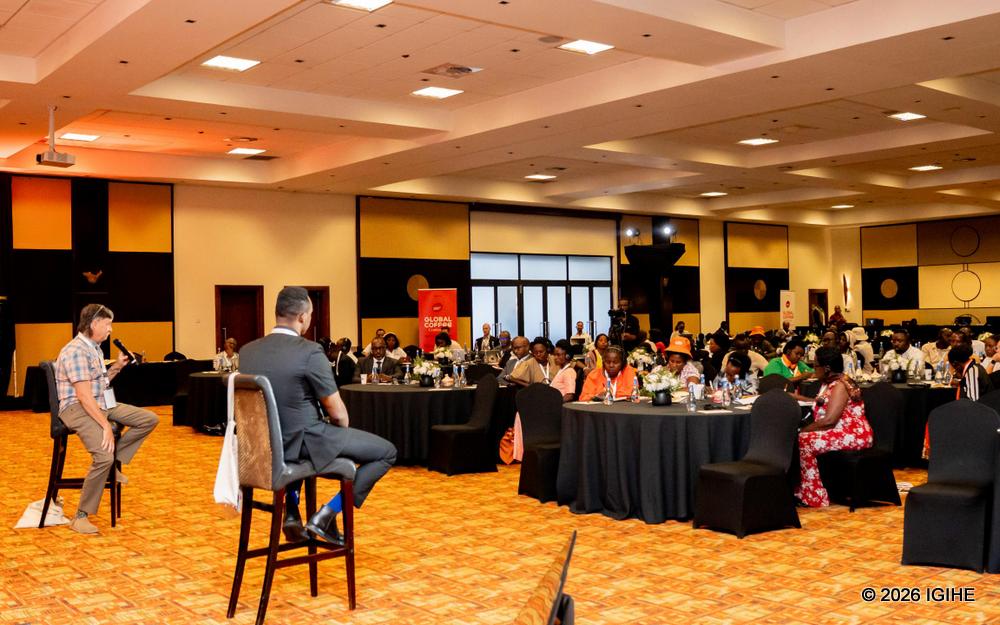
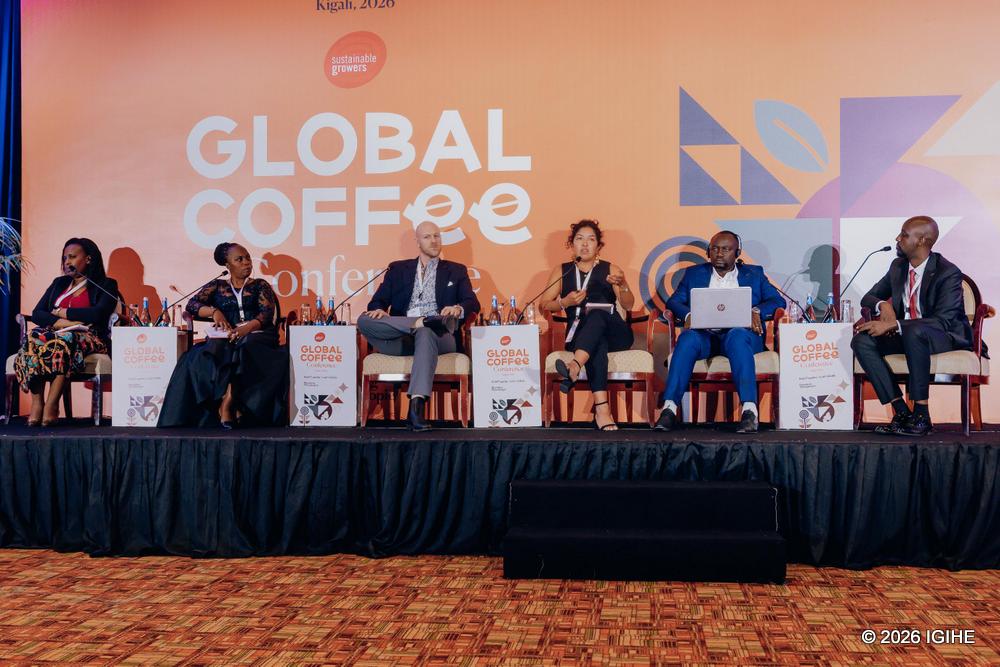
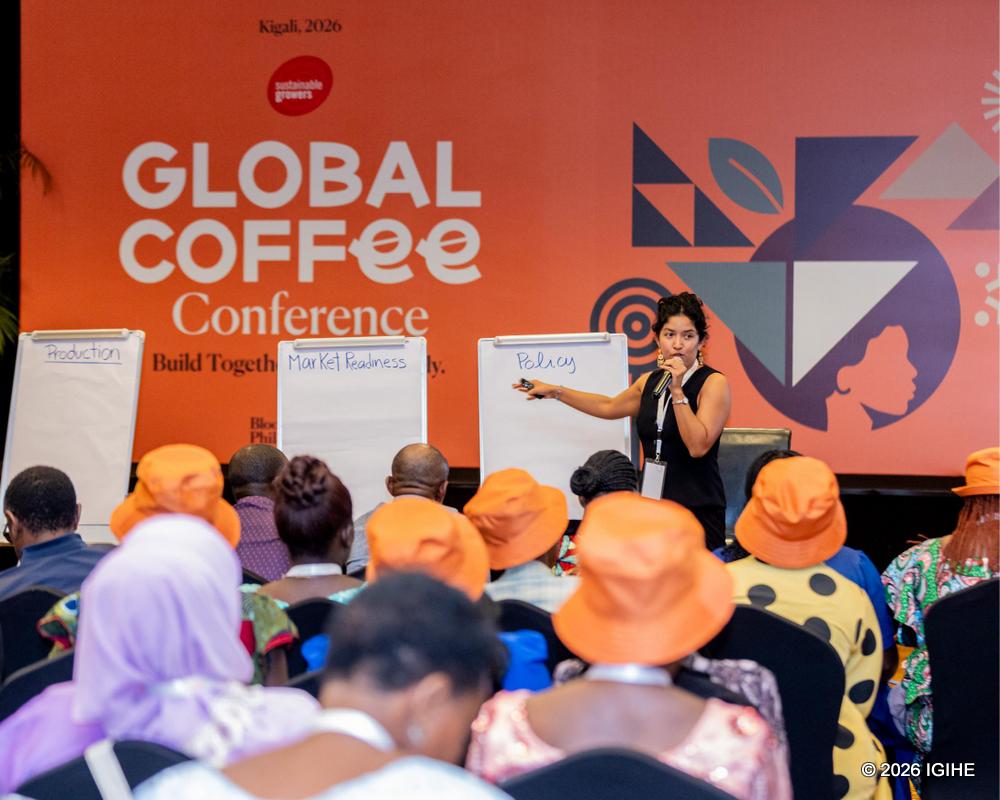
The call was made during a two-day Global Coffee Conference held in Kigali from September 24, 2026.
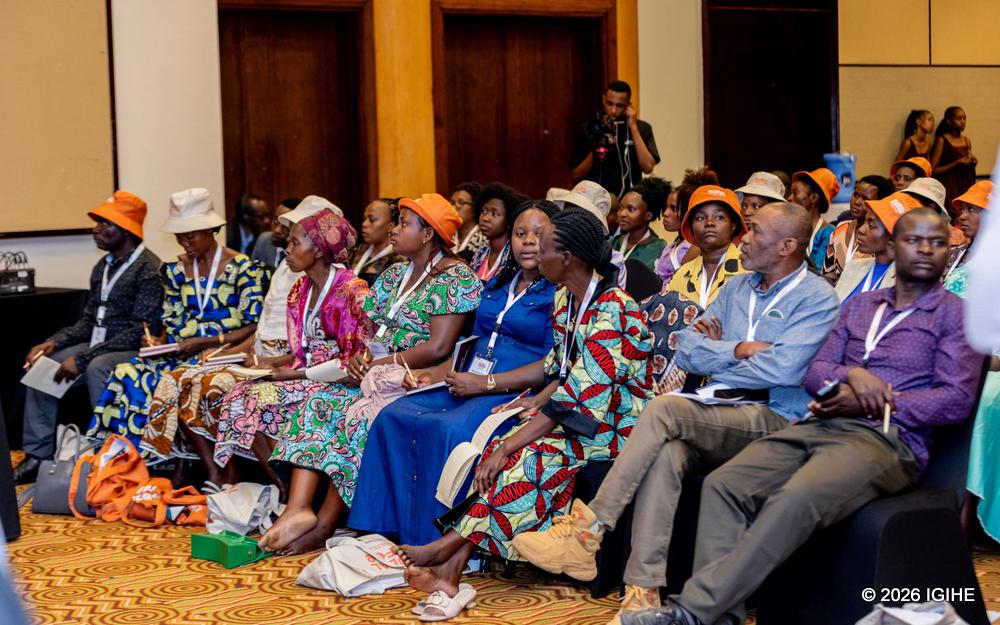
Organised by Sustainable Growers, the conference brings together farmers, buyers, coffee processors, private-sector players, investors and other stakeholders involved in the coffee value chain.
It was preceded by visits to two coffee cooperatives involved in growing and processing coffee in Rwanda: Nyampinga Cooperative in Nyaruguru District and KOPAKAKI DUTEGURE in Karongi District.
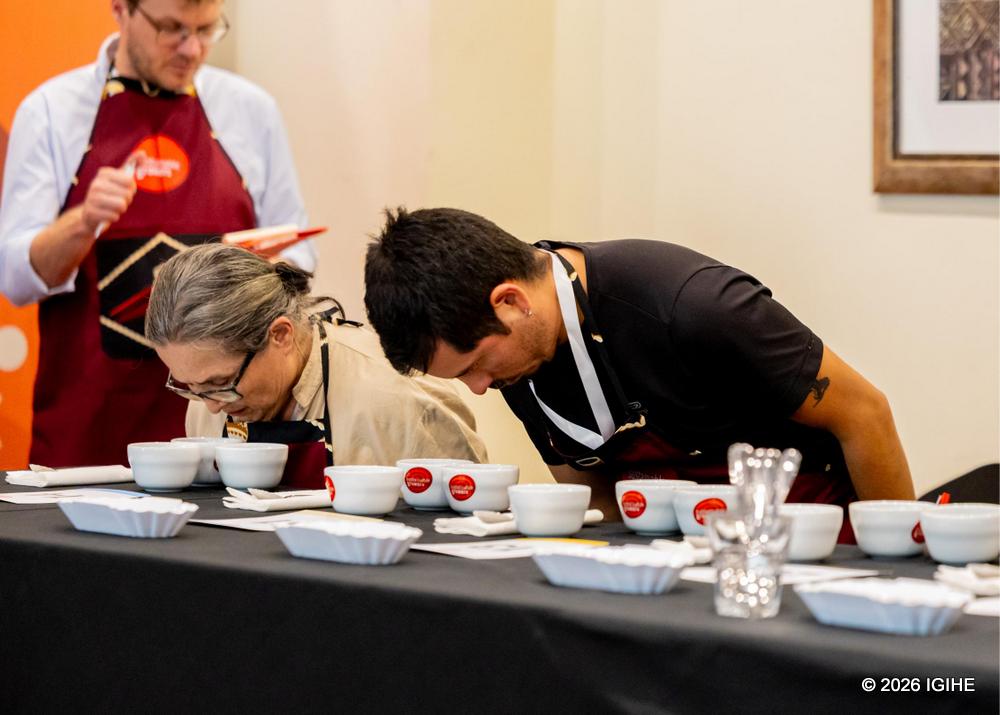
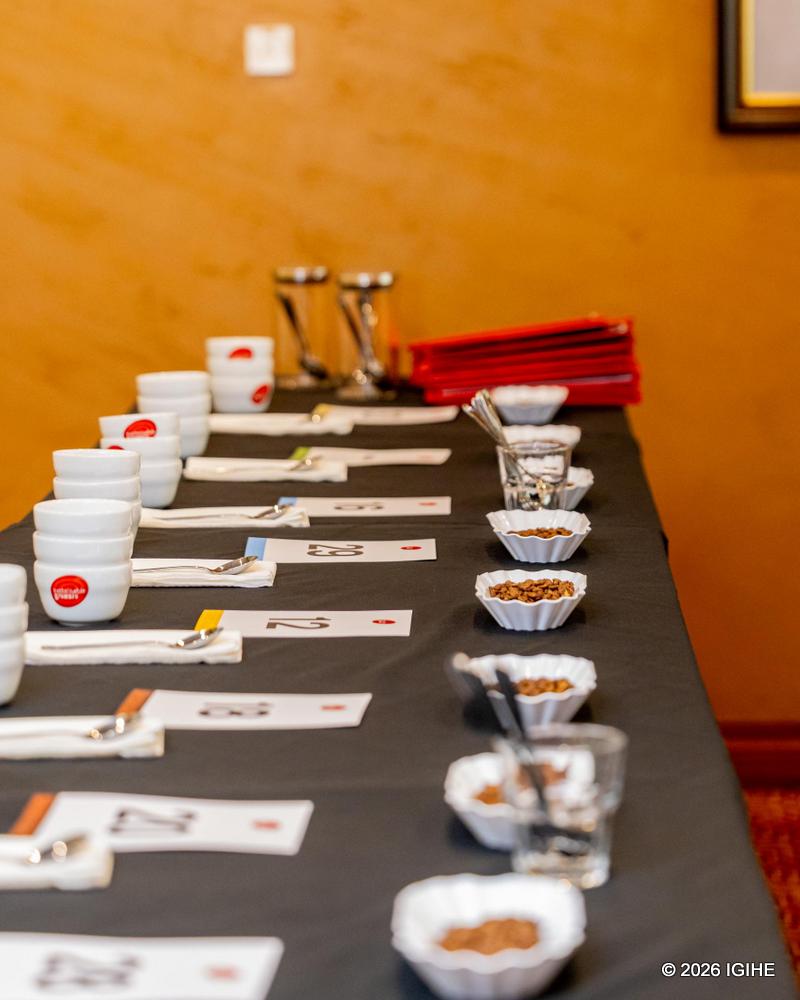
The conference has attracted participants from more than 17 countries and also featured coffee tasting sessions showcasing specialty coffees from different countries.
Minister of Gender and Family Promotion Uwimana Consolée, who officially opened the conference, said Rwanda’s coffee sector has made significant progress and generated substantial export revenues, but women involved in the sector should also benefit more from its growth.
“Rwanda’s exports reached more than $1.1 billion in the 2025-2026 financial year, with coffee generating a record $148.6 million. These figures demonstrate the strength and potential of our coffee sector. But this growth must be reflected in the pockets of our women,” she said.
“Women may produce coffee and create its value, yet remain excluded from the decisions, capital, and market that determine who benefits. Participation is not ownership, and producing value is not the same as having a stake in it. This is where our next phase of transformation must focus,” Uwimana added.
She said women coffee farmers around the world continue to face challenges in accessing financial services, markets and decision-making opportunities, calling for stronger collaboration to address them.
“It requires strong and coordinated partnership among governments, the private sector, financial institutions, producer organizations, and the global trade network,” she said.
NAEB Chief Operations Officer Urujeni Sandrine said Rwanda’s coffee value chain has made progress through partnerships supporting the sector, but more needs to be done to strengthen collaboration across the entire chain.
“We grow coffee and there are partnerships in different projects related to the sector, but we need to go beyond that and establish collaboration across the coffee value chain,” she said.
“As NAEB, we are there on the government side, development partners are there, and coffee processors and farmers are also there. What is missing is bringing everyone together and working with a business-oriented approach that can attract adequate and sustainable investment.”
She said stronger collaboration would help coffee farmers improve production while ensuring that increased productivity translates into higher incomes.
Brazilian Ambassador to Rwanda Irene Vida Gala also stressed the importance of cooperation between coffee-producing countries and international partners.
Highlighting that coffee connects countries, communities and people by strengthening cooperation between coffee-producing countries and international partners, the envoy stressed the need to build a sustainable value chain that benefits farmers, fosters innovation and gives farmers a stronger role in shaping the future of the coffee sector.
Dr. Innocent Ndikumana, Chairperson of the Board of Sustainable Growers, said the organisation has trained more than 77,000 women in Rwanda, Tanzania and the Democratic Republic of Congo on improved coffee farming and value addition.
He said 97% of the women trained have applied the knowledge they acquired.
According to Dr. Ndikumana, the programme has also contributed to improvements in access to financial services and health insurance, while some women have been able to acquire personal assets and contribute to the development of their households.
Nyirandimubanzi Jacqueline, who heads Association Hingakawa, a women coffee growers' association in Gakenke District, said women coffee farmers in Rwanda have made progress compared with the past.
“In the past, a woman in Rwanda would grow coffee and simply harvest it. Today, we know how to process our coffee and take it to the market, and we understand what it generates and how the income can be used in household planning,” she said.
Participants at the conference are drawn from countries including Rwanda, Tanzania, Brazil, Nicaragua, Mexico, Costa Rica, Honduras, Peru, Puerto Rico, the United States, the United Arab Emirates, Japan, France, Switzerland, Finland and Italy.



Loading comments...
Leave a comment