



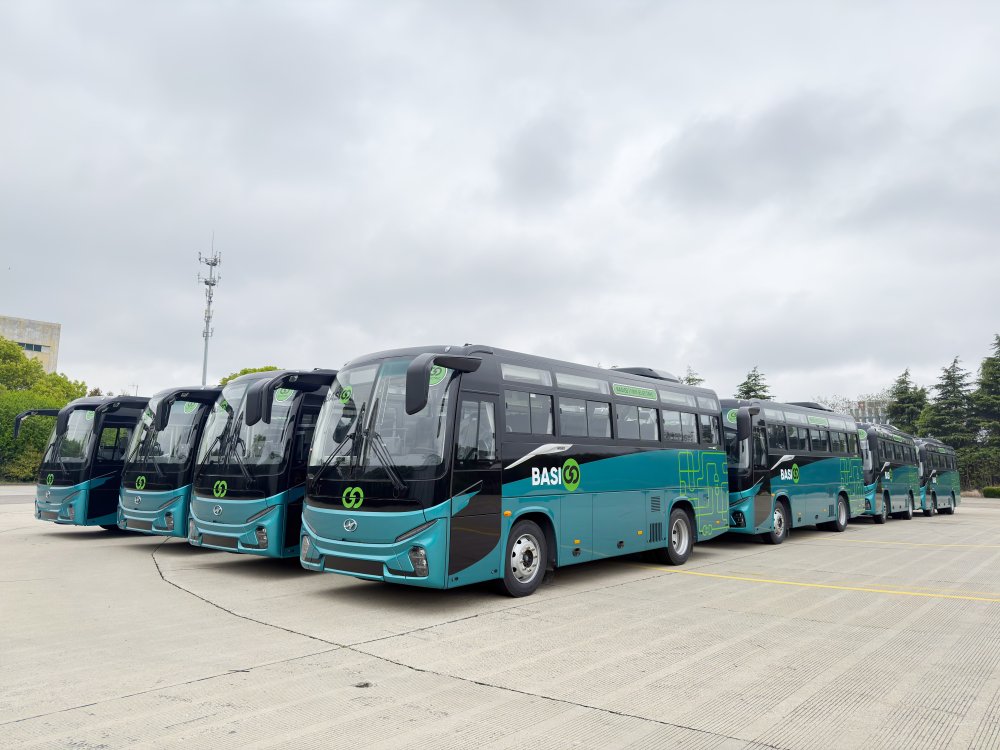
The investment comes as the company prepares to introduce 18 new electric passenger buses, which are expected to arrive in Kigali by June 15, 2026.
The buses will operate on routes serving different provinces, supporting Rwanda’s efforts to promote clean transportation while helping operators cope with rising fuel costs.
One of the buses’ key advantages is their long driving range. According to the company, a fully charged bus can travel up to 400 kilometres, allowing it to make a round trip from Kigali to Eastern Province without requiring a recharge.
BasiGo Rwanda Managing Director Jones Kizihira told IGIHE that the company has already invested more than $10 million in Rwanda since it began operations and now intends to invest a similar amount within the next year.
“At a time when fuel prices continue to rise, electric buses can help public transport operators meet their targets and maintain their investments,” he said. “Most operators still rely on diesel-powered fleets. Adding electric buses helps reduce their daily operating costs.”
Kizihira said BasiGo remains committed to introducing only electric buses to the Rwandan market, in line with the country's efforts to accelerate the adoption of electric mobility in public transport.
“That is the direction we will continue to follow as BasiGo,” he said. “We will keep bringing electric buses, expanding charging infrastructure and building local expertise not only in operating the vehicles but also in maintaining and repairing them so they can remain on the road for a long time.”
The company aims to have at least 100 electric buses operating in Rwanda by the end of 2026.
The expansion will also include training technicians, charging station operators and other personnel needed to support the growing electric mobility ecosystem.
Kizihira noted that the company’s experience in Rwanda has demonstrated the economic benefits of electric vehicles, especially as global events continue to affect fuel prices.
On June 5, 2026, the Rwanda Utilities Regulatory Authority (RURA) announced new fuel prices, maintaining petrol at Rwf 2,938 per litre while increasing diesel prices from Rwf 2,205 to Rwf 2,927 per litre.
Kizihira encouraged investors and transport operators to consider electric vehicles, saying many early adopters have already experienced their benefits.
“Electric vehicles are still relatively new technology, so it is normal for people to have concerns at first,” he said. “But what we have seen in Rwanda is that more people are becoming confident in using them. The more electric vehicles we have on the road, the more expertise we develop in maintaining and servicing them.”
To support the growing fleet, BasiGo plans to expand its charging network beyond its existing facilities in Kigali and Muhanga.
Although a fully charged bus can travel from Kigali to Rubavu and back without running out of power, the company intends to establish additional charging stations in Rubavu and Huye before expanding to other parts of the country.
The investment is expected to strengthen Rwanda’s transition to cleaner transport while reducing dependence on fossil fuels and lowering operating costs for public transport operators.

Loading comments...
Leave a comment