



The increase comes as investment in port operations and Tanzania's wider road and rail network changes the options available to businesses moving goods between the Indian Ocean and inland markets.
DRC-bound cargo increased 30 percent to 7.77 million tonnes, accounting for more than half of Dar es Salaam's transit traffic. Zambia remained one of the port's largest transit markets at 3.41 million tonnes, while cargo destined for Rwanda rose 24 percent to 2.18 million tonnes.
The growth comes amid increasing competition between regional ports and transport corridors, with cargo owners weighing cost, reliability and transit times when choosing routes for goods destined for inland markets.
Port activity accelerates
The rise in transit cargo formed part of a broader increase in activity at Dar es Salaam.
Total cargo handled at the port reached 33.71 million tonnes in 2025/26, up 21.5 percent from the previous financial year, according to official port data.
Government figures also show a longer-term improvement in port performance. Cargo handled at Dar es Salaam increased from 16.27 million tonnes in 2020/21 to 27.76 million tonnes in 2024/25, while the average time container vessels spent at berth fell from about 10 days to three.
Private investment has also contributed to changes in port operations.
DP World, which operates Terminal 1 under a 30-year concession that began in April 2024, had invested $123 million by April 2026 in equipment, infrastructure, technology and operating systems.
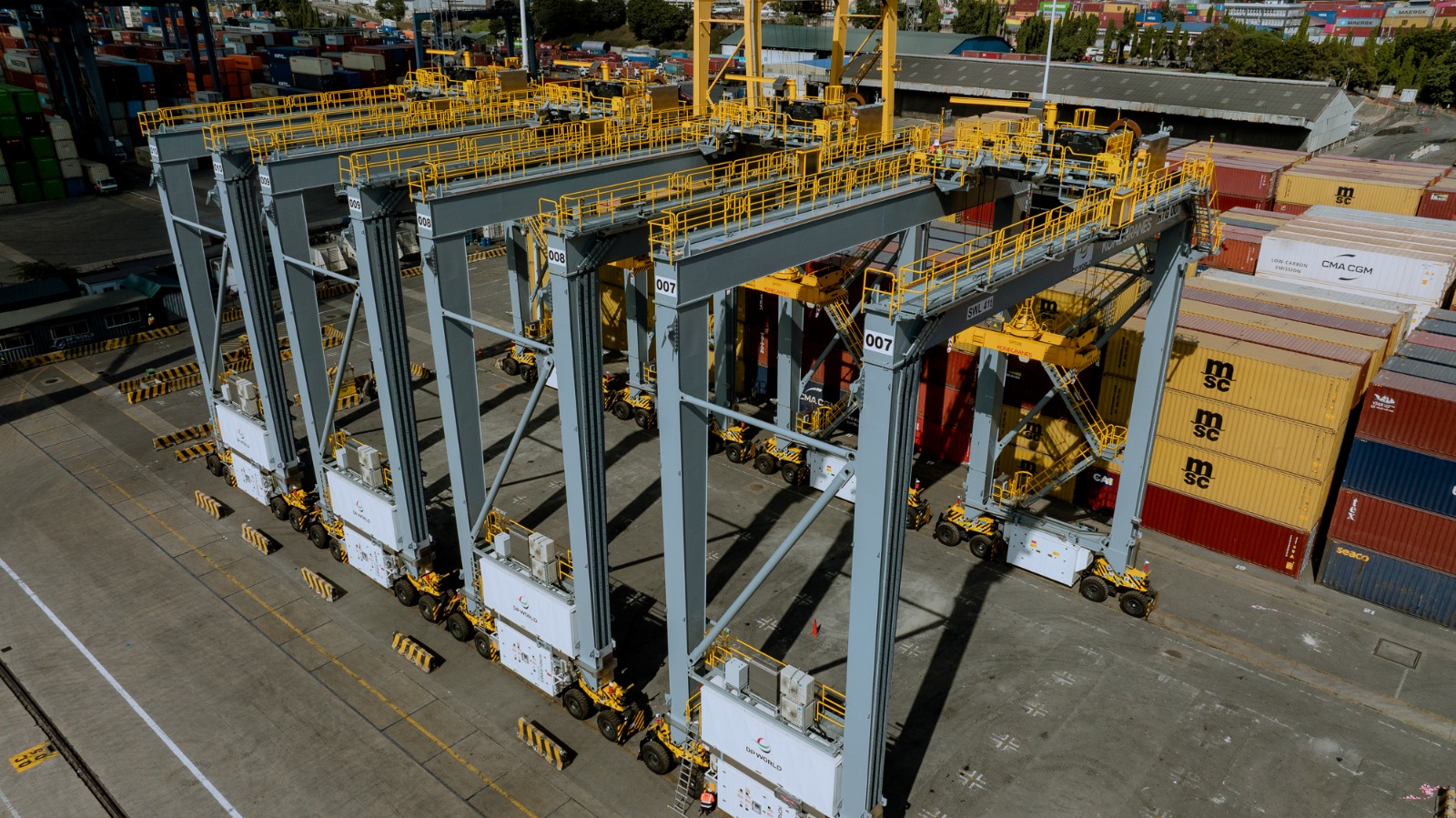
The investment includes cranes, cargo-handling systems, yard infrastructure and two gates connecting the port with Nelson Mandela Road. Eight new diesel-electric rubber-tyred gantry cranes were commissioned in June.
Cargo discharge times for comparable operations at the terminal have also fallen sharply, from more than 300 hours to under 28 hours, according to recent reports.
Container throughput has recorded four consecutive monthly highs. The terminal handled 44,001 containers in May, 45,856 in June, 46,582 in July and 48,793 in August, compared with monthly volumes of between 8,000 and 13,000 before 2024.
The port is also handling larger and more specialised vessels.
Among recent calls was the 240-metre M/V RAMHAN, which DP World said discharged nearly 7,900 heavy-duty vehicles in just over 27 hours.
Dar es Salaam is also expanding its capacity for dry bulk, general cargo and roll-on/roll-off traffic. Government plans include additional dry-bulk equipment expected to increase handling capacity by 65 percent for commodities such as wheat, sulphur and fertiliser.
The port currently records average wheat discharge rates of more than 12,000 tonnes a day.
Competition moves inland
For cargo owners, however, port efficiency is only one part of the calculation.
Once goods leave the port, customs procedures, rail availability, road conditions, storage capacity and border crossings can determine how quickly and cheaply cargo reaches its final destination.
Tanzania began commercial freight operations on the Standard Gauge Railway between Dar es Salaam and Dodoma in July 2025, while construction continues on sections intended to extend the network westwards.
A planned freight terminal at Morogoro is expected to link rail cargo with road transport serving domestic and neighbouring markets.
The Kwala dry port is also part of Tanzania's strategy to strengthen inland connections. It is already receiving trains from Dar es Salaam and is designed to handle about 300,000 containers a year, with space allocated to neighbouring markets including the DRC, Zambia and Rwanda.
For Zambia, attention is also focused on the rehabilitation of the Tanzania-Zambia Railway Authority (TAZARA).
Work under the railway's revitalisation programme advanced in July with construction beginning on a new operations control centre and training centre in Dar es Salaam. The project is intended to restore the railway's role in connecting Tanzania's Indian Ocean coast with Zambia and wider Southern African markets.
Road infrastructure is being upgraded at key border points as well.
At Tunduma, the approach to the border with Zambia is being widened from one lane to four after congestion became a recurring constraint for trucks travelling between Tanzania, Zambia, the DRC and other Southern African markets.
The government is also digitising maritime administration. The Tanzania Shipping Agencies Corporation is preparing to introduce a Maritime Transport e-Regulatory System, allowing maritime service providers to process licences, registrations and supporting documents online.
Different markets, different outcomes
The rise in DRC and Rwanda-bound cargo contrasts with the performance of Zambia, highlighting the different factors influencing the choice of regional corridors.
While Dar es Salaam has attracted more cargo from some inland markets, Zambia's decline shows that improvements at the port do not automatically translate into higher volumes across every corridor.
Factors affecting Zambia's route include the ownership structure of some mines and ongoing discussions over border fees and taxation with the Tanzanian government.
The wider competition is therefore increasingly being determined beyond the port gates.
For cargo owners, the relevant calculation includes vessel turnaround times, port clearance, access to rail and trucks, border efficiency and the predictability of delivery times.
Dar es Salaam's recent cargo growth suggests that improvements at the port and along its inland connections are attracting more regional traffic. The next test will be whether those gains can be sustained across the full corridor as Tanzania competes with other routes for cargo destined for landlocked markets.
Loading comments...
Leave a comment