



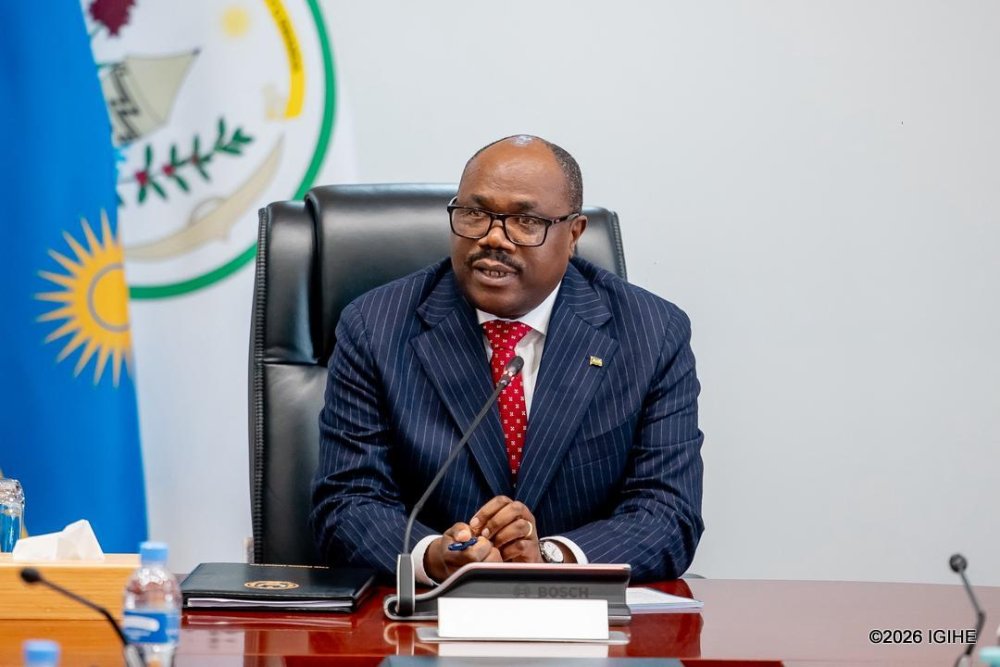
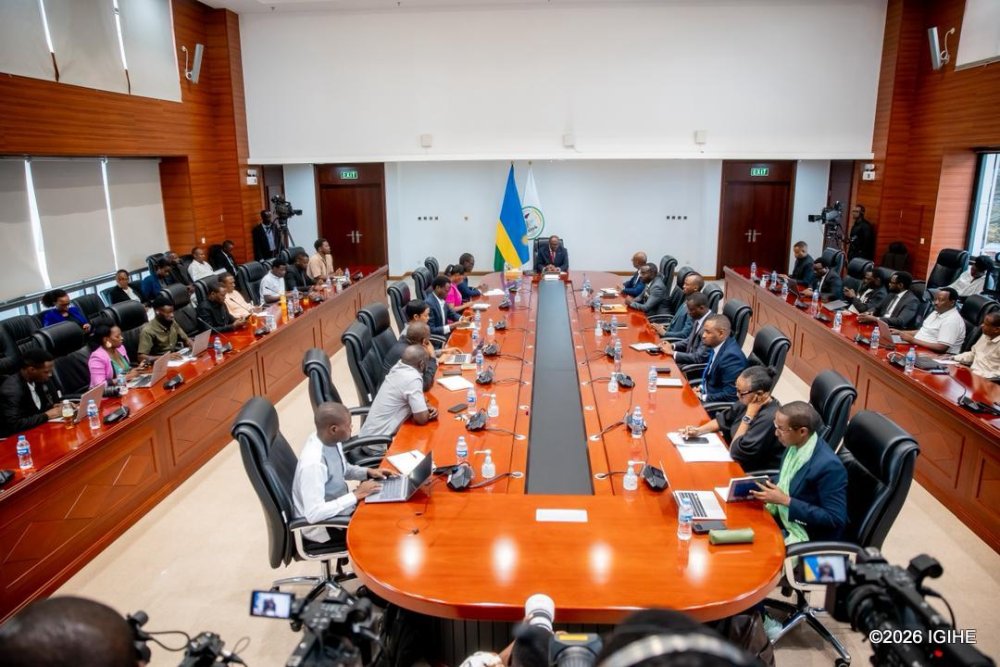
He made the remarks on June 6, 2026, during a press conference.
Rwanda’s current minimum wage was set in 1974 at Rwf100 per day for employees working in the formal sector.
The issue is frequently debated in public discourse, with concerns often linked to rising living costs, while incomes for many workers remain relatively unchanged.
Dr. Nsengiyumva noted that while workers naturally expect higher pay, employers view wage increases in relation to production costs and business sustainability.
“For workers, when the minimum wage is increased above prevailing market levels, it is seen as positive because they earn more. However, from the employer’s perspective, it increases the cost of producing goods and services,” he said.
He illustrated the impact with an example of a business currently paying Rwf50,000 per worker. If a minimum wage of Rwf80,000 were imposed, he said, the employer would have to significantly adjust operational costs.
“An employer who previously hired 10 workers may find it difficult to sustain all of them and may reduce the workforce to seven. As a country, we must ask whether we have truly benefited if three people lose their jobs,” he said.
According to him, while the remaining employees may earn more, the increase could simply reflect the redistribution of wages from those who were laid off.
He cautioned against focusing solely on nominal wage figures without considering broader economic dynamics.
“Increasing wages on paper while prices also rise achieves little. What matters is how we help workers become more productive. The key question is: how much value are we generating from the work being done? Employees should not rely on guaranteed wages alone while delivering low productivity, just as employers should not expect high output without fair compensation,” he said.
Dr. Nsengiyumva emphasised that productivity growth is the foundation for sustainable wage increases.
“If productivity increases, wage growth will follow naturally. Employers do not need to be reminded to increase wages when workers are generating higher value,” he added.
He also highlighted persistent productivity gaps in key sectors, particularly agriculture, where yields remain below potential. For instance, maize production may average around two tonnes per hectare, despite the capacity to produce significantly more under improved practices.
The government, he said, continues to prioritise investment in skills development and capacity building to enhance workforce productivity.
He further noted that Rwanda is focusing on creating higher-quality jobs that require specialised skills and offer improved remuneration.
According to the National Institute of Statistics of Rwanda (NISR), 238,491 non-agricultural jobs were created in 2025, marking an 8.9% increase compared to the previous year.
Loading comments...
Leave a comment