



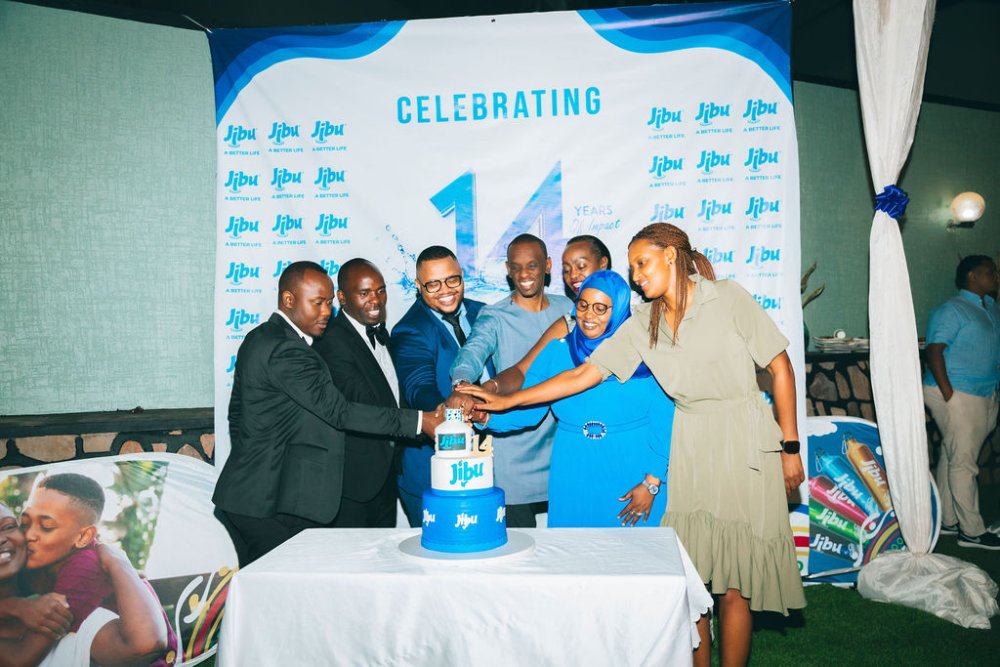
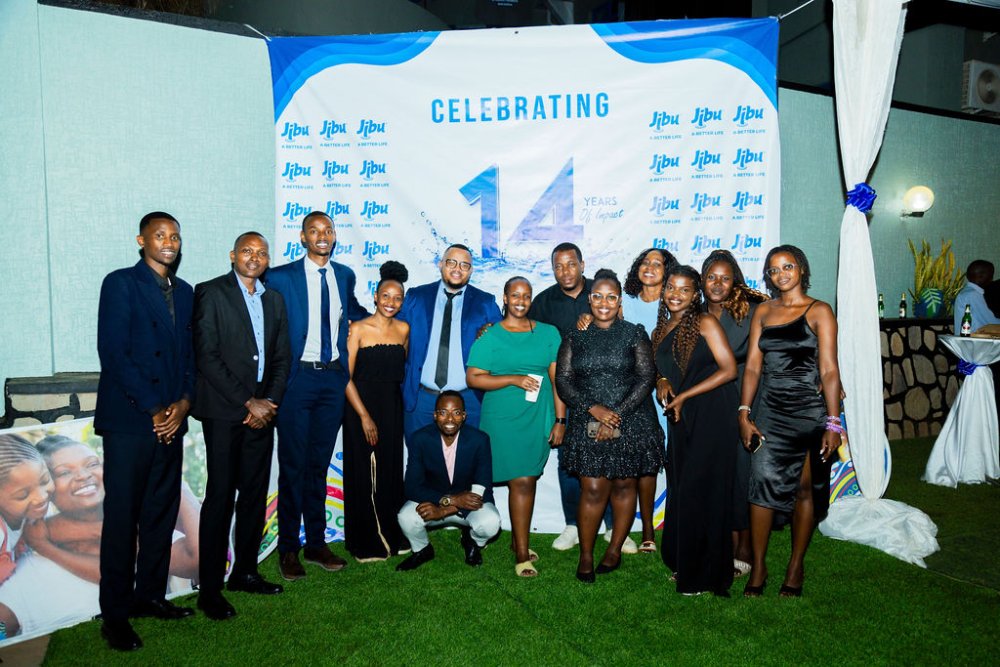
The company announced that it has established 65 water treatment facilities across almost all districts of Rwanda and created employment opportunities for more than 600 Rwandans.
The celebrations also marked the 15th anniversary of Jibu Holdings, the parent company that established its operations in Rwanda in 2012.
Jibu Holdings was founded in Colorado, United States, by Randy Welsch and his son Galen Welsch. Rwanda became the first country where the company launched its business model, which has since expanded to eight African countries, mainly in East Africa.
The company chose Rwanda for its anniversary celebrations as the country where it began operations and has remained one of its most successful markets.
Jibu works by partnering with local entrepreneurs to establish decentralised water treatment facilities in different communities.
Through its shared technology system, the company monitors water quality and ensures that all its facilities maintain consistent standards.
Across the eight African countries where it operates, Jibu has established more than 195 water treatment plants, supported over 10,000 water distributors, sold more than 950 million litres of water, and developed a network of more than 14,000 sales outlets.
In Rwanda, Jibu Country Manager Bruno Tuyisenge said the company currently works with more than 6,000 water distributors, operates 65 water treatment facilities, and serves over 300,000 regular customers.
He added that the company has created more than 640 jobs, excluding temporary employment opportunities, and its services have reached 26 districts across the country. The company currently treats about 280,000 cubic metres of water.
Tuyisenge said Jibu Rwanda expanded its operations in 2022 by entering the cooking gas sector in partnership with Japanese investors, aiming to reduce dependence on firewood and charcoal.
The company has since introduced a new gas distribution model that allows customers to purchase gas according to the amount of money they have.
“We are developing ‘Smart Stations’ where a customer who has Rwf 3,000 should not fail to access gas simply because they cannot afford to refill an entire cylinder. The first machine is already operating in Kacyiru, where residents have started purchasing gas through this system. We plan to expand the service to other parts of the country,” Tuyisenge said.
He added that more Smart Stations are being developed in Kigali City, Nyagatare and Kayonza.
Tuyisenge further said the company plans to introduce more varieties of water products to provide customers with wider choices. He noted that Jibu is also contributing to reducing reliance on boiled water, as many households have shifted to treated drinking water.
Rehema Uwamahoro, one of Jibu Rwanda’s franchise owners, said the company’s business model has helped her build a successful enterprise. Uwamahoro owns three productionfacilities located in Rwamagana, Kanombe, and Nyabisindu.
She said she joined the business in 2016 after leaving public service and has since expanded her operations, built a house, purchased a vehicle, and created jobs for more than 60 people.
Her facility in Rwamagana is valued at more than Rwf 60 million, despite starting the business with an initial capital of Rwf 500,000 when she was only selling water on a small scale.
Jibu Holdings Chief Executive Officer Galen Welsch said Rwanda remains a special market for the company because it was the first country where the business model was introduced and became the foundation for its expansion across Africa.
He said the company plans to expand its operations to more African countries over the next 10 to 15 years to ensure that affordable and safe drinking water reaches more households.
“Our vision is not only to expand as a business. We want to build a strong and sustainable African institution that contributes to improving public health, creating jobs, developing capable entrepreneurs, and transforming the lives of people across the African continent,” Welsch said.
Jibu Holdings currently operates in Rwanda, Uganda, Kenya, the Democratic Republic of Congo, Burundi, Tanzania, Zambia and Ghana.


Loading comments...
Leave a comment