



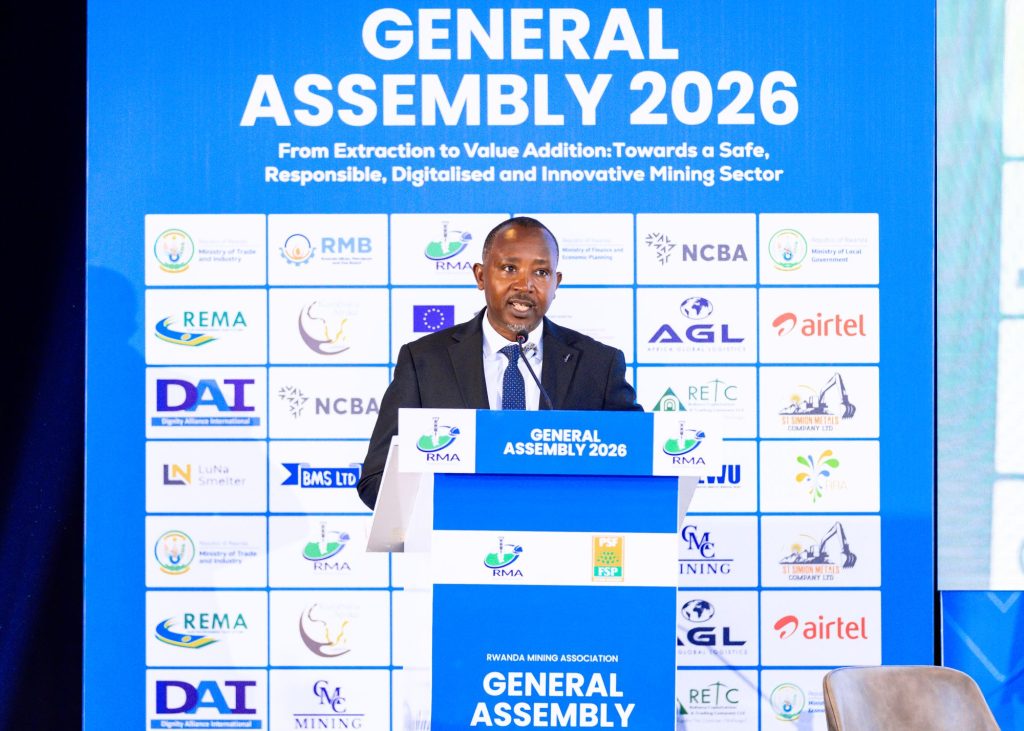
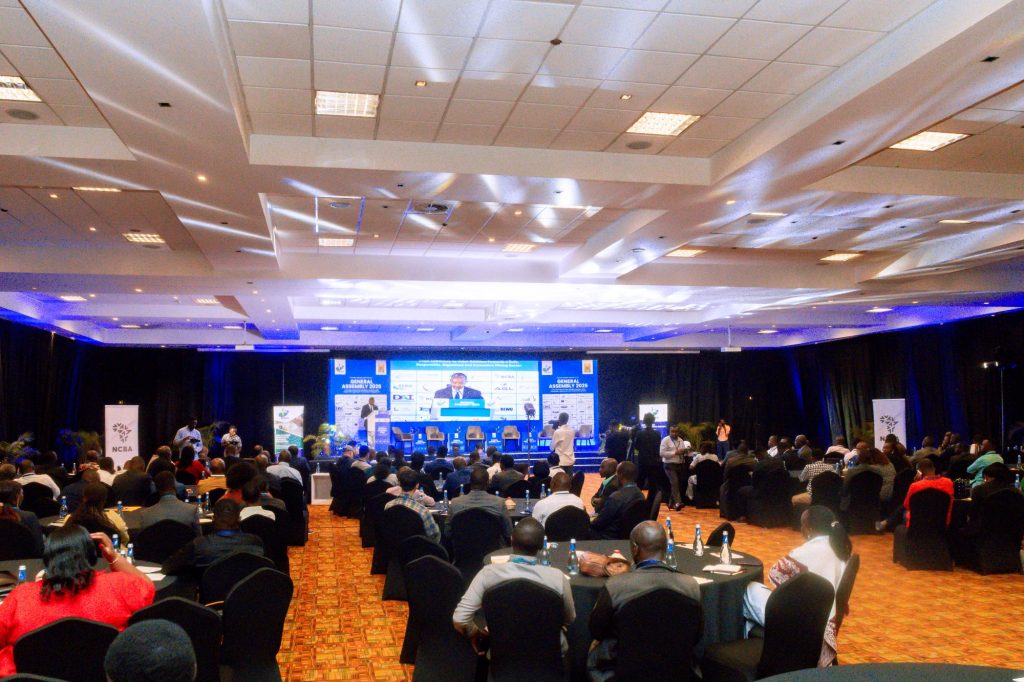
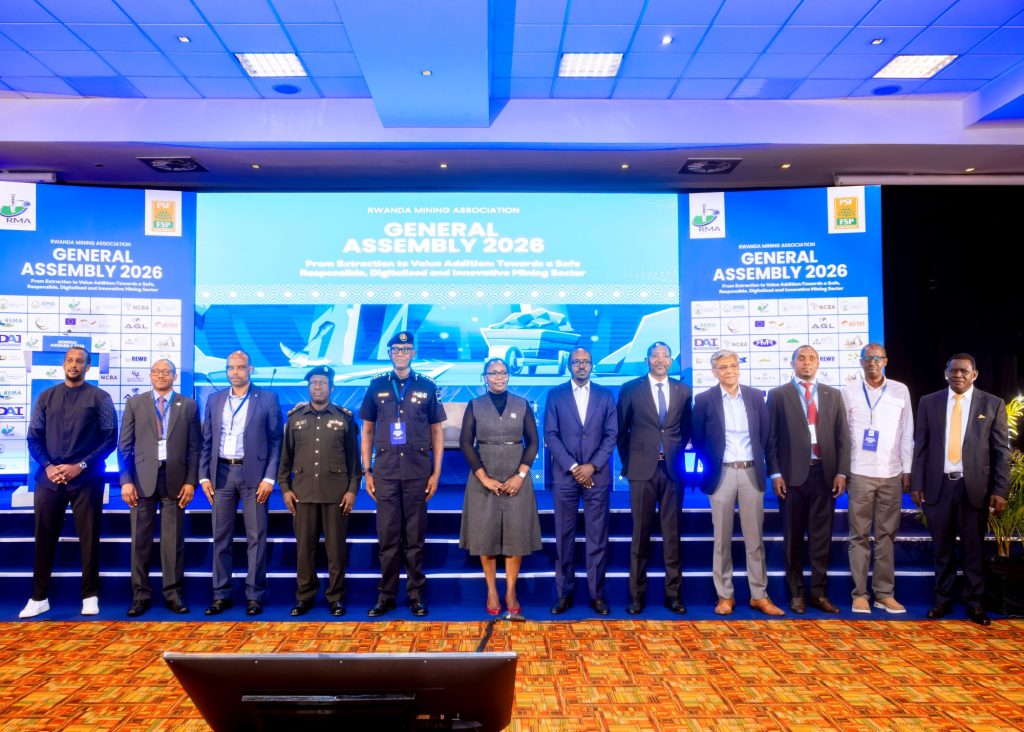
The commitment was announced by NCBA Bank Rwanda Managing Director Maurice Toroitich during the Rwanda Mining Association (RMA) General Assembly in Kigali on Friday, November 20, 2026.
The commitment seeks to address longstanding financing challenges in the sector, where businesses have often struggled to secure credit for investments needed to modernise operations, improve productivity and strengthen their competitiveness.
Toroitich acknowledged that banks, including NCBA, had not been sufficiently active in supporting mining businesses, but emphasised the bank's readiness to take a more active role.
"Because of the importance of mining, we would like to walk the journey with you," he told industry players, explaining that the bank wanted to understand their operations and financing requirements to develop solutions suited to their businesses.
He added that NCBA was ready to work directly with mining companies to identify their needs, particularly in areas such as equipment acquisition, machinery and technological capabilities required to make mining operations more sustainable.
The bank's commitment comes at a time when it is strengthening its regional capabilities through its integration into Nedbank Group.
Nedbank completed the acquisition of a 66% controlling stake in NCBA Group PLC in October 2026, making the East African banking group a subsidiary of the South African lender. NCBA continues to operate under its existing brand and local leadership, while retaining its listing on the Nairobi Securities Exchange, where the public holds the remaining 34% stake.
The acquisition gives NCBA access to Nedbank's established banking capabilities and experience across Southern Africa, including expertise in financing mining operations. Toroitich indicated that the Rwandan subsidiary intends to leverage this experience to strengthen its engagement with the local mining industry.
He described Nedbank's experience as an advantage that would allow NCBA to accelerate its understanding of mining finance rather than having to develop the expertise from scratch.
"We are very lucky that we are now part of this group, because very quickly we shall benefit from the skills that they have; we shall benefit from the relationships that they have built over the years in funding mining operations in the southern part of Africa," he remarked.
Financing equipment and machinery
One of the immediate opportunities NCBA sees is helping mining companies acquire the machinery and equipment required to modernise their operations.
Toroitich highlighted the bank's existing asset financing facility, which covers some of the equipment and machinery used in mining. Under this arrangement, the assets being financed can themselves serve as collateral, potentially reducing the need for additional security.
"We provide asset finance in the bank, and some of the assets that are included in that package actually include equipment and machinery, and the equipment and machinery itself is adequate collateral for credit from the bank that does not necessarily require additional collateral as we normally would ask for," he explained.
The approach could help mining businesses that have viable operations but face difficulties securing conventional loans because of the financing requirements imposed by banks.
Toroitich emphasised that NCBA wanted to develop solutions together with mining operators instead of offering financial products without fully understanding the realities of their businesses.
He cited electricity, infrastructure, machinery and equipment among the challenges raised by mining industry representatives, noting that addressing them would require collaboration between financial institutions and operators.
Mining's growing economic contribution
The commitment comes as the mining sector continues to gain economic importance in Rwanda.
Mining and quarrying generated Rwf438 billion in 2025, up from Rwf354 billion in 2024, accounting for 1.9% of the country's Gross Domestic Product (GDP).
The industry is also seeking to move beyond exporting raw minerals towards greater domestic processing and value addition, a shift that will require investment in modern equipment, technology and specialised skills.
Speaking at the same gathering, Private Sector Federation (PSF) Chief Executive Officer Clement Uwajeneza revealed that mineral exports were projected to increase by 46% in the 2025/2026 financial year, creating opportunities for businesses to invest in processing and supply higher-value mineral products.
He outlined plans for PSF to work with the Rwanda Mining Association in 2027 to identify potential mineral processing projects, assess the obstacles preventing their implementation and connect investors with partners who can help address financing and other challenges.
Uwajeneza noted that companies interested in investing in processing need access to financing for equipment, clarity on regulatory requirements and information about the quantities of minerals required by potential buyers.
For NCBA, these developments present an opportunity to become a more active financial partner in an industry with growing investment and modernisation needs.
Building partnerships across the mining value chain
Rwanda's mining industry brings together companies involved in mineral exploration, extraction, trading, processing and smelting.
RMA Chairperson Innocent Kagenga disclosed that the association has approximately 200 licensed mining companies and around 50 mineral processing and smelting companies, some of which operate multiple mines.
He noted that access to finance had historically been a challenge, with mining companies relying largely on their own resources because financial institutions were reluctant to lend to the sector due to its perceived risks.
However, he welcomed recent engagement between the Ministry of Finance and Economic Planning and mining sector regulators to encourage financial institutions to extend credit to miners and businesses involved in related activities.
Kagenga also called for greater adoption of modern machinery and technology to improve productivity, protect workers and reduce the environmental impact of mining.
Toroitich stressed that NCBA wanted to become part of the wider mining ecosystem, recognising that the success of mining companies also benefits workers, communities around mining sites and businesses across the value chain.
"When the businesses succeed, the communities where the mines operate, the people who work for the mines, the people in the mining value chain, will also succeed," he observed.
He invited mining companies to engage with the bank beyond the General Assembly, noting that NCBA's team was available to discuss their individual requirements and explore financing arrangements suited to their operations.
Through its expanded regional banking capabilities and Nedbank's mining experience, NCBA aims to help bridge the financing gap and support the next phase of development in Rwanda's mining industry.









Loading comments...
Leave a comment