



The annual compliance strategy, unveiled on Wednesday, July 8, is aimed at strengthening voluntary tax compliance, expanding the tax base and mobilising more domestic revenue to support Rwanda's development agenda.
The launch comes after RRA recorded a 27.7% increase in tax collections compared to the previous fiscal year. Revenue collected on behalf of local governments also exceeded target, reaching Rwf 137.9 billion, or 102.3% of the planned collection before reconciliation.
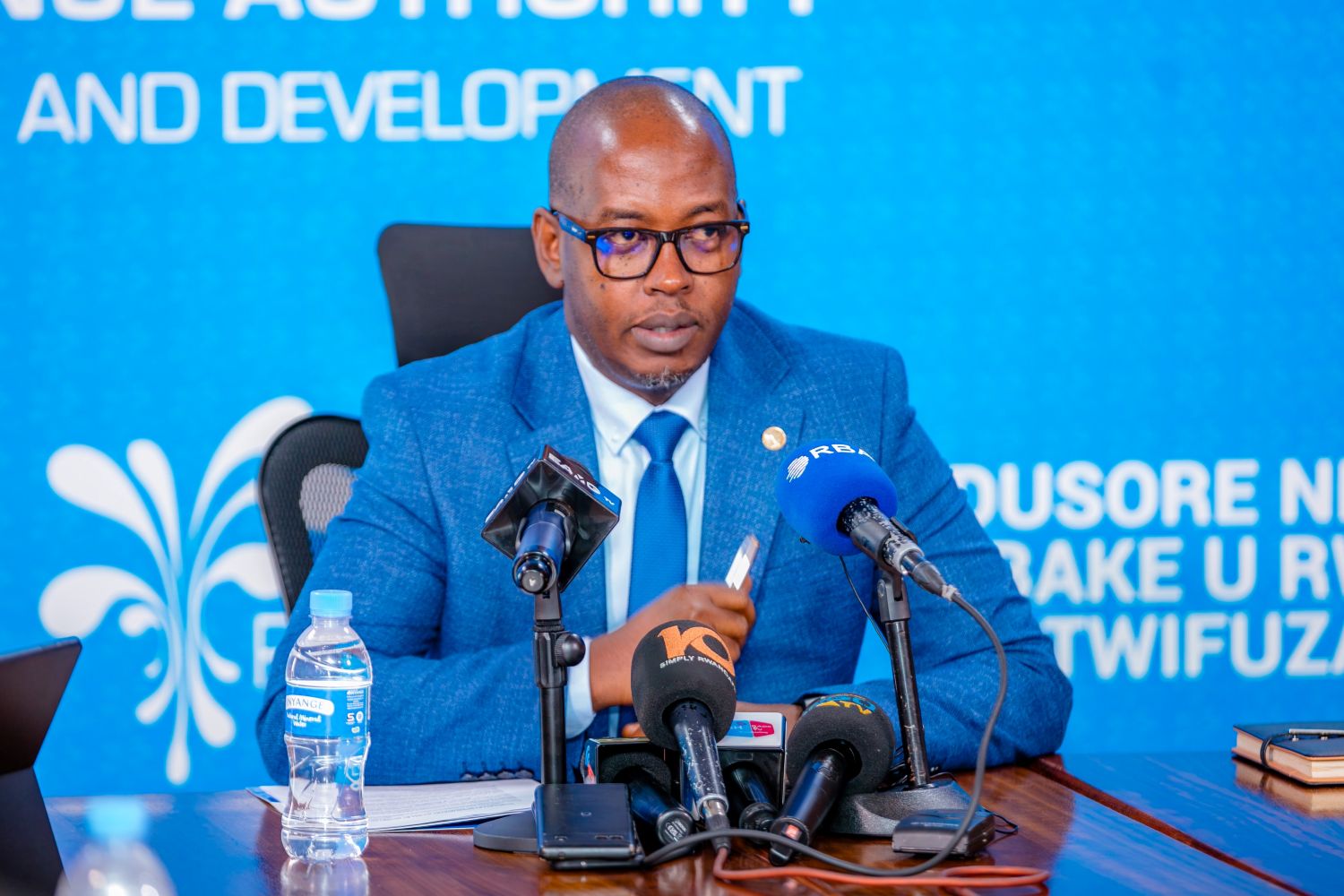
RRA Commissioner General Ronald Niwenshuti attributed the strong performance to "favourable macroeconomic conditions, effective tax administration, successful implementation of tax policy measures, and sustained improvements in taxpayer compliance."
Strong economic growth boosts tax collections
According to RRA, Rwanda's economy expanded by 11% during the first three quarters of the fiscal year (July 2025 to March 2026), outperforming the projected 8.1%, with growth driven largely by the industrial and services sectors.
The stronger economic activity translated into improved tax performance across major revenue streams.
Business turnover increased by 23.7%, while the proportion of VAT-taxable sales rose from 52.3% to 59.2%, broadening the country's Value Added Tax (VAT) base.
Corporate taxable income grew by 22.9%, compared to 1.9% in the previous fiscal year, while taxable employment income rose by 14.6%, resulting in a 16% increase in Pay As You Earn (PAYE) revenue.
The value of taxable imports also increased by 29.6%, contributing to stronger customs revenue.
Meanwhile, tax policy reforms introduced during the year generated Rwf 286.7 billion, exceeding the projected Rwf 259.2 billion and achieving 110.6% of the target.
Compliance measures strengthen revenue mobilisation
Beyond economic growth, RRA credited a series of compliance initiatives for boosting domestic revenue.
During the year, the authority registered 126,282 new taxpayers, who contributed Rwf 15.4 billion in tax revenue, while Rwf 277.1 billion in outstanding domestic tax arrears was recovered through strengthened enforcement.
The adoption of Electronic Billing Machines (EBMs) also continued to expand, with 43,243 additional taxpayers joining the system to improve VAT compliance and transaction traceability.
RRA completed 1,883 tax audits, resulting in Rwf 9.3 billion in additional tax assessments and payments, while enhanced monitoring of unsupported business expenses helped improve corporate income tax compliance and reduce underreporting.
The authority also credited continued taxpayer education, risk-based compliance management and collaboration with stakeholders for improving voluntary compliance.
Participation in the Tengamara na TVA and Tenga Promo VAT reward schemes grew significantly during the year, with registered participants increasing from 74,964 in June 2025 to 1.09 million by the end of June 2026.
The scheme generated invoices accounting for Rwf 105.8 billion in VAT output, while consumers received Rwf 4.2 billion in VAT rewards.
On the enforcement front, RRA completed 163 tax investigation cases, leading to assessments worth Rwf 21.4 billion, while 1,542 anti-smuggling operations resulted in assessments totalling Rwf 29 billion.
Joint EBM compliance campaigns conducted with the Rwanda National Police across Kigali and five districts outside the capital led to more than 12,000 taxpayers adopting EBMs and the recovery of Rwf 3 billion in penalties.
Using data analytics, the authority also identified and blacklisted fictitious invoices, preventing fraudulent VAT refund claims worth Rwf 28 billion.
New strategy targets higher voluntary compliance
Building on the gains made in 2025/26, RRA has been assigned a revenue target of Rwf4.640 trillion for the central government and Rwf165.9 billion for local governments during the 2026/27 fiscal year.
The collections are expected to finance approximately 61.6% of Rwanda's Rwf7.796 trillion national budget.
Under the new Compliance Improvement Plan, RRA will focus on strengthening taxpayer registration, encouraging timely filing and payment of taxes, improving the accuracy of tax declarations, expanding the use of Electronic Billing Machines, accelerating digital transformation, enhancing taxpayer education and applying risk-based compliance management.
The strategy also calls for closer collaboration with stakeholders and law enforcement agencies to combat tax crimes.
Priority sectors include manufacturing, transport and storage, information and communication, professional services, education, real estate and construction, where the authority intends to strengthen compliance while promoting fair taxation.
Niwenshuti said continued collaboration between taxpayers, stakeholders and the tax authority will be key to achieving the new revenue target.
"While significant progress has been made, much remains to be done to achieve even higher levels of compliance and domestic revenue mobilisation. I remain confident that, through continued collaboration, mutual trust and the shared commitment of taxpayers, stakeholders and RRA staff, we will successfully achieve our revenue and compliance objectives for FY 2026/2027," he said.

Loading comments...
Leave a comment