



By the time the seller responds, the customer may already have moved on.
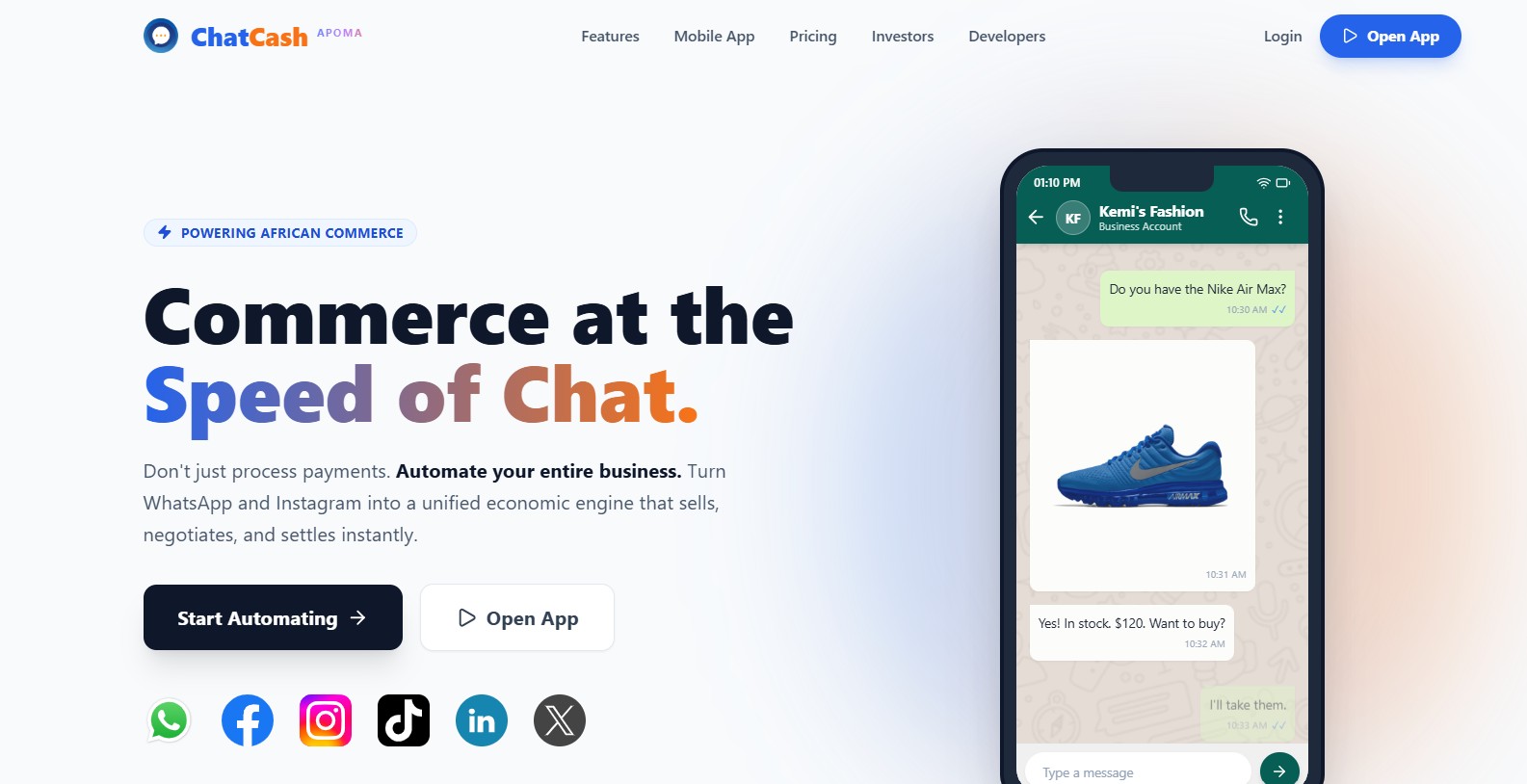
This is the fragmented reality of social commerce that Zimbabwean fintech ChatCash is trying to change by turning messaging conversations into complete digital storefronts.
The fintech allows small businesses to create online shops, showcase products, communicate with customers and receive payments without forcing buyers to leave the messaging platforms they already use.
Months after expanding into Rwanda and securing a fintech pilot licence, ChatCash is positioning Kigali as a base for its planned expansion into other African markets.
John Sakala, the company's CEO, says the idea is built around a simple observation: much of Africa's commerce is already happening through conversations.
"The future of commerce is conversational, and Africa is where it's beginning," Sakala told IGIHE in an exclusive interview.
He said businesses and customers increasingly begin transactions through platforms such as WhatsApp, Facebook and other messaging services, but the tools supporting those transactions remain fragmented.
A customer may ask about a product on WhatsApp, make a payment through mobile money or a bank account, and then send a screenshot to prove that the money has been transferred.
ChatCash wants to put those steps in one place.
Turning a chat into a shop
According to Sakala, a merchant can use ChatCash to build an online storefront in about six minutes.
The business owner creates a profile, uploads products and connects an AI-powered assistant to the store.
That assistant acts as a digital salesperson, responding to customers around the clock through messaging platforms.
The system can communicate in local languages, including Kinyarwanda, as well as French and English, according to Sakala.
Instead of directing customers to a separate website, the business can meet them where the conversation has already started.
"When a customer comes to the WhatsApp number linked to your storefront, they are responded to conversationally," Sakala explained.
Once the customer decides to buy, the payment can also be completed within the conversation.
ChatCash connects different payment options, including mobile money and bank accounts, allowing the customer to complete the transaction without moving to another platform.
For Sakala, that is the difference between traditional e-commerce and what he calls conversational commerce.
An e-commerce platform such as Shopify gives a business a dedicated online store and expects customers to visit that platform.
ChatCash, on the other hand, brings the store to the customer.
"The dynamic in Africa is that your customers are already talking to you on WhatsApp," he said.
"We're not giving you a platform to trade on or dictating where you should trade. We're helping you communicate in a more organized way, right where your customers already are."

Beyond chatbots
ChatCash's technology goes beyond automated responses to frequently asked questions.
Sakala describes its AI-powered systems as autonomous agents that can make decisions within parameters defined by a business.
For example, an agent can respond to questions about products, manage a shopping cart, verify information, collect a delivery location and operate within price ranges set by the merchant.
That allows the AI assistant to function more like a salesperson than a conventional chatbot.
"The agent represents you when you're not there," Sakala said.
The company believes such technology could be particularly useful for micro and small businesses that cannot afford dedicated staff to manage online sales throughout the day.
From Zimbabwe to Rwanda
ChatCash began its journey in Zimbabwe, where Sakala says the company built its initial customer base.
Its move into Rwanda followed Sakala's participation in the Visa Accelerator Programme in September 2025.
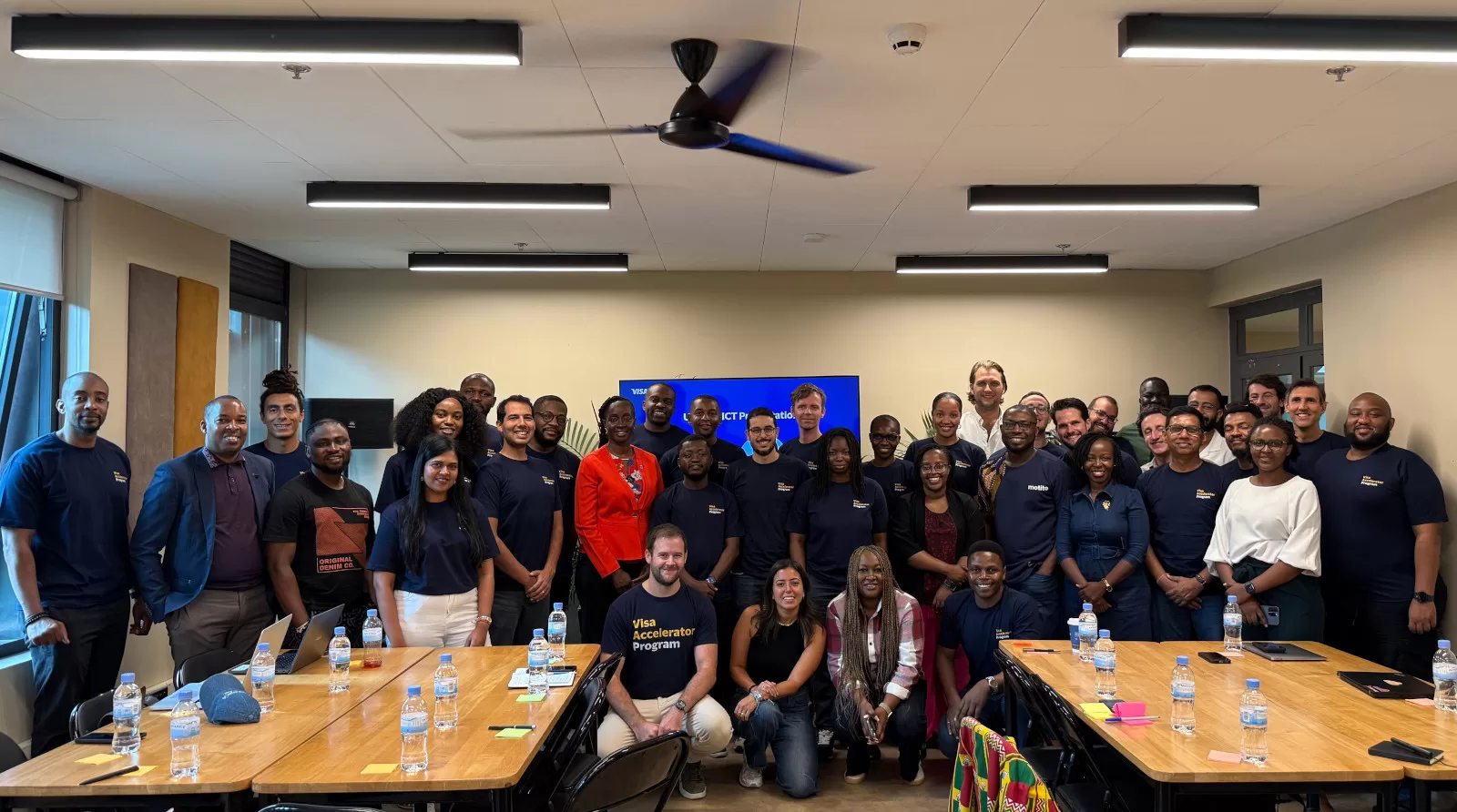
The programme brought him to Kigali and introduced him to Norrsken House Kigali, where he learned more about Rwanda's business environment.
He returned to Rwanda in December and has since established ChatCash Rwanda as the company's regional headquarters for East Africa.
Sakala says the country's regulatory environment and multilingual market were among the factors that made Rwanda attractive.
He also points to the ease of registering a business and the support provided by institutions including the Kigali International Financial Centre and the National Bank of Rwanda.

For ChatCash, Rwanda is not simply another market. It is intended to serve as a launch pad for the company's broader African expansion.
Sakala said the company is looking at Ghana and Nigeria as its next markets, while also targeting countries including Kenya and South Africa as part of its longer-term pan-African strategy.
"We believe this is a very good foundation for getting into other markets as well," Sakala said.
He highlighted the possibility of licence passporting as another advantage of building the business in Rwanda, saying the framework can facilitate expansion into markets such as Ghana and Kenya with reduced onboarding requirements.
ChatCash enters Rwanda's fintech sandbox
ChatCash recently secured a pilot licence to operate as a fintech in Rwanda.
The pilot will initially involve a limited number of businesses and will operate within parameters set by the regulator, including limits on the amount of money that can be held in wallets.
Sakala said the company expects to start with about 100 businesses, despite having a waiting list of nearly 4,000 merchants.
He described the pilot as a controlled environment where the company can test its technology and operations before moving toward a full licence.
Once the process is completed and the limits are lifted, ChatCash plans to serve more merchants, including businesses on its waiting list.
The company has already spoken to more than 3,900 businesses in Rwanda, according to Sakala, while another 1,215 businesses have shown interest in Zimbabwe.
He said merchants have particularly appreciated the ability to bring their existing WhatsApp conversations, products and payments into a single system.
Moving beyond screenshots
One of ChatCash's key propositions is eliminating the reliance on screenshots as proof of payment.
Sakala said the platform creates a verifiable record for every transaction, allowing businesses to see the status of payments rather than relying on customers to send screenshots.
ChatCash has integrated with eKash, Rwanda's interoperable payment system, as well as MTN MoMo and other payment infrastructure.
The company also works with regional players such as Onafriq and Modu Pay.
Sakala said eKash is particularly important because it connects bank accounts and mobile money wallets while reducing the cost of transactions.
He argues that such interoperability could make it easier for fintech companies to build services around Rwanda's financial infrastructure.
From transactions to creditworthiness
ChatCash also sees another opportunity in the transaction records generated by small businesses.
Many micro-merchants operate across cash, mobile money and bank transfers, leaving them with limited formal records of their business activity.
Sakala believes that putting those transactions into a traceable digital system could eventually help merchants demonstrate their business performance to financial institutions.
"Every transaction counts," he explained. "The cash is in the chat."
The platform, he argues, can create a record showing that a merchant has been trading consistently, potentially strengthening their ability to seek financing.
For businesses that have traditionally struggled to demonstrate their income and transaction history, ChatCash hopes its platform can become more than a sales tool.
Expansion plans
The company is preparing to raise more capital to support its expansion.
Sakala said ChatCash plans to seek about $5 million in its upcoming fundraising efforts and has been selected as a finalist in a financial inclusion competition organised by FINCA Ventures.
The startup founder will travel to San Francisco and London in October to participate in the FINCA Ventures Final Celebrations and Pitch Event, where the company will compete alongside other leading African startups developing solutions to expand financial inclusion and pitch to investors.
Financing the merchants' marketing
ChatCash's ambitions extend beyond payments and online storefronts.
Sakala said the company is working with local banks on a product that would help merchants finance their digital advertising.
Instead of paying upfront to advertise on platforms such as Facebook or LinkedIn, eligible businesses could receive marketing financing and repay after generating sales.
He expects the product to launch within two months, although the exact timing will depend on the company's rollout.
Loading comments...
Leave a comment