



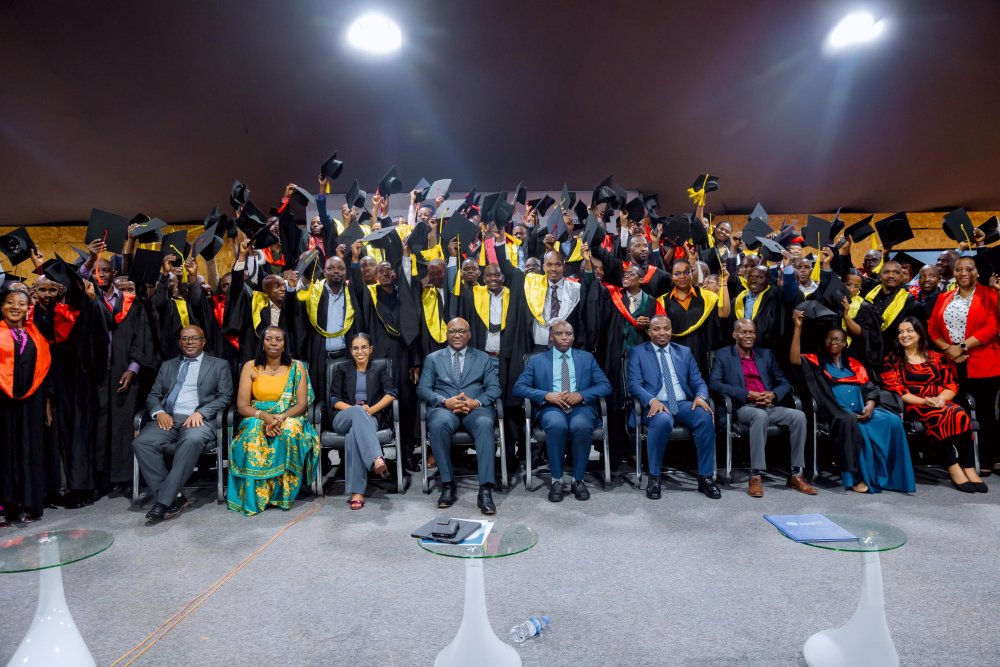
The announcement was made on September 30, 2026, during a ceremony in Kigali at which 137 secondary school teachers were awarded the Professional Diploma in Education (PDE) after successfully completing a one-year professional training programme.
The programme, known as the Continuous Professional Development–Graduate Diploma in Education (CPD-GDE), was developed and implemented by the University of Rwanda–College of Education (UR-CE), in collaboration with REB, under the Rwanda Quality Basic Education for Human Capital Development (RQBEHCD) Project, financed by the World Bank.
The 137 teachers held A1 qualifications in non-education subjects before joining the programme. Through the CPD-GDE programme, which comprises 180 academic credits, they acquired pedagogical knowledge, skills and competencies required for effective teaching and learning.
The certification ceremony marked a step in efforts to strengthen teacher professionalism and improve the quality of basic education in Rwanda.
Dr. Nelson Mbarushimana, Director General of REB, said strengthening teachers’ knowledge and professional skills is essential to improving the quality of education.
He said the demands of 21st-century education require teachers to continuously develop their capacity and adapt to new approaches and technologies.
“Teachers who have studied education know how to follow up on all the children they teach, ensuring that no child is left behind. We are now also in a technological era where audio is used together with visual materials. There is a part of the brain that helps children retain information when they learn through images and other visual materials,” Dr. Mbarushimana said.
He said professionally trained teachers are expected to play a greater role in improving the quality of education, while additional professional development programmes can further strengthen the skills they have acquired.
Dr. Mbarushimana said the certification of the 137 teachers represents an important step towards ensuring that Rwanda's teaching workforce has received formal training in education.
“We no longer have teachers who have not studied education. We have also trained all those who were teaching in primary schools without having studied education, and we will soon award them education qualifications.
"Going forward, we are only recruiting people who have studied education. Those who remained are the ones who have now received these qualifications, and we hope they will contribute to improving the quality of education,” he said.
Prof. Florien Nsanganwimana, Principal of the University of Rwanda–College of Education (UR-CE), said the college has played a significant role in providing professional training to teachers who were already working in the education sector.
He said that since 2019, UR-CE has trained more than 3,200 secondary school teachers in Mathematics and Science, as well as more than 25,000 primary school teachers in various subjects, alongside other categories of teachers.
However, the training of teachers in education is not considered the end of efforts to strengthen professionalism and improve the quality of teaching.
UR-CE and REB say teachers will continue to undertake additional short-term training and professional development programmes in areas including artificial intelligence, technology, languages and other emerging areas.
According to Ministry of Education figures for the 2024/25 academic year, Rwanda had 122,828 teachers working in pre-primary, primary and secondary schools, an increase of 9,280 compared with the 2023/24 academic year.

Loading comments...
Leave a comment