



With eight years of experience in radio, she has worked with Kenyan stations including USIU Radio, NRG Radio and Choice Radio before continuing her career in Rwanda at Royal FM.
In an exclusive interview with IGIHE, Kish reflected on her journey into broadcasting, her move to Rwanda, the differences between the two countries’ media industries and her ambitions as a musician.
From music dreams to radio
Kish originally wanted to study music, but pressure to pursue a more conventional career led her towards journalism.
“I really wanted to study music and pursue it as a career, but African parents often see that as just a hobby; you need an ‘actual’ career. So I thought, what’s the closest thing to music? Media.”
Growing up in a strict home with a 6:30 p.m. curfew, she looked for opportunities beyond school. Kish auditioned for her university radio station and began hosting a morning show, marking the beginning of her broadcasting career.
One of her most memorable moments came when she won an audition for commercial radio in Kenya. More than 100 people had participated, with about 20 finalists waiting on stage for the results.
“When I saw my face and name on the screen, I was screaming and crying. Someone next to me was also crying because they didn’t get it. So, I was caught between celebrating and feeling bad for them.”
From Kenya to Rwanda
When Kish’s family moved to Rwanda eight years ago after her mother secured a job in the country, she remained in Kenya to complete university before eventually deciding to relocate.
“My parents encouraged me. They would say, ‘You’ve been in the industry for a long time. Move, because change is good.’”
Kigali has since become a place where she feels comfortable and secure. She appreciates its hills, fresh air and the freedom to walk around without constantly worrying about her safety.
“The views, the hills, the fresh air. You can walk around freely. The security. In some places in Kenya I wouldn’t walk around holding my phone openly. I love that I can feel safe.”

Different media cultures
Kish describes Kenya’s broadcasting industry as fast-paced and highly competitive, while Rwanda’s is calmer and more structured.
“They do disruptive things you wouldn’t necessarily expect in broadcast media, and somehow it works. In Rwanda it’s a bit more calm and grounded. There’s structure and a clear way of doing things. It’s good to be upbeat, but it’s also good to be level-headed. It’s a nice balance.”
Broadcasting has also challenged Kish to grow personally. Although she considers herself introverted and shy, the profession has taught her to communicate confidently and find creative ways to capture audiences’ attention.
“You can’t say the same thing the same way it’s always been said. You have to find a hook, a way to tell a story, how to be interesting and attract attention.”
Kish says managing public opinion remains another challenge, particularly when criticism begins to affect confidence.
“When people see and hear you, they always have opinions. Sometimes those get into your head and you start doubting if you’re good enough. It’s about learning to block out the noise.”

A childhood love for music
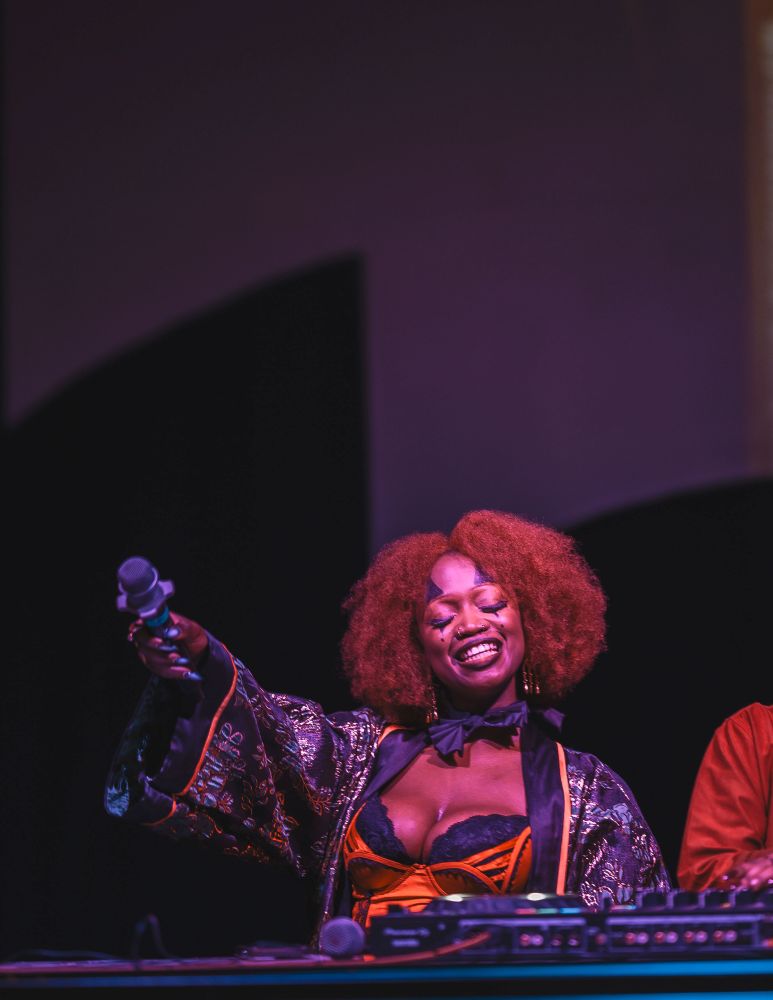
Music has been part of Kish’s life since childhood. One song she remembers singing repeatedly at home was Alicia Keys’ Falling.
“When I was about eight, I wrote down the lyrics. Listening and singing it made me know I wanted to do music for the rest of my life.”
Her experience as both a musician and presenter helps her approach conversations about the entertainment industry from different perspectives.
She understands the creative process, from songwriting and recording to performing and recognising musical influences.
“As an artist I know the process: going to the studio, writing, performing. I can tell you when a song was sampled from another. That knowledge lets me go deeper in conversations about music and the industry.”
Kish believes African music is gaining international recognition through collaborations and tours that increasingly include African destinations.
“We’ve stuck to our roots. The richness of our culture is amazing, and I hope we don’t lose it even as we collaborate. Honestly, we’re doing amazing.”
Her advice to young creatives is to remain authentic rather than imitate others.
“Be yourselves. Be authentic. You can get inspired by someone, but don’t try to be exactly like them. There are billions of people in the world but only one you. Do it for the right reasons, don’t lose yourself, and remember you’re here because you can do it.”
Discovering Rwanda’s culture
Kish says she was impressed by how widely Kinyarwanda is spoken and how strongly Rwandans embrace their culture.
“It was beautiful to hear how much Kinyarwanda is spoken and how Rwandans are in touch with their culture and embrace the language. It makes you want to learn.”
She has learned basic greetings and a few words used when bargaining. She is also improving her pronunciation through an Instagram series in which she sings some of her favourite Kinyarwanda songs.
Her cultural experiences extend to traditional weddings, local food and entertainment events. Kish has developed a taste for local condiments, particularly mayonnaise and akabanga, a chilli condiment.
She has also been impressed by the country’s concerts and sporting events.
“The way concerts are done in Rwanda is ten out of ten. I also experienced my first BAL and was completely wowed. Amazing things happen here.”
Over the next five years, Kish hopes to perform across Africa, collaborate with Rwandan artists and potentially release two albums. She also wants to expand her broadcasting career beyond presenting.
“In radio, I don’t just want to be a presenter. I want to run a radio station, run shows, and be more involved in managing a media house. I’d also like to explore TV. If I can do radio, I can do TV.”
Her immediate focus is Narushe, her upcoming song that incorporates Kinyarwanda. Although she is still learning the language, she sees including it in her music as a way of connecting more deeply with the country she now calls home.
“I’m nervous because I’m still learning the language, but I want to include it in my music because I live here now. Rwanda is home. I’m looking forward to releasing it and hope people show it love. This is just the start of many more songs.”
For Kish, moving from Kenya to Rwanda has opened a new chapter in which broadcasting, music and cultural discovery come together.
As she develops her sound and pursues new opportunities in media, she hopes to connect with audiences across Africa while remaining true to herself.
Loading comments...
Leave a comment