



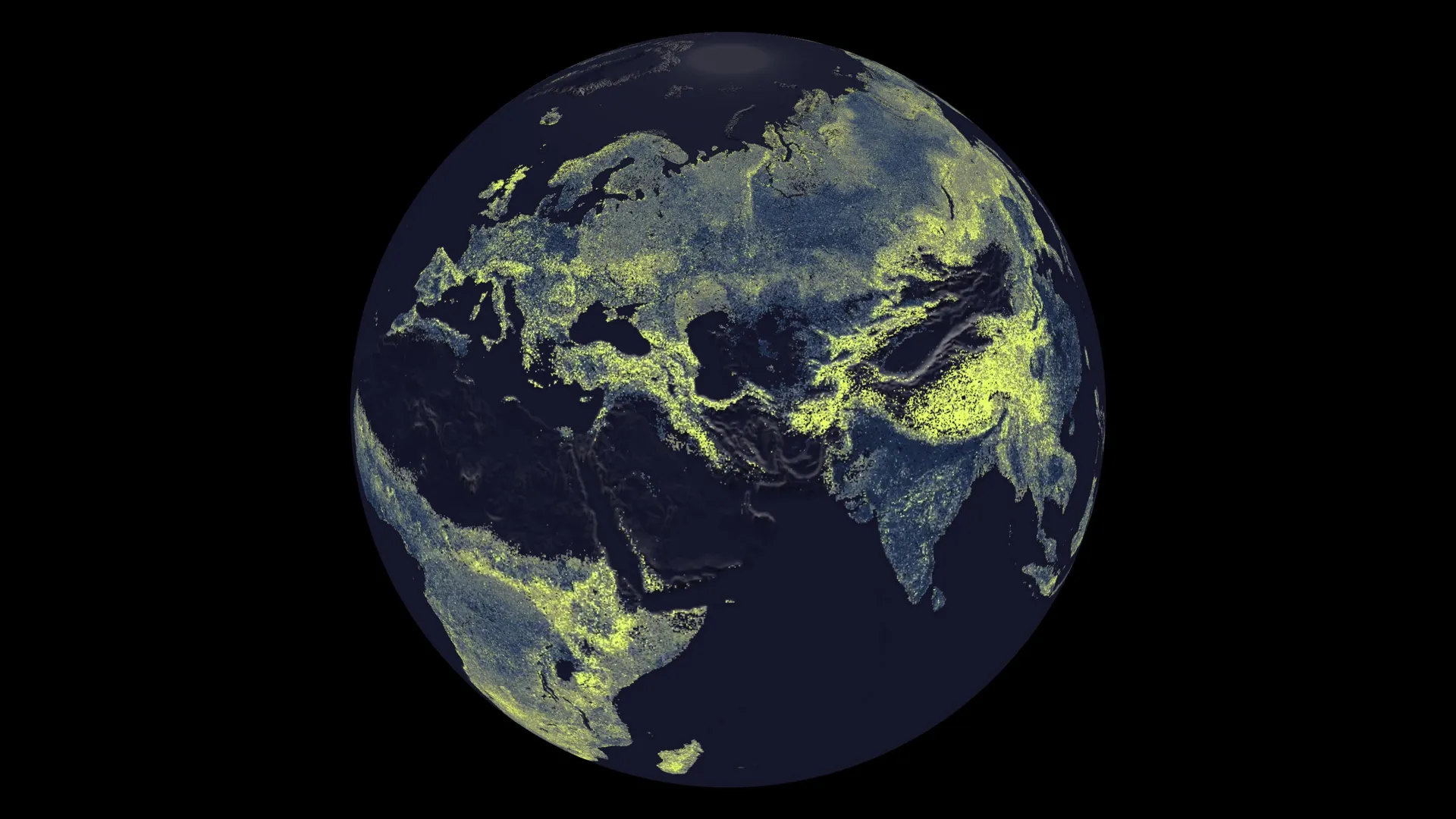
The study published in the journal Science by the Society for the Protection of Underground Networks (SPUN), reveals the mind-boggling scale of Earth's underground "circulatory system," composed of arbuscular mycorrhizal (AM) fungi.
Scientists estimate that these vast subterranean networks stretch an astonishing 110 quadrillion kilometers roughly 68 quadrillion miles. To put that into perspective, this hidden grid of thread-like structures, called hyphae, spans a distance equivalent to nearly a billion times the journey from Earth to the Sun.
These fungi form crucial, mutually beneficial partnerships with approximately 70 percent of all plant species on Earth, providing them with essential water and nutrients in exchange for carbon produced through photosynthesis.
The planetary impact of this fungal network is immense. According to the study, AM fungal networks absorb and channel an estimated 4 billion tons of carbon dioxide equivalents into global soils every single year.
This massive carbon sink accounts for roughly 11 percent of all global human-related carbon emissions, making the underground network one of the planet's most critical lines of defense against climate change. Wild grasslands are particularly vital to this system, holding about 40 percent of the world’s total arbuscular mycorrhizal infrastructure.
However, the research also soundly warns that human activity is putting this living architecture at risk. By analyzing more than 16,000 soil cores using robotics and machine learning, scientists discovered that large agricultural croplands have roughly 50 percent lower fungal network densities on average compared to undisturbed wild ecosystems.
When these networks are degraded by heavy farming, the soil drastically loses its capacity to store carbon, cycle nutrients, and withstand severe environmental stress.
Ultimately, this pioneering study proves that the fight against climate change cannot ignore what lies beneath our feet. For too long, these vital organisms have been left out of global conservation maps and climate policies.
Experts stress that understanding and protecting this fragile, 68 quadrillion-mile planetary circulatory system is absolutely paramount if humanity hopes to secure future food security, preserve biodiversity, and stabilize a changing global climate.
Loading comments...
Leave a comment