



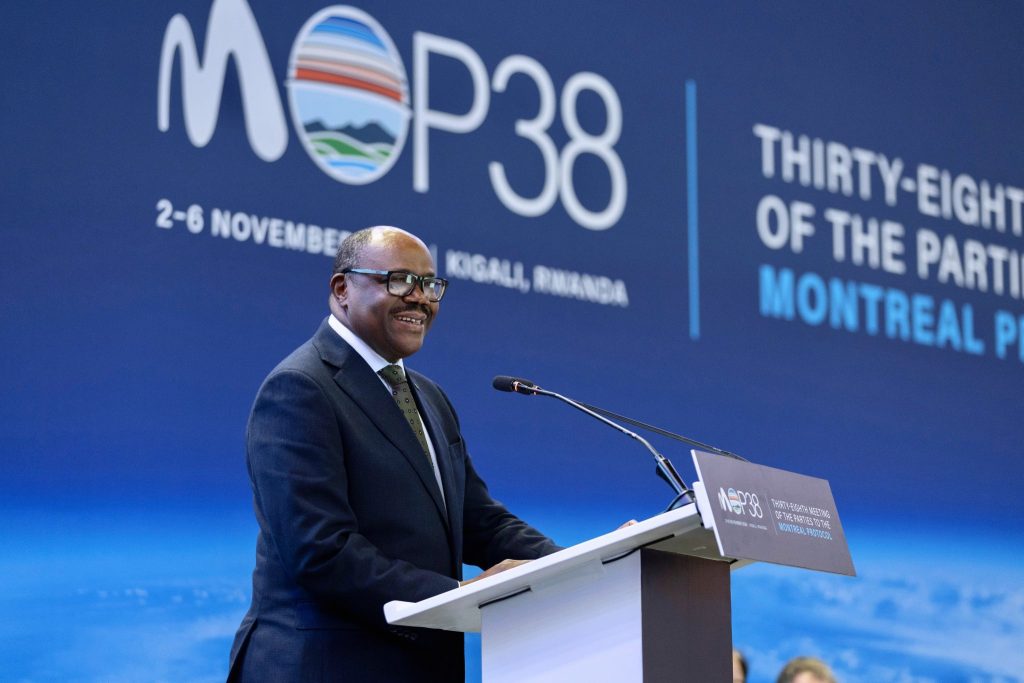
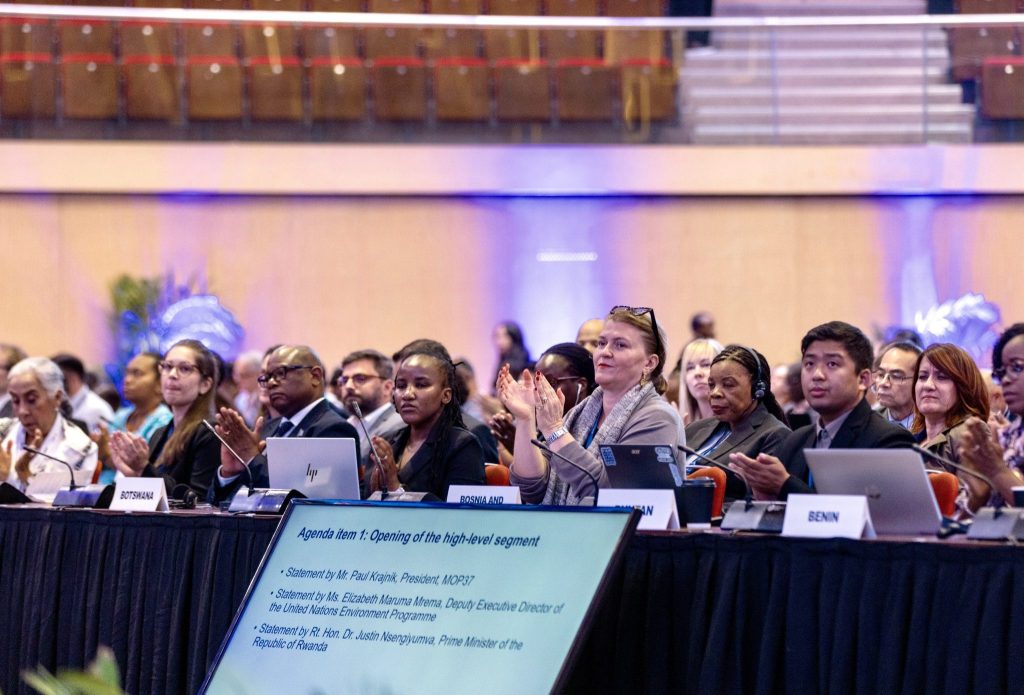
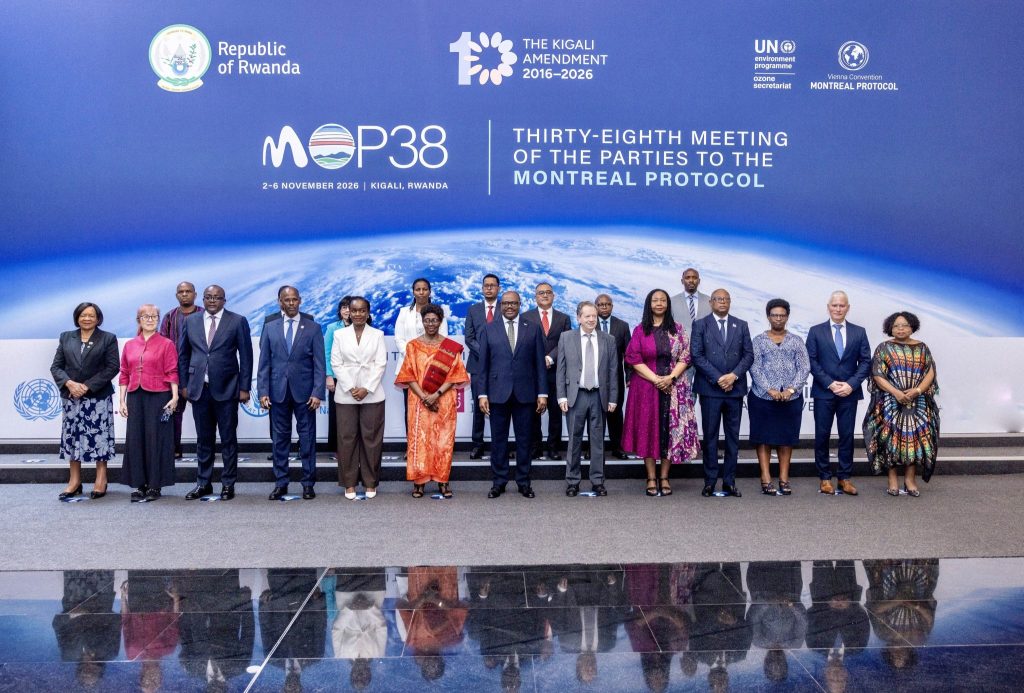
The call was made by the Prime Minister during the opening of the high-level segment of the 38th Meeting of the Parties to the Montreal Protocol (MOP38), held in Kigali on November 5, 2026.
Addressing delegates, the Prime Minister said that although the Kigali Amendment marked a major achievement in global efforts to phase down hydrofluorocarbons (HFCs), countries must now focus on translating their commitments into tangible results.
The Kigali Amendment was adopted in Kigali in 2016, bringing countries together around efforts to reduce the use of hydrofluorocarbons, which contribute to global warming.
The Prime Minister said its adoption demonstrated the ability of the international community to respond collectively to emerging global challenges while taking into account the different circumstances and development needs of individual countries.
He noted that fully implementing the amendment would make a significant contribution to protecting the climate and the well-being of present and future generations.
Quoting President Paul Kagame, who set out expectations following the adoption of the amendment, the Prime Minister recalled his call for countries not to settle for limited progress when greater results were achievable.
“We should not allow ourselves to be satisfied with making a little bit of good progress when it is within our power to actually solve the problem,” President Kagame said at the time.
The Prime Minister stressed that the success of international commitments should be measured by their impact on people's lives, rather than by the agreements countries sign.
He explained that access to cooling goes beyond comfort, playing an important role in healthcare, food preservation, economic opportunities and communities' ability to cope with extreme heat.
For farmers, reliable cold storage can help preserve agricultural produce and prevent losses after harvest. In healthcare, it ensures that vaccines and essential medicines reach communities, including those in remote areas.
He also warned that access to cooling can be a matter of life and death for people exposed to increasingly severe heat, particularly vulnerable populations.
However, reliable cooling remains out of reach for millions of people, especially in Africa, where electricity access is still limited or unreliable.
The Prime Minister said growing demand for cooling must be addressed through energy-efficient and climate-friendly solutions that support efforts to expand electricity access, strengthen resilience and create economic opportunities.
He emphasised that the transition should not be limited to replacing one technology with another, but should also involve developing the infrastructure, skills and industries required for countries to benefit fully from sustainable cooling.
Rwanda, he said, is already contributing to these efforts through the Africa Centre of Excellence for Sustainable Cooling and Cold-chain (ACES), established in the country with a pan-African vision.
The centre brings together research, training, technology development and practical application to advance sustainable cooling and cold-chain solutions.
The Prime Minister further highlighted the importance of South-South cooperation and broader international partnerships, saying countries need to pool expertise, resources and experience to address challenges that cannot be resolved individually.
He said developing countries should be active participants in shaping the transition to sustainable cooling rather than simply being expected to adapt to decisions made elsewhere.
Looking ahead, he urged countries to build on the progress made since the adoption of the Kigali Amendment a decade ago by strengthening their commitments and expectations.
He called for the full and timely implementation of existing commitments, alongside increased investment in infrastructure, skills and technologies that can make sustainable cooling affordable and accessible.
“The next decade must be defined not merely by the commitments we make, but by the results we deliver,” he said.
The 38th Meeting of the Parties to the Montreal Protocol runs from November 2 to 6, 2026.
Loading comments...
Leave a comment