



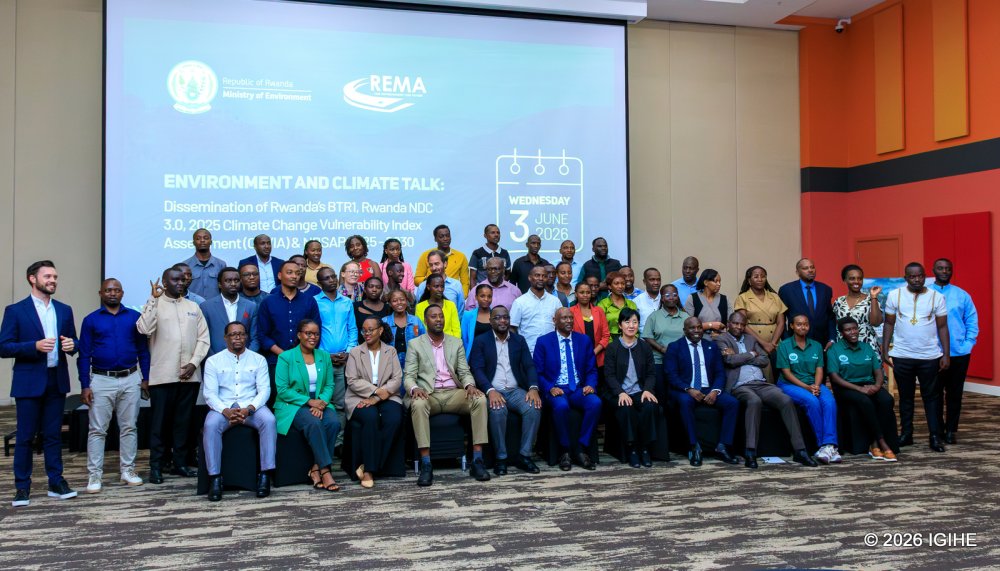
The findings are contained in a report titled Climate Change Vulnerability Index Assessment, released on June 3, 2026, though the study was conducted in late 2025. The report provides an updated assessment of Rwanda’s vulnerability to climate change, building on previous data from 2018 when a similar assessment was last published.
According to the report, climate change resilience is measured on a scale from 0 to 1, where values closer to 0 indicate higher resilience, while higher values reflect increased vulnerability.
Rwanda’s national resilience score currently stands at 0.5, compared to 0.3 recorded in 2018, indicating a deterioration in the country’s ability to withstand climate-related risks.
Despite this decline, the report emphasizes that the change reflects increasing climate pressures and exposure to extreme weather events rather than a reduction in national efforts.
At the subnational level, Kigali City records the strongest resilience performance with a score of 0.48, followed by the Northern Province at 0.51 and the Western Province at 0.52.
The Southern Province ranks fourth at 0.53, while the Eastern Province records the weakest resilience at 0.54, making it the most vulnerable region overall.
The report further identifies several districts with relatively low resilience scores, including Nyagatare, Nyamagabe, Gatsibo, Ngoma, and Karongi. These districts generally record scores around 0.55, above the national average, indicating higher vulnerability compared to other parts of the country.
Kigali City districts continue to perform better overall, with Gasabo District among the strongest performers, recording a score of approximately 0.48.
The report attributes lower resilience in certain districts primarily to limited adaptive capacity in responding to climate-related disasters. For instance, districts in the Eastern Province frequently experience drought conditions that negatively affect agricultural production and livelihoods.
Despite the observed decline in resilience, the report underscores that Rwanda has continued to make significant progress in environmental protection and climate adaptation over the past seven years.
Officials note that worsening climate impacts and increasingly severe weather events can at times outweigh the effectiveness of existing mitigation measures, leading to higher vulnerability indicators.
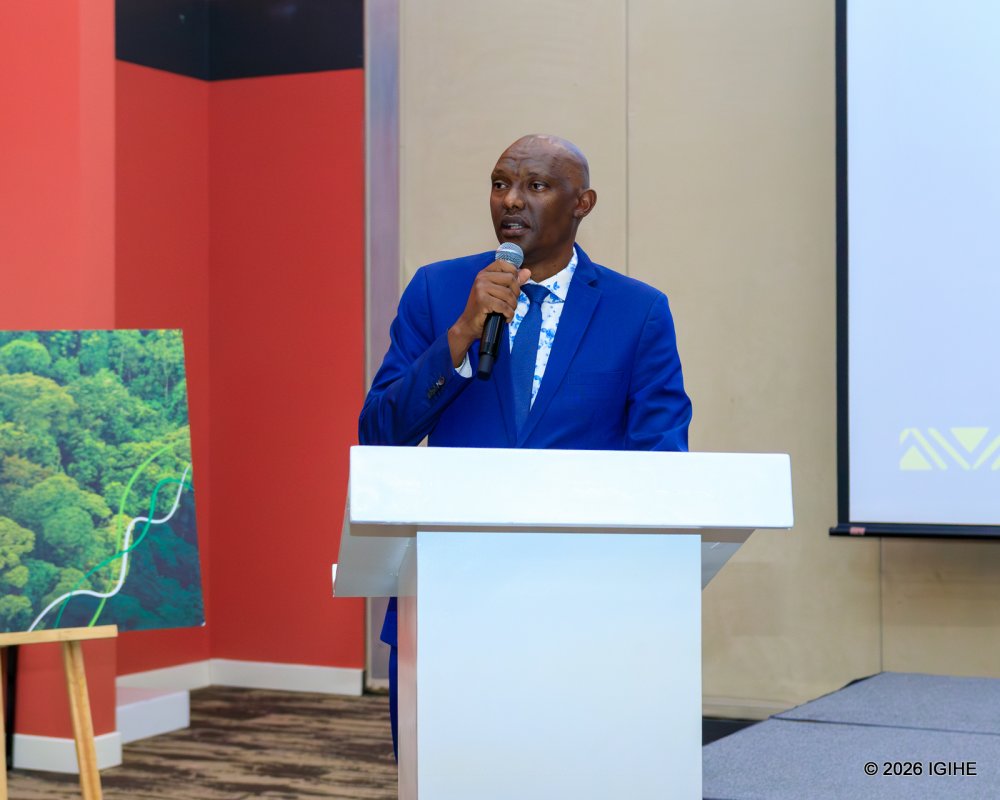
Speaking on the findings, the Deputy Director General of REMA, Faustin Munyazikwiye, said climate shocks have at times intensified beyond the country’s capacity to fully mitigate their effects.
He noted that major disasters, including those experienced in the Western Province in 2023, resulted in significant loss of life and property damage, contributing to the overall decline in resilience indicators.
He emphasized that this does not reflect a reduction in government commitment, but rather the increasing scale and frequency of climate-related hazards.
REMA highlights ongoing initiatives such as Green Gicumbi and Green Amayaga, which focus on ecosystem restoration, afforestation, and community-based adaptation to strengthen resilience against climate shocks.
Climate change continues to pose a significant economic burden on Rwanda. According to reports from the Ministry responsible for emergency management, disaster-related losses remain among the country’s most costly challenges, with estimated annual expenditures of around $300 million.


Loading comments...
Leave a comment