



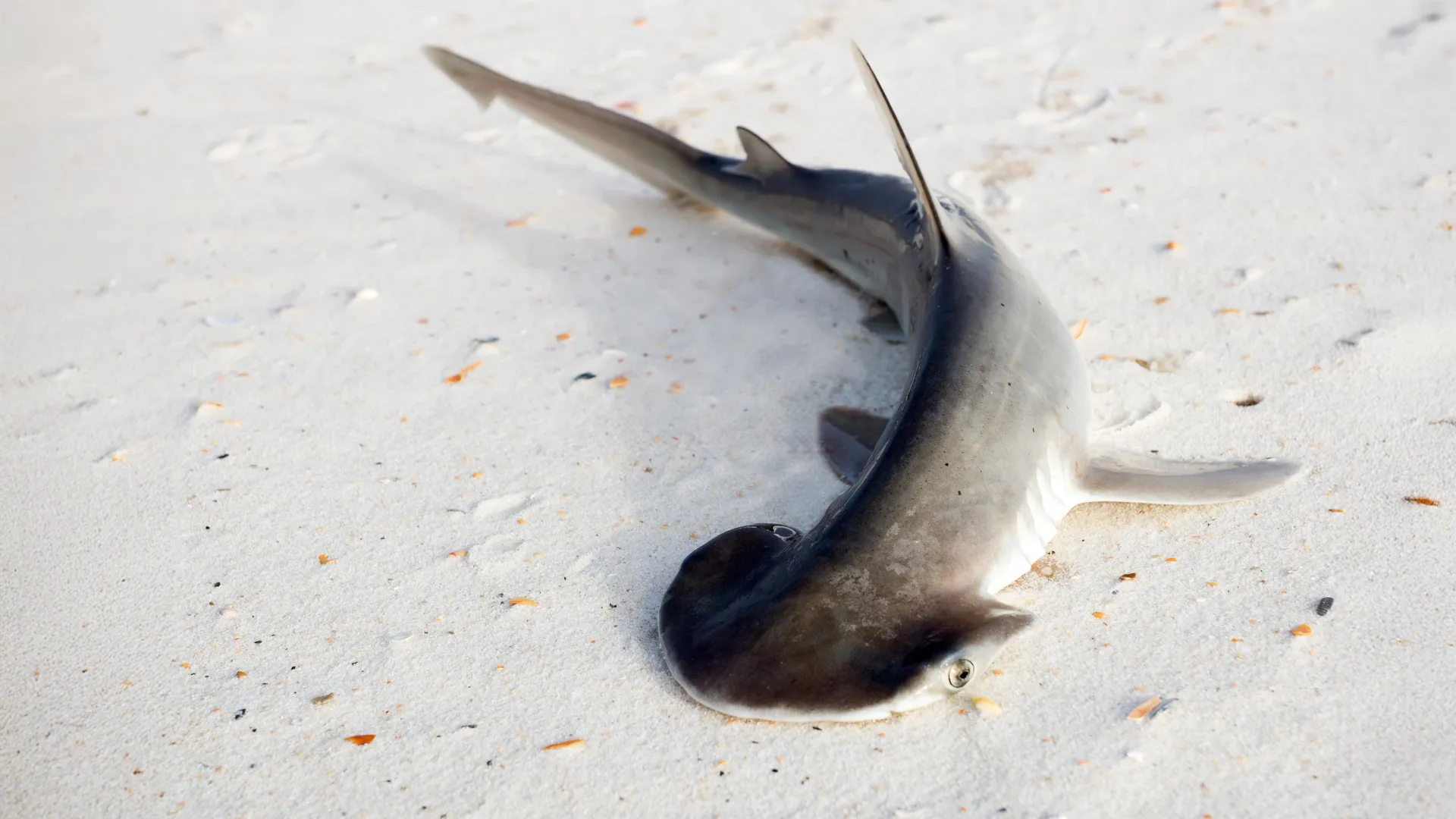
Bonnethead sharks, scientifically known as Sphyrna tiburo, are small relatives of hammerhead sharks and are recognized by their distinctive shovel-shaped heads.
They are the only shark species currently known to show clear differences in head shape between males and females.
Adult male bonnethead sharks typically have a more pointed head, while females tend to have a smoother and rounder shape.
Scientists had previously suggested that the pointed shape in males developed when they reached sexual maturity.
However, a new study has found that the process is more complicated.
Researchers discovered that young bonnethead sharks of both sexes initially have relatively pointed heads.
As the sharks grow older, their heads gradually become rounder, with the change being much more pronounced in females.
The finding challenges the idea that males develop their pointed heads as a result of reaching sexual maturity.
The researchers also investigated whether differences in diet could explain the different head shapes.
They studied bonnethead sharks from Biscayne Bay and Tampa Bay in Florida and found that the two populations fed within different food webs.
However, males and females living in the same area generally relied on similar food sources.
This suggested that differences in diet or feeding behaviour were unlikely to be responsible for the differences in head shape.
Between May 2022 and May 2023, researchers sampled 105 bonnethead sharks in Biscayne Bay and another 39 in the Tampa Bay region.
They measured the sharks and photographed their heads before releasing them. The researchers later analyzed the photographs to measure the curvature and shape of the sharks’ heads.
They also examined muscle samples from 137 sharks for carbon and nitrogen isotope signatures.
These chemical markers helped researchers understand the sharks’ positions within local food webs and identify differences between populations.
Although the study ruled out diet as the main explanation, scientists still do not know exactly why the sharks’ head shapes change differently between males and females.
Researchers believe swimming performance or changes linked to reproduction could provide possible explanations.
Future studies may examine how head shape develops during embryonic growth and whether different head shapes provide swimming advantages at different stages of life.
The researchers also plan to study bonnethead sharks from other areas to determine whether similar patterns occur across different populations.
Loading comments...
Leave a comment