






This discovery reshapes the scientific understanding of early life on Earth and highlights the crucial role these small arthropods played in building the planet’s earliest terrestrial ecosystems.
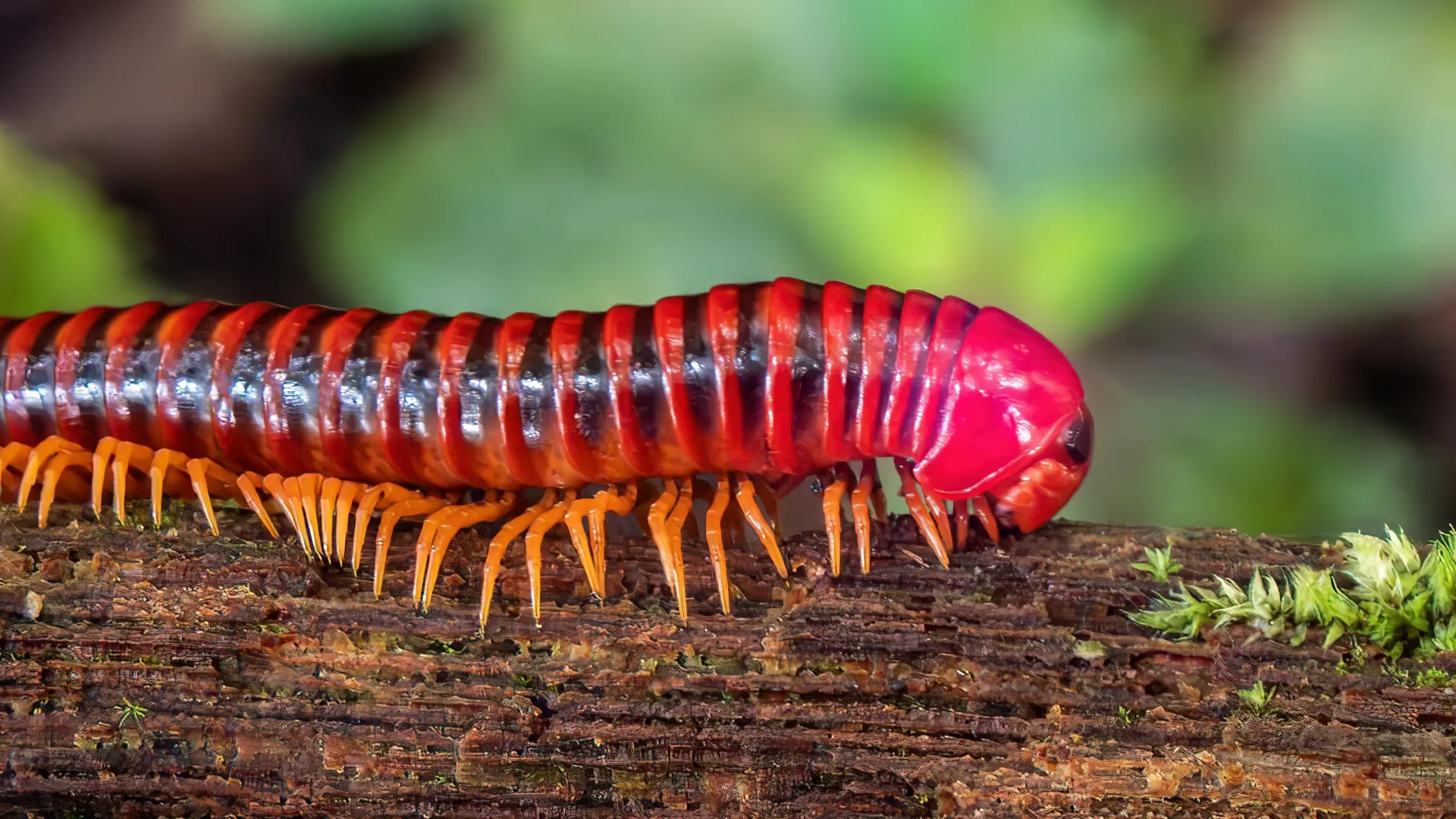
According to new research, millipedes were already thriving on land around 460 million years ago, during a period when Earth looked completely unfamiliar. At that time, there were no trees, no flowers, and no complex land ecosystems.
Land surfaces were mostly barren or covered in simple plant-like organisms such as mosses and algae. In this primitive environment, millipedes emerged as some of the earliest animals capable of surviving outside of water, feeding on decaying organic matter and helping to recycle nutrients in the earliest soil systems.
To reach these conclusions, researchers constructed the most comprehensive evolutionary family tree of living millipede groups to date. They combined modern genetic analysis with fossil evidence to trace the lineage and evolutionary relationships of millipedes across hundreds of millions of years. This approach allowed scientists to identify when major groups first appeared and how they diversified over time, filling significant gaps in the fossil record.
The study also suggests that some millipede lineages may be even older than previously discovered fossils indicate, meaning their origin could stretch further back into Earth’s ancient past. This challenges earlier assumptions about the timeline of life on land and suggests that terrestrial ecosystems may have developed earlier and more rapidly than once believed.
Another important finding from the research is the evolution of chemical defense systems in millipedes. Around 260 million years ago, certain millipede groups developed powerful chemical compounds to deter predators. These natural defenses significantly increased their survival chances and helped them adapt to changing environmental conditions and increasing competition from other emerging land animals.
This research positions millipedes as key pioneers in Earth’s history. Far from being simple creatures, they played a foundational role in shaping early land ecosystems by breaking down organic material, enriching soils, and supporting the development of more complex life forms that would follow millions of years later.
Loading comments...
Leave a comment