



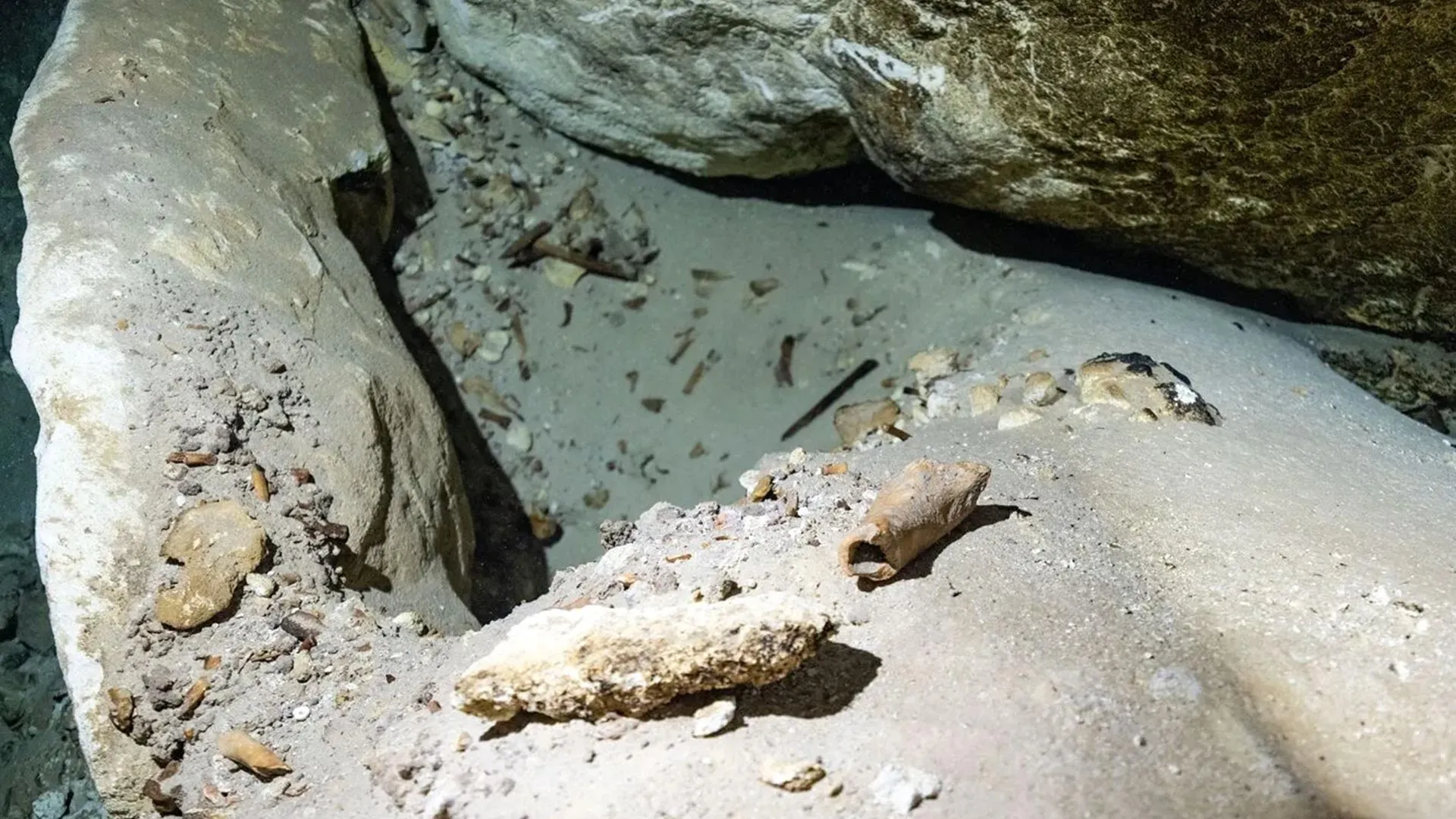
A study from Griffith University found that bones recovered from underwater caves in South Australia carry unique “fingerprints” shaped by the conditions they experienced after the animals died.
These changes were influenced by darkness, algae, bacteria, and other environmental factors inside the caves.
The findings provide researchers with a new method to investigate how the remains of ancient megafauna, including some of the giant animals that once roamed Australia, entered and survived in underwater cave systems.
Scientists have long studied fossilized bones to understand extinct species, but determining how those remains arrived in unusual locations such as submerged caves has remained a challenge.
The new research suggests that microscopic changes preserved on bones can reveal important information about their journey through different environments.
According to the researchers, underwater caves create unique conditions that can preserve biological remains for thousands of years. The absence of sunlight, along with interactions between minerals, microorganisms, and water, leaves distinctive marks on bones that act like environmental records.
These clues allow scientists to examine not only the animals themselves but also the conditions surrounding their burial and preservation.
The research could improve scientists’ understanding of ancient ecosystems and provide new insights into Australia’s extinct megafauna, a group of large animals that disappeared thousands of years ago.
By studying these hidden signals inside underwater cave bones, researchers hope to reconstruct the events that brought extinct giants to their final resting places and learn more about how environmental changes affected ancient life.
Loading comments...
Leave a comment