



The International Air Transport Association (IATA) and Airlines for America made the appeal in separate letters to the US Centers for Disease Control and Prevention (CDC).
The rules, scheduled to take effect on November 3, require passengers and crew members on international flights to the United States to sign a digital or paper declaration confirming they have not been in the Democratic Republic of Congo (DRC) during the preceding 21 days.
IATA, which represents more than 370 airlines in over 130 countries, said airlines had insufficient time to adapt their systems and procedures to the requirement.
“It is unreasonable for the U.S. government to require all airlines serving the U.S. market to modify their procedures to accommodate the collection of attestations from each individual (passenger and crew) flying to the United States in less than two weeks,” the association said in its letter, as quoted by Reuters.
Airlines for America, which represents major US carriers including United Airlines, American Airlines, Southwest Airlines and Delta Air Lines, also described the plan as difficult to implement within the available timeframe.
The group said airlines would need to adjust check-in systems, introduce digital signatures, update procedures at airports and train staff to enforce the requirement.
It called on the CDC to consider a more measured response and urged exemptions for crew members, US military personnel and passengers travelling in aircraft jump seats.
The industry group also cited figures showing that US Customs and Border Protection screened approximately 130 million air passengers in 2025, fewer than 25,000 of whom had a connection to the DRC.
IATA questioned why the declaration requirement applies to air travel but not to maritime and land transportation but the CDC has also not publicly responded to the airline groups’ appeal.
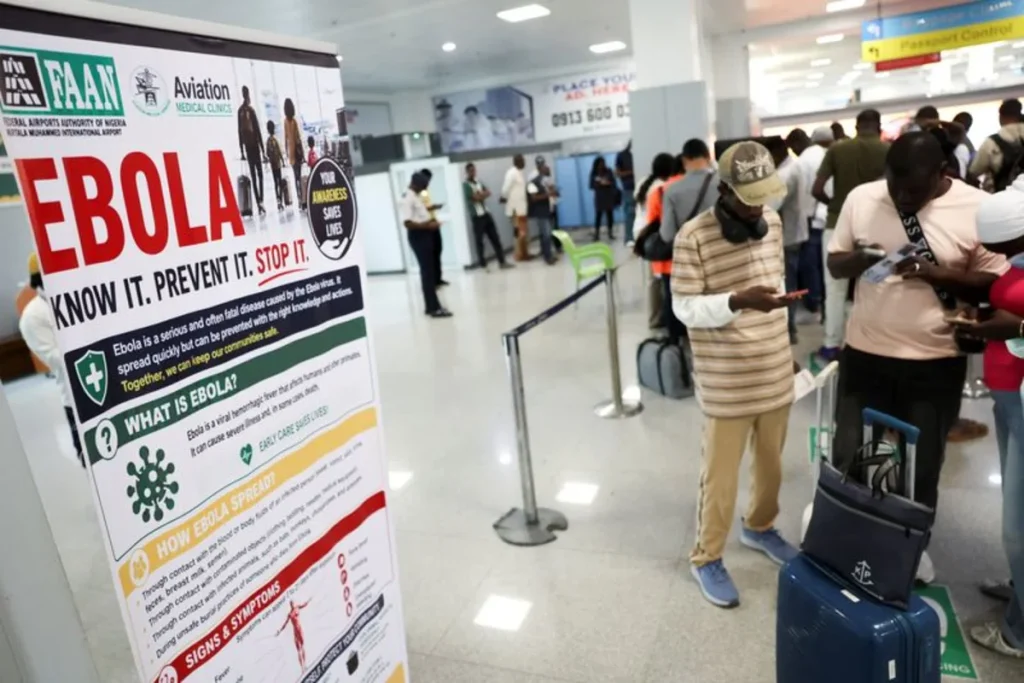
The new requirement comes amid a major outbreak of Bundibugyo virus disease, a form of Ebola, centred in the DRC and with confirmed imported cases reported in other countries.
According to the US Centers for Disease Control and Prevention (CDC), the Bundibugyo Ebola outbreak had reached 10,172 confirmed cases and 4,932 confirmed deaths across five affected countries as of October 26, 2026.
The Democratic Republic of Congo accounted for 10,141 cases and 4,928 deaths, while Kenya had reported nine cases, including two deaths.
Uganda had recorded 20 confirmed cases and two deaths, Nigeria one confirmed case, and France one confirmed case. The outbreak has spread across the five countries since it was declared in the DRC on May 15, 2026.
The outbreak has prompted authorities to strengthen surveillance, contact tracing and preparedness measures across borders.
The CDC says the 21-day declaration requirement is intended to reduce the risk of Ebola entering the United States through air travel. The period corresponds to the maximum incubation period for Ebola disease.
Under the order, airlines must ensure that covered travellers complete the declaration before boarding. Those who fail to provide it may not be allowed to board unless they qualify for an exemption.
The requirement applies to US citizens and other eligible travellers departing from foreign countries, including those connecting through the United States.
While the airline groups have raised concerns about implementation costs and operational difficulties, the dispute highlights the challenge of introducing emergency public health measures across an international aviation network.
The WHO has advised against restrictions on travel to or trade with affected countries, while emphasising the importance of cross-border cooperation, surveillance and preparedness as the outbreak continues.
Loading comments...
Leave a comment