



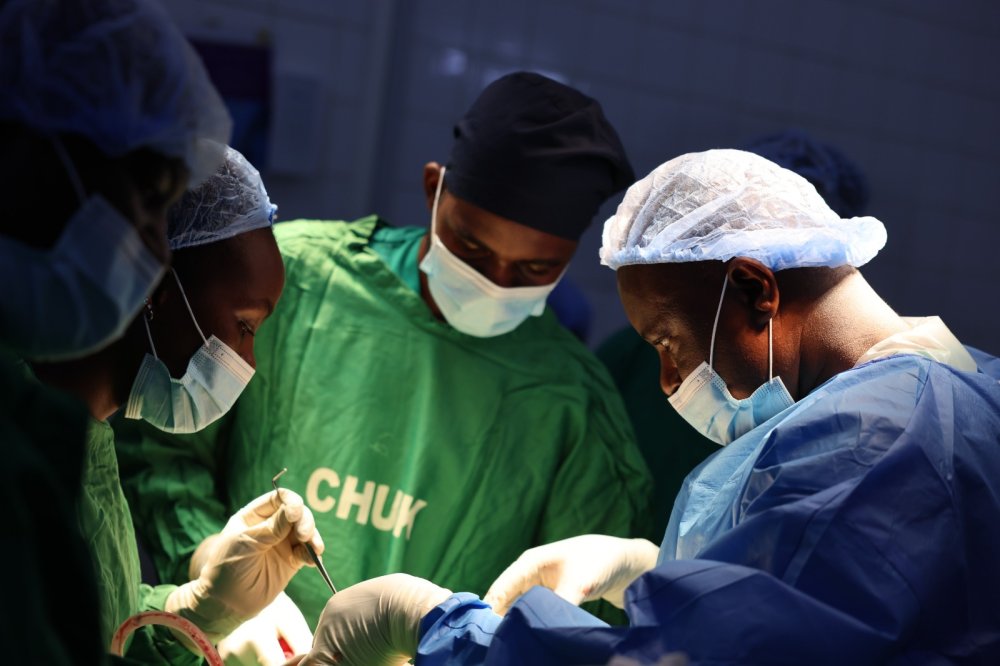
According to the Ministry of Health, heart disease was previously the second-leading reason Rwandan patients were sent overseas for treatment. However, investments in specialist training and healthcare infrastructure have enabled the country to provide advanced cardiac care domestically.
State Minister for Health Dr. Yvan Butera said Rwanda has made substantial progress in cardiac treatment compared with its position four years ago.
“Four years ago, heart disease was the second-largest reason for referring patients abroad,” Butera told Rwanda Broadcasting Agency (RBA). “Since launching this program, we have treated 1,100 patients here in Rwanda.”
The achievement is part of broader efforts to strengthen Rwanda’s healthcare system and position the country as a regional medical hub. Authorities have invested in medical infrastructure and specialist training to improve access to high-quality healthcare services.
As part of these efforts, Rwanda has sent doctors to Israel for specialised training in cardiac surgery. The Ministry of Health said some physicians are still undergoing training and are expected to contribute to cardiac care services in Rwanda and the wider region upon their return.
Butera said the program has enabled the treatment of both children and adults with complex heart conditions that previously required referral abroad.
“We are not only treating patients but also training Rwandan professionals to ensure these services are sustainable in the long term,” he said.
Cardiac care requires multidisciplinary teams that include diagnostic specialists, surgeons, anesthesiologists, intensive care physicians, and other healthcare professionals. While such services demand significant resources, Butera said Rwanda has steadily built the capacity needed to deliver them.
The growing expertise has also begun attracting patients from neighbouring countries and beyond.
“We are increasingly seeing people from across the region and even farther afield coming to Rwanda for treatment, which is a positive development,” he said.
The progress comes amid broader government efforts to expand access to healthcare nationwide. Rwanda currently has more than 520 health centers, 57 hospitals, and 1,280 health posts distributed across the country.
The government has also launched the 4×4 program, an initiative aimed at quadrupling the number of doctors in Rwanda by 2028. The program seeks to achieve a ratio of four doctors for every 1,000 residents and is expected to attract investments exceeding $395 million.
Loading comments...
Leave a comment