



The Rwanda Climate and Health Vulnerability and Adaptation Assessment 2025, published by the Ministry of Health on October 23, 2026, maps areas where climate hazards could intensify existing health challenges and examines how prepared the country’s health system is to respond.
The assessment identifies significant differences in climate-health risks across Rwanda’s districts. In the western highlands, Rusizi, Nyamasheke, Rubavu and Ngororero emerge as high-risk hotspots, with Ngororero recording the highest overall risk in the country. Gakenke is also identified among the high-risk districts. By contrast, Kicukiro, in Kigali City, and Rwamagana, in the Eastern Province, record the lowest overall climate-health risk.
The assessment identifies a medium-risk belt across parts of the north, including Musanze and Burera, while risk is generally lower across much of the east and Kigali. It also identifies a low-impact corridor across the south and southeast, including Nyamagabe, Nyaruguru, Huye and Gisagara, with smaller low-impact pockets in Kicukiro, Rwamagana and Nyabihu.
In Kigali, urban areas such as Gasabo are also identified as vulnerable to heat and flooding, highlighting the growing importance of climate-resilient urban health planning.
The report warns that these hazards are not only environmental concerns. They can disrupt access to healthcare, damage health infrastructure, affect water and sanitation services and increase the burden of diseases that are sensitive to climate conditions.
Climate risks and disease burden
The assessment examines 17 climate-sensitive diseases using district-level monthly health data covering January 2019 to December 2024.
Among the health concerns highlighted are malaria, schistosomiasis, diarrhoeal diseases, intestinal parasites, respiratory illnesses, asthma, chronic obstructive pulmonary disease, cardiovascular conditions and malnutrition.
The report identifies seasonal patterns in several of these diseases, with some increases coinciding with rainy periods and changing climate conditions.
Transmission of waterborne diseases is closely linked to rainfall and environmental conditions. Notably, the report reveals that schistosomiasis is sharply concentrated along the western lakeshore, with Nyamasheke, Rubavu, Rutsiro, and Rusizi forming an intense regional cluster around the Lake Kivu basin where water-contact sites and snail habitats drive local transmission.
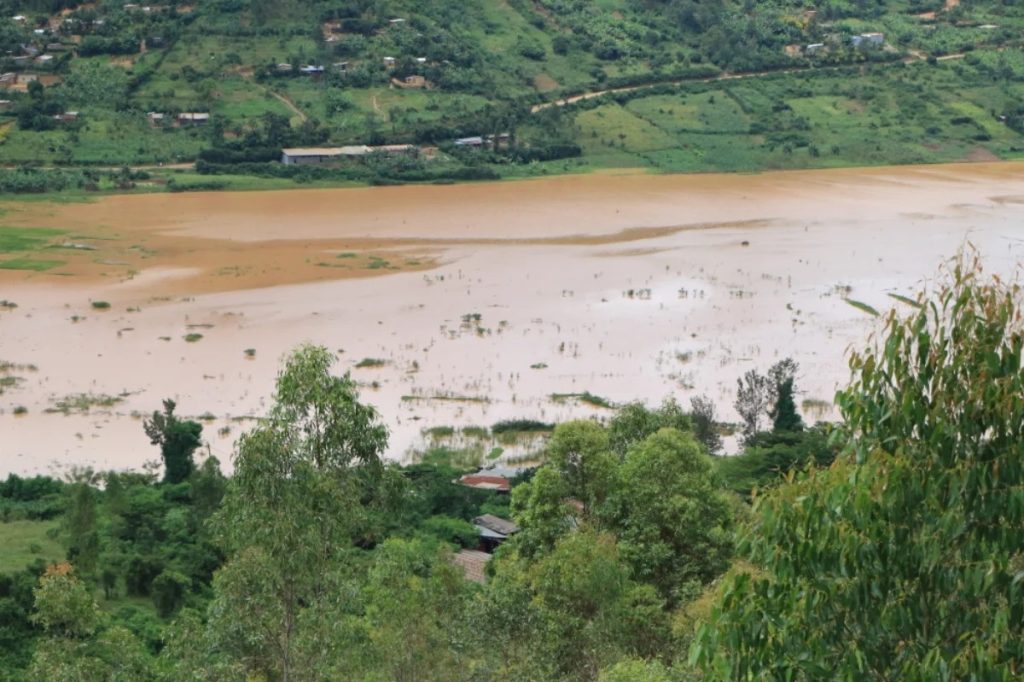
Malaria remains a particular concern in areas where environmental conditions can support mosquito breeding. Flooding and changes in rainfall can also affect water quality and sanitation, increasing the risk of diarrhoeal diseases and other water-related infections.
The assessment cautions that observed relationships between climate conditions and disease patterns should not automatically be interpreted as proof of direct causation. Other factors, including access to healthcare, population movement, sanitation and disease-control interventions, also influence health outcomes.
Vulnerable communities face greater exposure
The effects of climate change are not expected to be evenly distributed across the population.
The assessment identifies pregnant and postpartum women, children under five, adolescents, older people, persons with disabilities, displaced populations and low-income communities as groups that may face greater risks.
Disruption to healthcare services during extreme weather events can make it harder for pregnant women to access antenatal care, skilled delivery services and emergency obstetric care. Children are also vulnerable to the effects of unsafe water, poor sanitation, malnutrition and climate-sensitive infections.
The report records a decline in Rwanda’s maternal mortality ratio from 197 deaths per 100,000 live births in 2019 to 145 in 2024. However, it also identifies seasonal variation, with a reported peak of 213 in February.
It further notes that deliveries among girls under 20 increased from 5.7 per cent in 2021 to 6.6 per cent in 2024, with higher proportions recorded in some eastern districts.
Gender-based violence also features in the assessment. Reported cases show seasonal increases between August and October, although the report cautions that changes in reporting and access to services may influence the figures.
The assessment estimates that approximately 137,000 forcibly displaced people are among the populations whose vulnerability and access to essential services require consideration in climate adaptation planning.
Poverty is another underlying factor. The report cites approximately 3.6 million people, or 27.4 per cent of the population, living in poverty in 2024, potentially limiting their ability to prepare for and recover from climate-related shocks.
Health facilities face preparedness gaps
Beyond the risks facing communities, the assessment raises concerns about the ability of health facilities to withstand and respond to climate-related emergencies.
An assessment of 10 district hospitals across Rwanda’s five provinces examined infrastructure, water, sanitation, energy and workforce preparedness. The study also drew on qualitative input from 170 health-sector stakeholders.
The findings point to uneven readiness across key areas. Workforce readiness was assessed at 42 per cent, compared with 69 per cent for water, sanitation and hygiene, and 64 per cent for energy.
The report identifies important gaps in human-resource planning. Only 20 per cent of assessed facilities had contingency plans for mobilising staff, while 30 per cent had shift-relay systems. Just 10 per cent reported post-event recovery support for staff, and the same proportion involved health workers in climate adaptation planning.
Water and sanitation systems also require greater attention. Only 30 per cent of facilities had updated risk assessments for sanitation infrastructure, while monitoring of stormwater and sewer overflows remained limited.
Although all assessed facilities had emergency backup generators and maintenance arrangements, only 10 per cent assessed whether their renewable energy capacity was sufficient.
The report also finds that facilities are generally better prepared for floods and storms than for drought and extreme heat. It highlights the absence of facility-level climate-health early-warning systems as another important weakness.
In a separate survey of 93 respondents, heavy rainfall was the most frequently reported hazard affecting facilities, cited by 73 per cent. Flooding followed at 64 per cent, while strong winds and storms were reported by 36 per cent, lightning by 33 per cent and landslides by 30 per cent.
Drought and extreme heat were also reported, at 24 per cent and 21 per cent respectively.
Respondents associated these hazards with health problems including malaria, respiratory infections, diarrhoea and cholera, and malnutrition.
Rising temperatures expected
The assessment’s climate projections indicate that Rwanda will continue to experience rising temperatures over the coming decades, although the scale of warming will depend on future global emissions.
Compared with the 1985–2014 baseline, projected increases in mean annual temperature under the lower-emissions SSP1-2.6 scenario are approximately 0.93°C by 2030, 1.38°C by 2055 and 1.43°C by 2080.
Under the higher-emissions SSP5-8.5 scenario, the projected increase reaches approximately 1.01°C by 2030, 2.36°C by 2055 and 4.08°C by 2080.
The report notes greater uncertainty around future rainfall projections, making rainfall variability and the frequency of heavy precipitation important considerations for planning.
Rising temperatures could increase heat-related health risks, while changes in rainfall patterns may affect the distribution of disease vectors, water availability and the frequency of flooding.
Call for stronger climate-health planning
The assessment calls for climate considerations to be integrated more systematically into Rwanda’s health planning, disease surveillance and emergency preparedness.
Among its recommendations is the development of climate-health early-warning systems that connect meteorological information with health surveillance data. Such systems could help authorities anticipate periods of increased disease risk and prepare health services before emergencies occur.
The report also recommends strengthening preparedness for seasonal increases in malaria, schistosomiasis, diarrhoeal diseases and respiratory illnesses, alongside improving the capacity of health facilities to maintain essential services during extreme weather events.
It calls for climate-resilient infrastructure, improved water and sanitation systems, reliable energy supplies, better workforce planning and training for health professionals.
Integrating climate-related information into the Health Management Information System would also help authorities monitor emerging patterns and support evidence-based decisions.
The assessment further recommends targeted adaptation measures across five geographical zones, recognising that districts face different combinations of climate hazards and health vulnerabilities.
The assessment was led by the Ministry of Health with primary support from the Agence Française de Développement (AFD), the Clinton Health Access Initiative (CHAI), UNICEF, and UNFPA.
Loading comments...
Leave a comment