



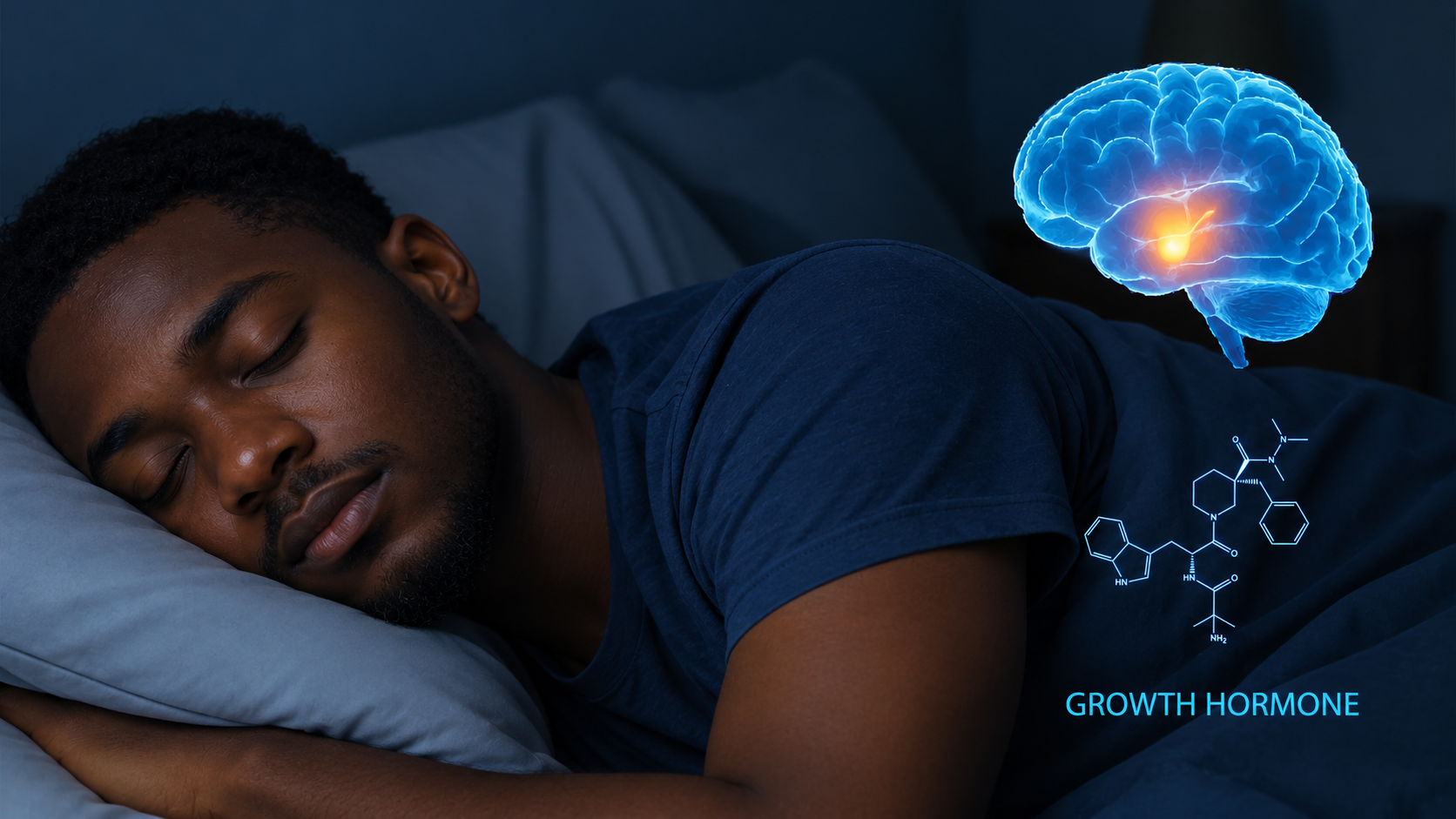
Researchers at the University of California, Berkeley, identified a network of brain cells that regulates growth hormone release during sleep and discovered that the hormone also sends signals back to the brain to influence wakefulness.
The findings are based on research by UC Berkeley scientists published in the journal Cell.
The study examined how the brain balances hormone production and sleep using experiments involving mice.
Growth hormone plays an important role in childhood development, helping the body grow, strengthen bones and build muscle.
In adults, it continues to support muscle maintenance, bone health and the way the body processes stored fat and regulates blood sugar.
Scientists have long understood that growth hormone release is closely linked to sleep. However, the precise brain mechanisms controlling this relationship have remained unclear.
“We're actually directly recording neural activity in mice to see what's going on,” said Xinlu Ding, the study's first author and a postdoctoral researcher at UC Berkeley.
The research team focused on the hypothalamus, a region deep within the brain that helps regulate hormones, hunger and the sleep-wake cycle.
Researchers examined nerve cells that produce growth hormone-releasing hormone, which stimulates growth hormone production, and somatostatin, which suppresses it.
Using electrodes to record brain activity and light to stimulate specific nerve cells, the scientists observed how these signals changed as mice moved between sleep stages.
They found that different patterns of activity during rapid eye movement (REM) sleep and non-REM sleep helped promote growth hormone release.
The study also revealed that growth hormone influences the locus coeruleus, a brain region involved in alertness, attention and cognitive function.
As growth hormone levels rise during sleep, the hormone stimulates this region, helping regulate the transition towards wakefulness.
This creates a two-way relationship in which sleep encourages hormone release, while the hormone helps regulate when the brain becomes alert.
Daniel Silverman, a UC Berkeley postdoctoral researcher and study co-author, said the findings suggest that sleep and growth hormone form a closely balanced system.
The discovery could eventually inform research into treatments for sleep disorders and conditions associated with disrupted metabolism, including diabetes, as well as neurological diseases such as Parkinson's and Alzheimer's.
However, the experiments were conducted in mice, meaning further research is needed to establish whether the same mechanisms operate in humans and whether they can safely be targeted by treatments.
Loading comments...
Leave a comment