



A study led by researchers from the Hebrew University of Jerusalem found that neurons in the human cortex can process information in remarkably sophisticated ways.
The findings suggest that individual brain cells function more like tiny biological computers than simple on and off switches.
For decades, scientists have focused largely on the number of neurons in the human brain and the vast networks connecting them when trying to understand human intelligence.
The new research suggests that the complexity of individual neurons may also play an important role in explaining abilities such as language, imagination, mathematics and invention.
The research was led by Professors Idan Segev and Mickey London, together with PhD students Ido Aizenbud and Daniela Yoeli at the Edmond and Lily Safra Center for Brain Sciences.
The team also collaborated with Professor Chris de Kock of the Free University in Amsterdam.
To measure the computing power of individual neurons, researchers developed a new approach combining computer modelling and artificial intelligence.
They examined how difficult it would be for an artificial neural network to reproduce the relationship between information entering a biological neuron and the response it produces.
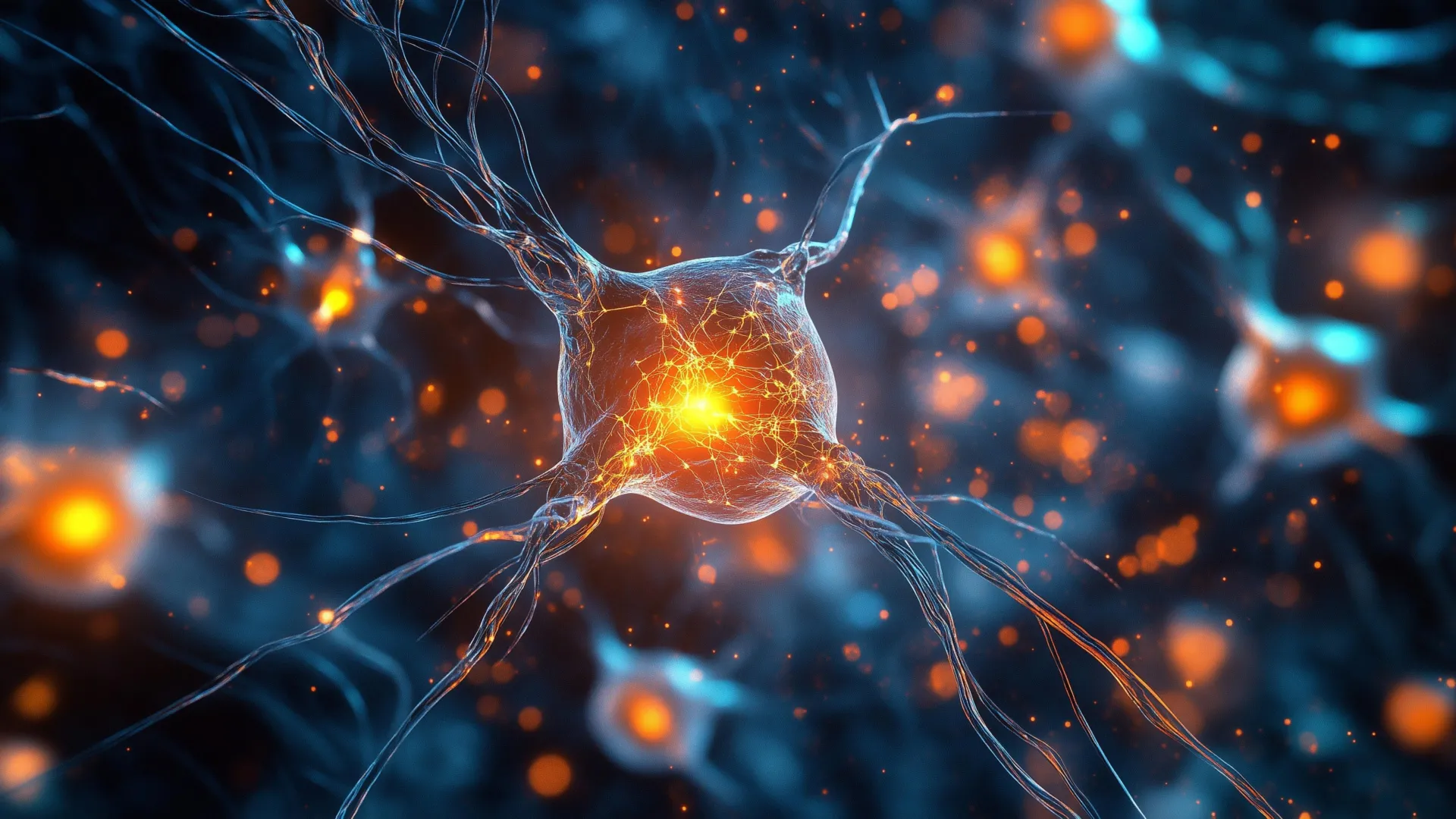
The researchers found that human cortical neurons have highly complex branching structures known as dendritic trees, along with distinctive electrical properties that allow them to perform sophisticated computations.
These abilities enable individual neurons to process complex information, including visual signals.
The findings challenge the traditional view of neurons as relatively simple components whose main role is to transmit signals through the brain.
Instead, the researchers suggest that a single human cortical neuron can operate as a powerful computing unit, with capabilities comparable to those of a deep neural network.
Professor Segev said the findings show that a single human neuron is an “extraordinarily sophisticated computing device,” highlighting how much processing power may exist within individual brain cells.
The discovery could also influence the development of artificial intelligence. Modern AI systems generally rely on simplified artificial units inspired by neurons.
The researchers suggest that future brain-inspired AI could instead use artificial units designed to reproduce some of the deeper computational abilities found in biological neurons.
The study, published in the Proceedings of the National Academy of Sciences, provides a new perspective on the biological foundations of human intelligence.
It also gives scientists a framework for studying how the physical structure of individual brain cells is connected to their ability to process information.
The researchers believe this approach could contribute to a better understanding of how the human brain produces thought, learning and other complex cognitive abilities.
Loading comments...
Leave a comment