






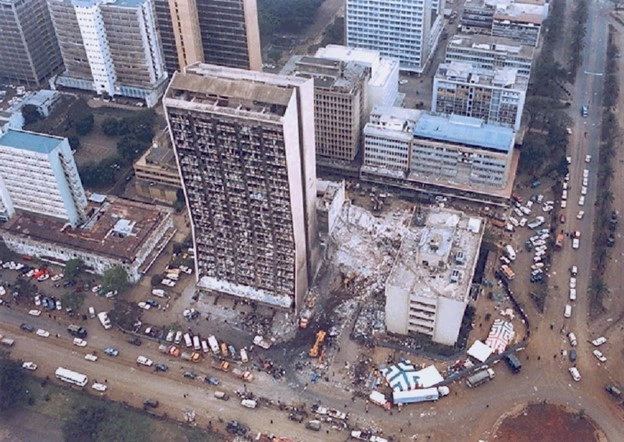
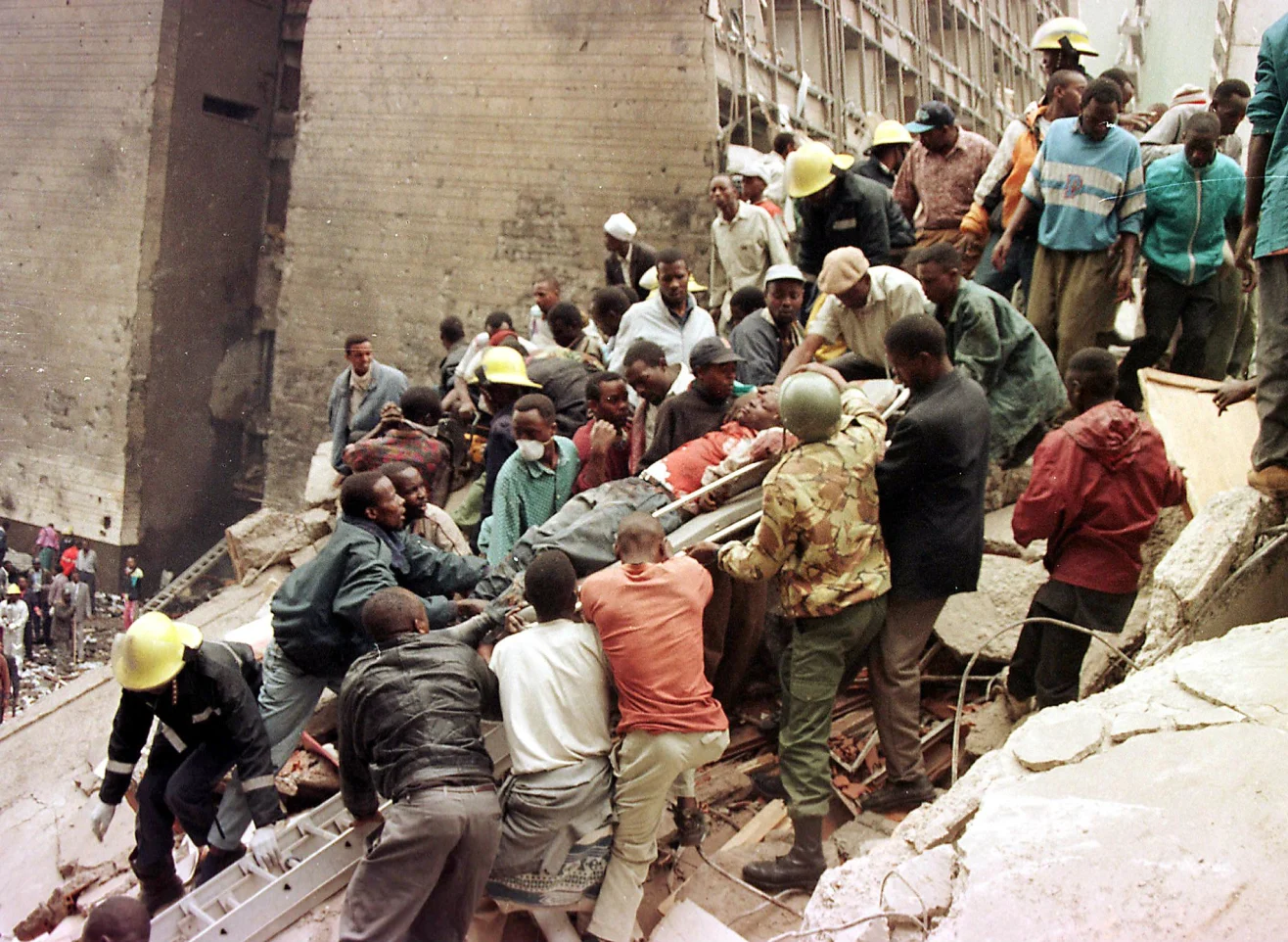
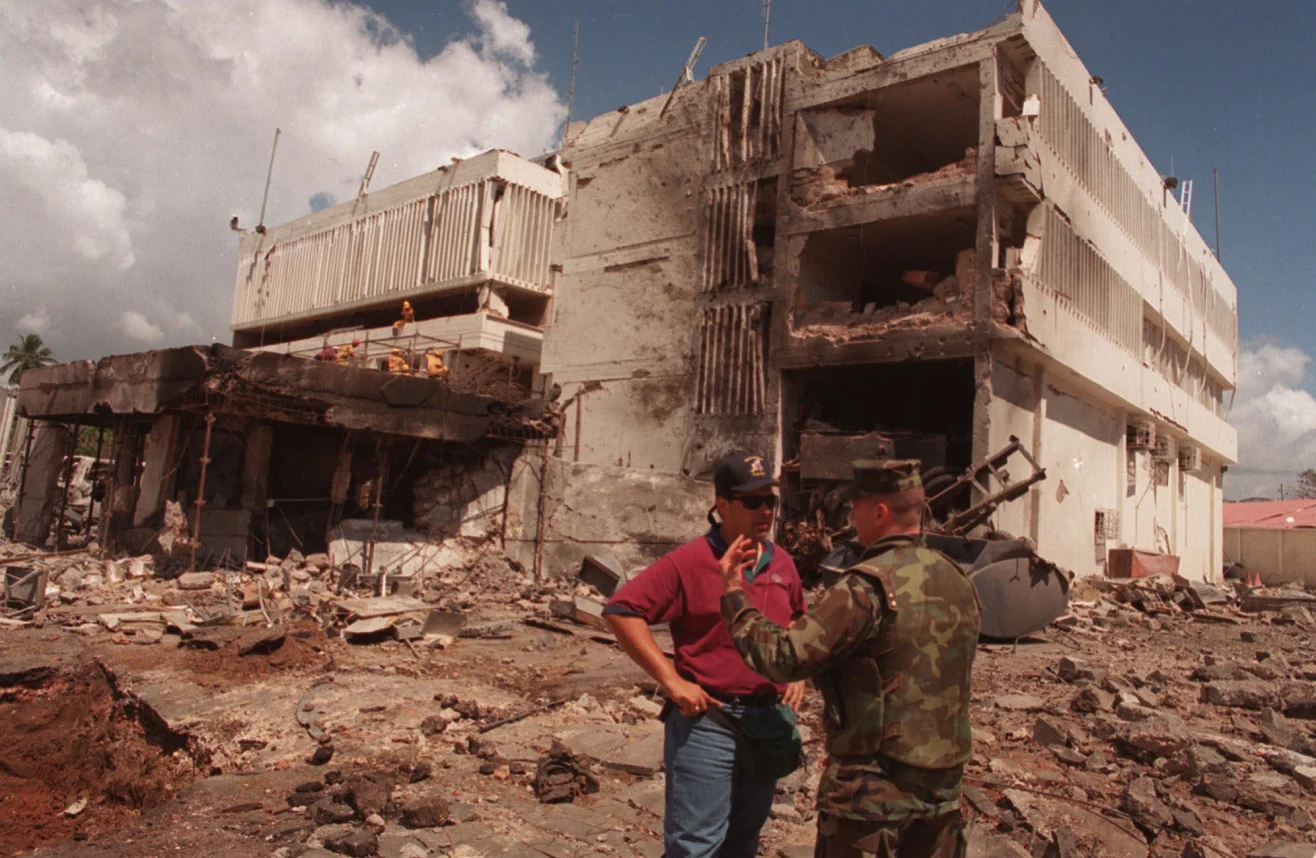
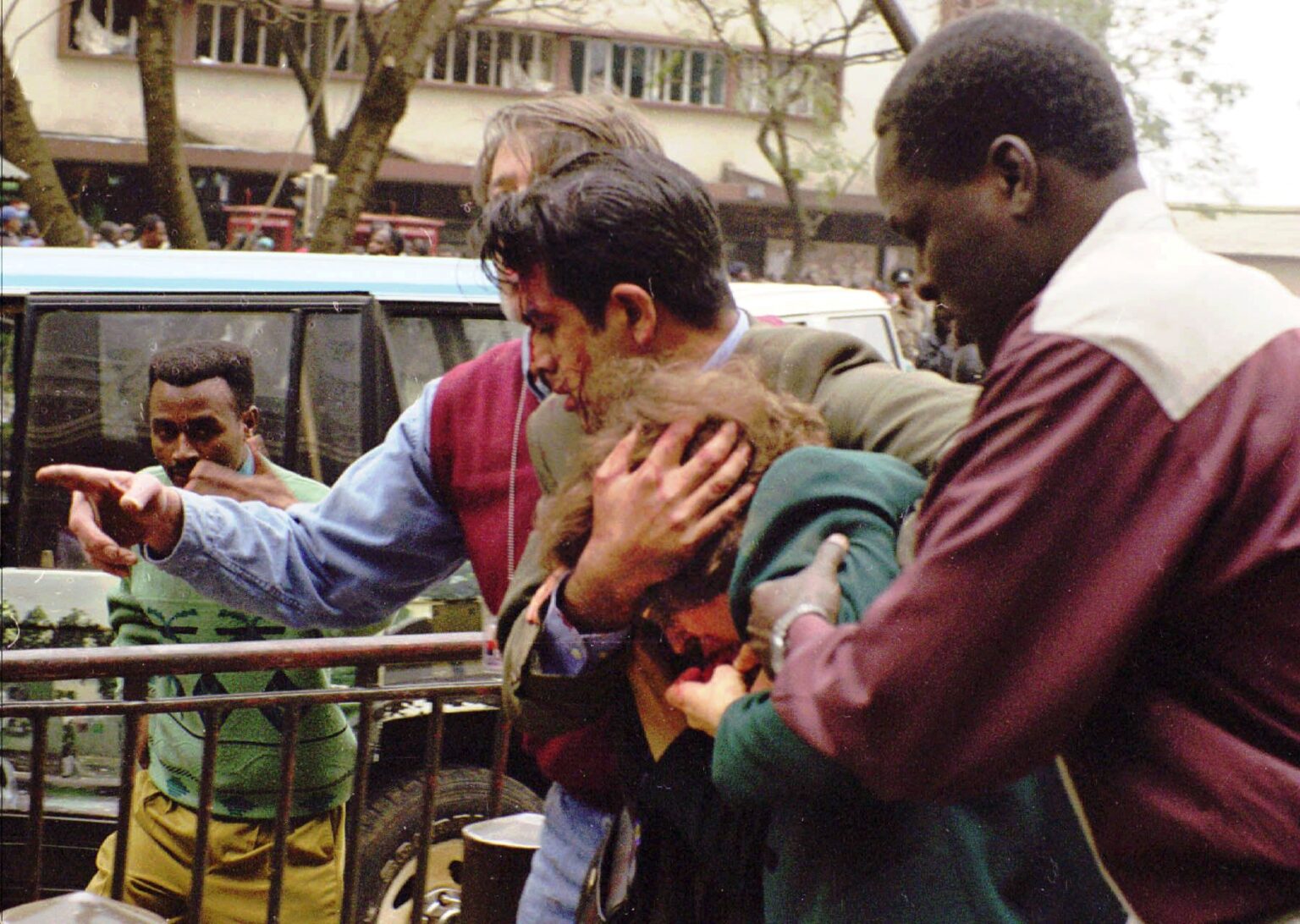
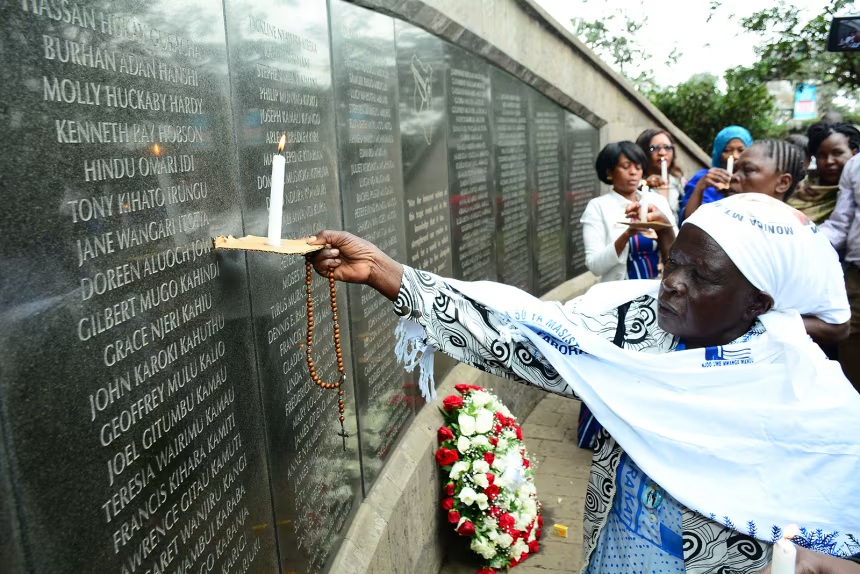
By the time the dust settled, 224 people were dead, including 12 Americans, and more than 4,500 were wounded. Nairobi accounted for the vast majority of the casualties: 213 killed and roughly 4,000 injured, most of them Kenyan office workers, students and bus commuters who had nothing to do with American diplomacy. Dar es Salaam recorded 11 dead and 85 injured.
What has aged worse than the rubble is how avoidable much of it was. Government investigators, and the ambassador who ran the Nairobi mission that day, later laid out in painstaking detail how a warning that reached Washington months earlier went unheeded, and how the embassy itself sat exposed on one of the city's busiest corners, with no buffer between the public street and the chancery walls.
Al-Qaeda's justification for the attacks was laid out months earlier. Osama bin Laden had grown increasingly hostile toward Washington over the US military presence in Saudi Arabia and Somalia, and sought to force American personnel out of the region.
In February 1998, he and Ayman al-Zawahiri's Egyptian Islamic Jihad announced a "World Islamic Front" and issued a fatwa calling on Muslims to kill Americans and their allies "wherever and whenever they find them". Prosecutors later called the East Africa bombings his first major attempt to carry that out. Bin Laden was indicted in the US that November.
A cable that went unanswered
Prudence Bushnell, then US ambassador to Kenya, had flagged the danger well before the bombing. In a cable to Washington on December 24, 1997, more than seven months before the attack, she laid out reports of terrorist and criminal threats against the mission and stressed that the embassy's lack of standoff distance from the road left it acutely exposed. She asked for backing to build a new, more secure chancery.
The response, in January 1998, was that the post's existing "medium" threat rating for political violence and terrorism was appropriate, and that the Bureau of Overseas Buildings Operations was not planning a new office building. Washington offered a security assessment team instead, and the exchange ultimately produced a reduction in embassy staff, with some personnel reassigned to Pretoria rather than the building itself being replaced or moved.
Bushnell has spent the years since turning that decision into a wider argument about institutional failure. In her 2018 memoir, Terrorism, Betrayal, and Resilience: My Story of the 1998 U.S. Embassy Bombings, she traces how intelligence agencies and policymakers had already been tracking Osama bin Laden's Nairobi cell since 1996, yet the threat assessments and bureaucratic priorities in Washington failed to translate that scrutiny into protection on the ground. She has also noted that no congressional hearings followed the bombings and that the national security establishment conducted no broad after-action review. At the time, Congress was in recess, and Washington's attention that week was consumed by the Clinton-Lewinsky scandal.
What the official inquiry found
The State Department's own investigation, an Accountability Review Board chaired by retired admiral William Crowe, reached a more measured but still damning conclusion in January 1999. It found that security systems at both embassies generally met, and in places exceeded, the standard requirements set for posts rated at medium or low threat, but that those standards had simply never been built to withstand a large vehicle bomb. It also found that both the intelligence community and State Department policymakers had leaned too heavily on narrow, tactical intelligence to gauge the threat level at individual posts, rather than weighing the broader strategic picture building around al-Qaeda.
Despite documenting these systemic gaps, the Board stopped short of finding any individual government employee derelict in their duty, a conclusion that let the officials who turned down Bushnell's request for a new chancery escape personal accountability, even as the report acknowledged the standoff problem directly contributed to the scale of the Nairobi casualties.
In Dar es Salaam, the picture was different. The Marine Security Guard detachment there had run bomb-response drills in the months before the attack and mobilised within minutes once the blast occurred, a response the review board credited for helping contain the chaos. The main operational failure flagged in Tanzania was logistical: Washington's Foreign Emergency Support Team was delayed 24 hours in departing after a late decision to add a second aircraft, though the delay did not end up affecting the immediate crisis response.
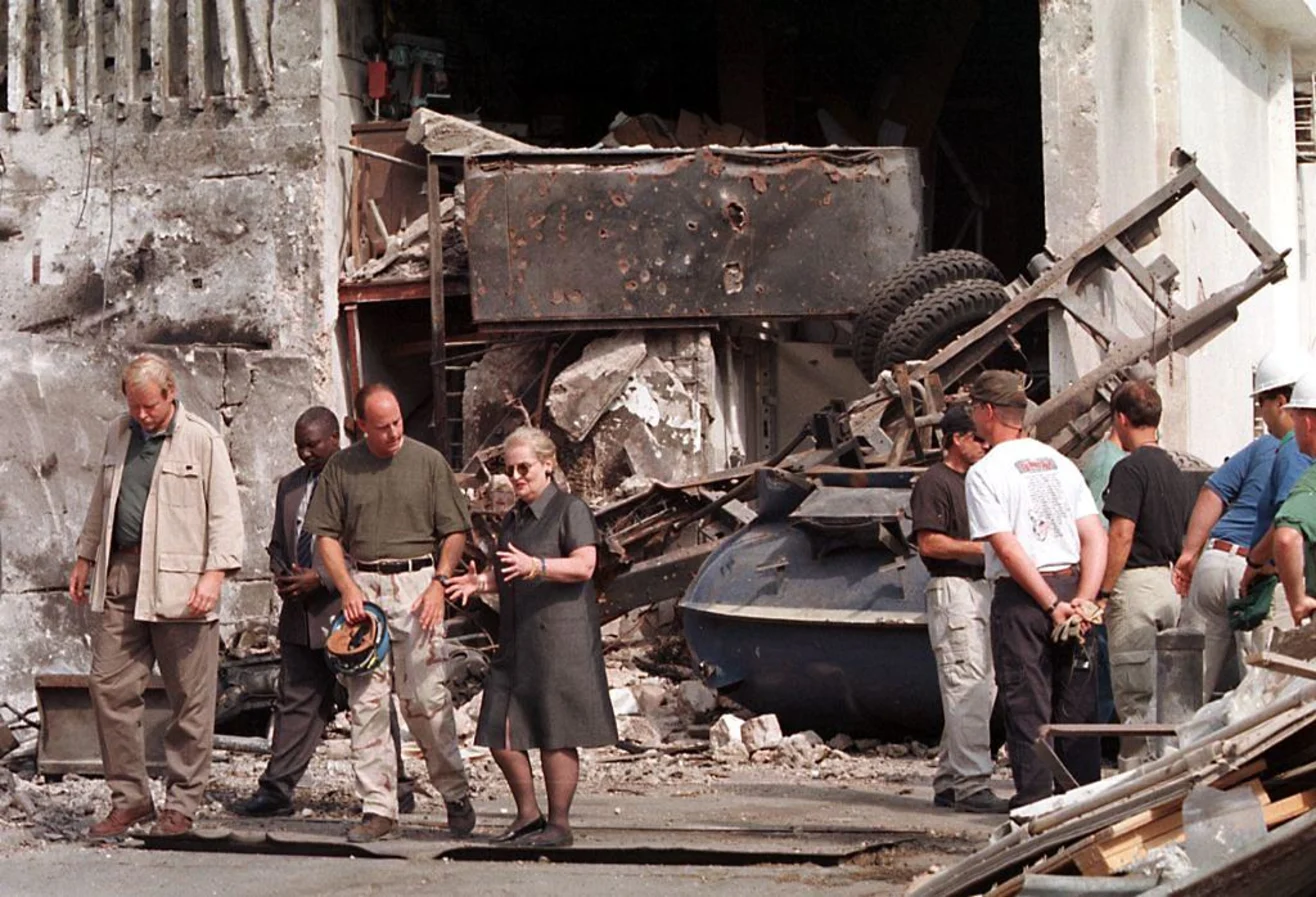
The aftermath that reshaped US diplomatic security
The bombings forced a rethink of how American missions abroad are built and guarded. Congress approved roughly $1.4 billion for new, more secure embassy construction, and the Diplomatic Security Service saw a 25 percent increase in staffing in the years that followed. Regional security officers were given new authority, reporting directly to ambassadors rather than through a longer chain of command. The families of victims also pushed for the creation of the State Department's Office of Casualty Assistance in 1999, to support the relatives of Americans killed or injured overseas, an office whose recent closure Congressional leaders have criticised as a disservice to the legacy of the 1998 victims.
But as Bushnell has argued in the years since, much of that institutional memory faded fast. Three years later, the September 11 attacks eclipsed East Africa's bombings in the American public consciousness, turning what should have been a foundational case study in ignored warnings into what she has called “little more than a historical footnote” in Washington.
Compensation, and the gap that remains
American victims and their families pursued compensation for years through US courts, arguing that Sudan and Iran had provided material support to al-Qaeda before the bombings. Federal judges awarded them billions of dollars in default judgments from 2014 onward, upheld on appeal in 2017, though sovereign immunity protections made actually collecting on those judgments difficult. That changed in 2020, when Sudan's transitional government, seeking removal from Washington's list of state sponsors of terrorism, agreed to pay $335 million to settle claims from the 1998 bombings alongside other attacks, including the USS Cole bombing.
The initial deal drew criticism for paying naturalised US citizens far less than those who held citizenship at the time of the attack, one advocacy estimate put the gap at roughly 8 percent, prompting Congress to pass the Sudan Claims Resolution Act that December, adding $150 million to narrow the disparity. According to a US Government Accountability Office review, the State Department ultimately found 78 people eligible for compensation under the Act, with individual payments ranging from $170,000 to $10 million.
For Kenyan and Tanzanian victims, who made up the overwhelming majority of the dead and wounded, the picture remains far less resolved. Of the 224 people killed, only 12 were American; most of the rest were Kenyans and Tanzanians killed on their own streets or at desks in nearby buildings, with 44 locally hired embassy staff among the dead. US law generally allows lawsuits against state sponsors of terrorism only on behalf of US citizens, government employees or contractors, which excludes most ordinary Kenyan bystanders from the same legal route available to American victims and locally hired embassy staff.
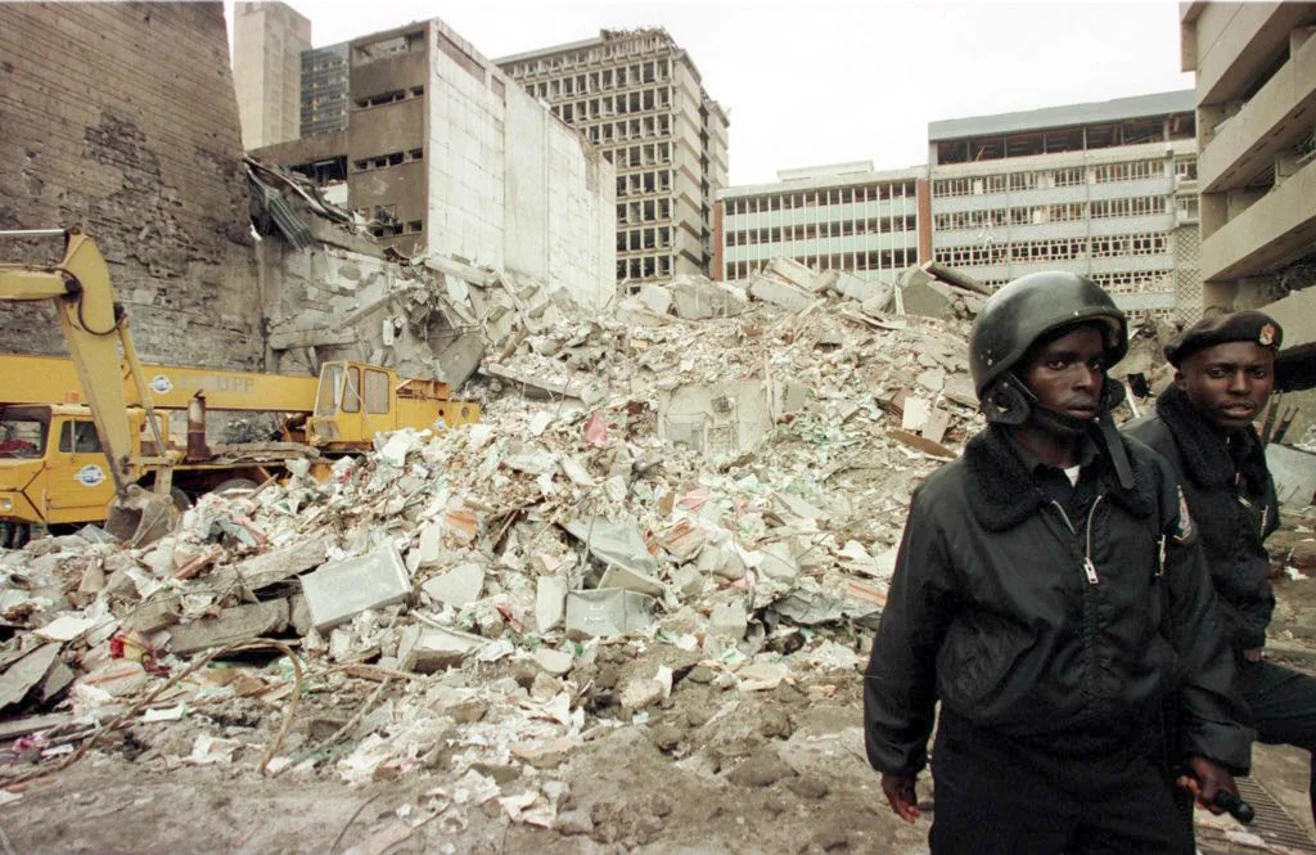
Survivors such as Douglas Sidialo, blinded in the Nairobi blast, have spent years appealing directly to Washington, including during President Barack Obama's 2015 visit to Kenya, for compensation on humanitarian grounds. US officials have said Washington spent tens of millions of dollars assisting victims and families in the years after the bombing, but campaigners describe that assistance as ad hoc rather than a structured scheme comparable to what American victims eventually secured.
Doreen Oport, an American employee of the Nairobi embassy who was badly burned in the blast, put the disparity in blunt terms when the 2020 settlement terms became public:
"It's unfair when they want to make us feel of a lesser value than Americans. It basically sets a value of human lives, both American and Kenyan… when basically, if it was not for Foreign Service Nationals doing the work, then these embassies or consulates would not stand. The work continues. Human lives should not have a value of who gets what and who doesn't get what. We are all the same."
Twenty-eight years on, that imbalance remains the East Africa bombings' most visible unfinished business, as the legal and compensation framework continues to treat American and Kenyan lives lost in the same attack differently.
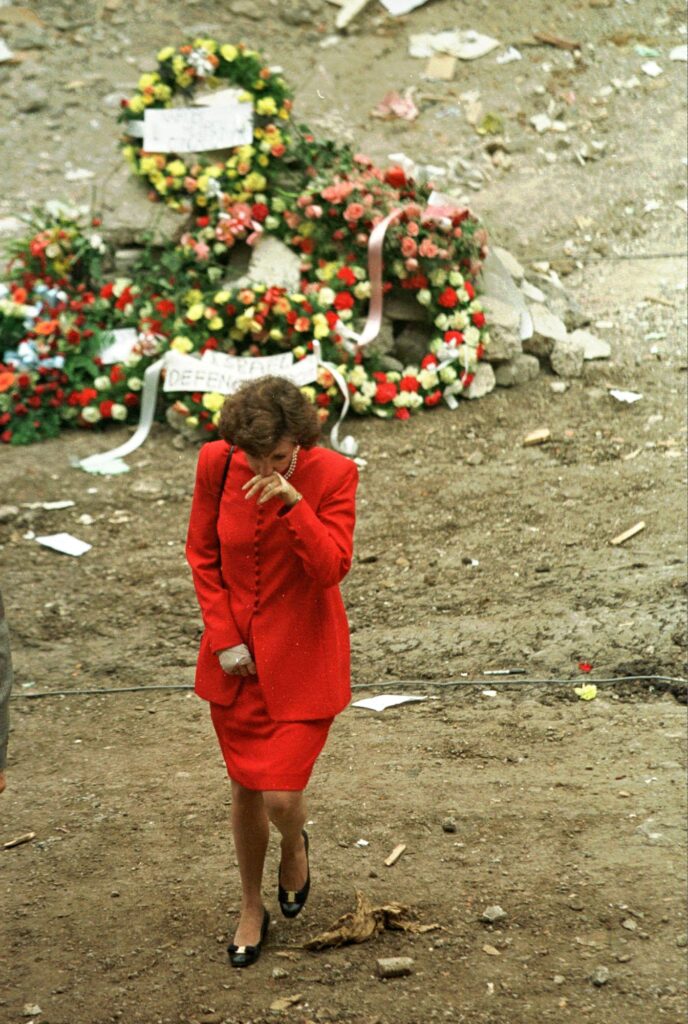
Marking the day in Nairobi
In Kenya, the memory has not faded the same way. The site of the old embassy on Haile Selassie Avenue is now the August 7th Memorial Park, opened in 2001, with a wall bearing the names of those who died. Survivors, victims' families and government officials gather there every year to lay wreaths and light candles. Kenya's National Counter Terrorism Centre typically marks the day with a renewed public pledge to prevent future attacks, and current and former US ambassadors have made a practice of attending the commemoration. Then-Secretary of State Antony Blinken laid a wreath at the memorial in 2021, and the US mission has continued the tradition at senior levels since.
For Bushnell, who returned to Kenya for the 20th and 25th anniversaries, the park itself has become part of the story she tells about recovery. Reflecting on the site in 2023, she called it “a green oasis on a busy street corner," and the visible result of a Kenyan and American community that rebuilt after the attack and helped each other heal. Twenty-eight years on, the physical wound has become a green space in the middle of the city. The bureaucratic failure that helped cause it remains a cautionary tale in how governments weigh warnings against the cost of acting on them.
Loading comments...
Leave a comment