



Ingabire and nine others are on trial at the High Court in Kigali in a case that began on September 18, 2026. The prosecution has presented audio recordings and other evidence which it says demonstrate plans to overthrow the Government.
Two recordings from May 2020 featured conversations between Ingabire and Ntamuhanga. One concerned alleged military training in Burundi, while another discussed a possible demonstration at a major roundabout in Kigali.
In the recording played on September 21, Ntamuhanga is heard discussing what he called “Tura Tugabane” insinuating ‘take over of something by force’.
Ingabire asks whether there was capacity to develop a plan to overthrow the Government. The prosecution interpreted some coded expressions used by Ntamuhanga, including references to “heavy scales” and calabashes, as referring to heavy weapons and grenades.
The prosecution also said Ntamuhanga’s reference to “men at the feet of Africa” referred to people based in South Africa, including Kayumba Nyamwasa.
Prosecutors further alleged that the two discussed training fighters in Mutaga, Burundi, and that Ingabire asked Ntamuhanga to contact a person identified as Placide to develop the matter further.
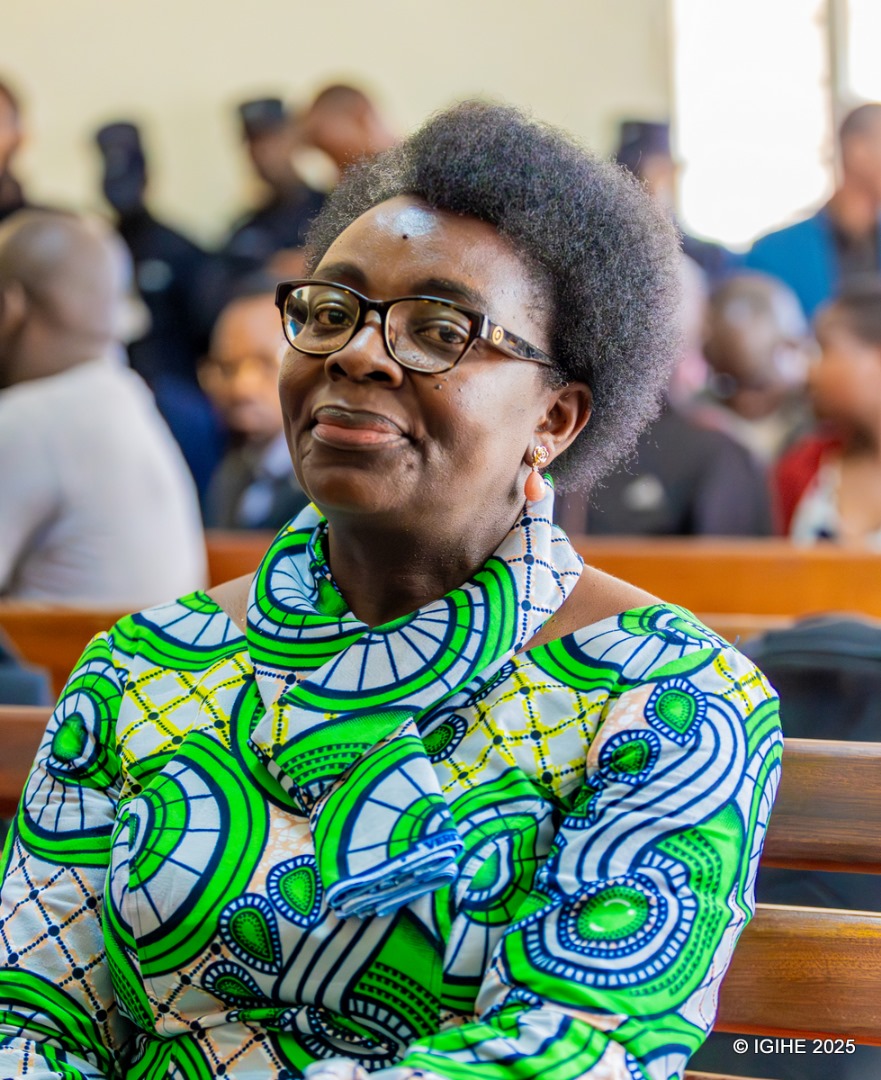
However, appearing before court on October 1, Ingabire challenged the recording and said the conversation did not constitute an agreement.
“Regarding that audio about Burundi and Mutaga, nowhere did I tell Cassien that I agreed with what he was telling me. Let them examine whether those coded expressions were mine or Cassien’s. I told Cassien that I was not available,” she said.
Ingabire said Ntamuhanga had called her and that they discussed the issues, but denied agreeing to his proposals. She said referring him to Placide, who lives in Belgium, was intended to distance herself from the alleged plan.
She also said she spoke to Ntamuhanga despite his having fled Rwanda because, as a politician, she needed to understand the positions and activities of different people.
“As a politician, you need to know all the information. Where do you stand? How do you stand? What are others thinking? What are they doing?” she said.
The presiding judge asked whether Ntamuhanga was a politician, and Ingabire said he belonged to a political party called RANP Abaryankuna.
Kigali demonstration
A second recording played on September 22 featured a discussion about a possible demonstration in Kigali.
Ntamuhanga said they had three experienced motorcycle taxi operators who could participate. Ingabire suggested recruiting others from Nyabugogo, Remera, Muhima and Nyamirambo, reaching 50 riders.
She is heard discussing a vehicle fitted with a loudspeaker that would reach a major roundabout, appear to break down and then play a song by the late singer Kizito Mihigo. She also described roads being blocked as people gathered around the vehicle.
Ntamuhanga responded that the plan would require caution and suggested using a sealed cargo vehicle with a generator.
Ingabire told court on October 1 that the discussion was actually about the possible impact of Covid-19 on governments and had been prompted by a report published in France.
She said the conversation involved discussing how weaknesses in government could be exposed during the pandemic, including issues surrounding food distribution.
Ingabire maintained that the conversation ended without an agreement to implement the ideas discussed.
“What happened was that we had a discussion based on that report. Nowhere did we conclude by saying, ‘We are going to do this,’ for the prosecution to use it to say that Ingabire and Cassien agreed to establish a criminal organisation,” she said.
She added that the prosecution could have relied on the conversations differently if Ntamuhanga had been a member of her political party, DALFA Umurinzi.

Loading comments...
Leave a comment