



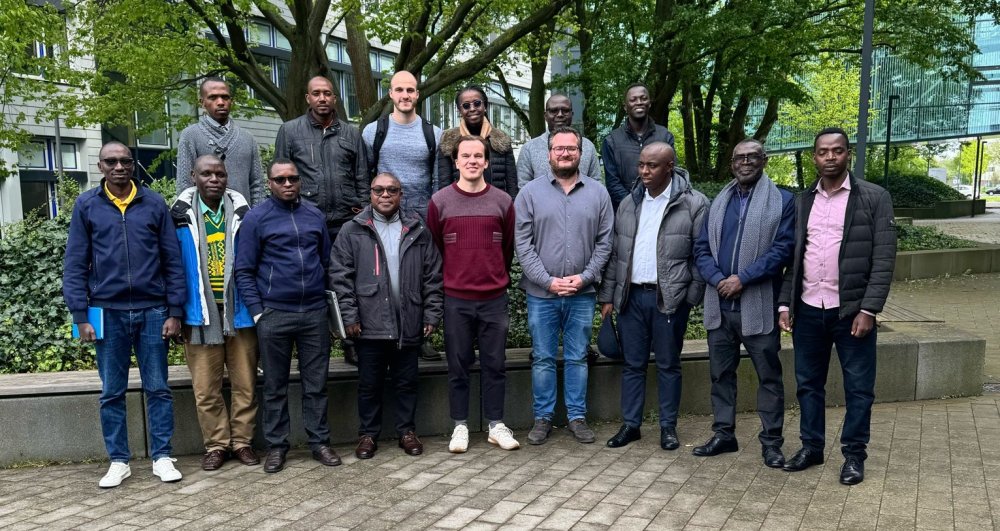
The beneficiaries are from the University of Rwanda, RP Tumba College, INES Ruhengeri and UTAB. They participated in the Growing Rwanda Energy Awareness Through Higher education (GREATER) project, a three-year initiative aimed at promoting the use of renewable energy through education.
The project brought together the four Rwandan institutions and four European higher learning institutions. It facilitated exchanges between lecturers and students, with a particular focus on enabling Rwandan academics and students to learn from European universities with advanced experience in renewable energy.
More than Rwf 1.3 billion was invested in the project, funding activities including renewable energy projects implemented by each participating university in local communities, curriculum development, and exchanges involving lecturers and students.
The initiative supports Rwanda’s target of having renewable energy account for 50% of the country’s electricity by 2050. As part of this broader effort, a study is expected to be completed by the end of 2026 to identify a suitable site for a solar power plant with a planned generation capacity of 200 megawatts.
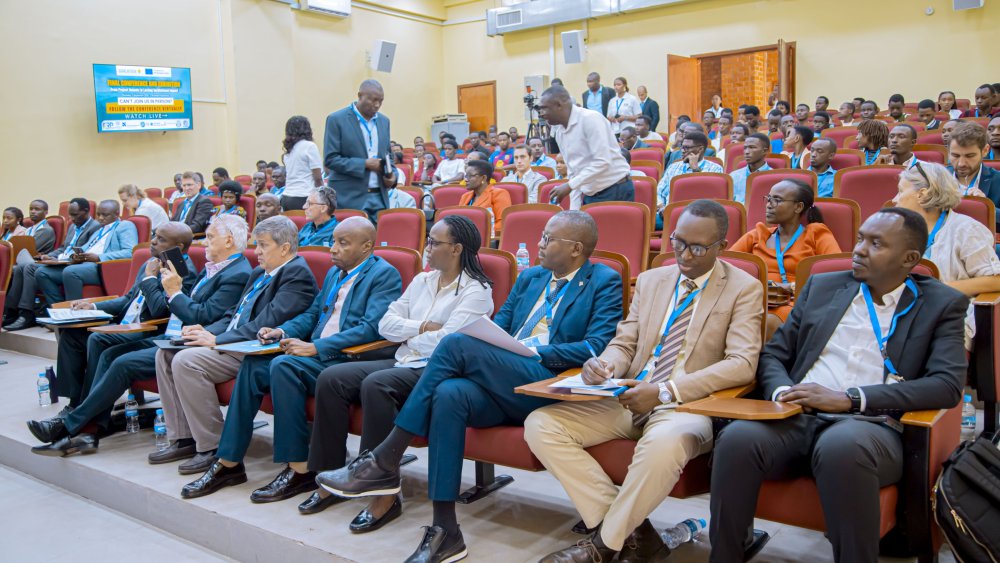
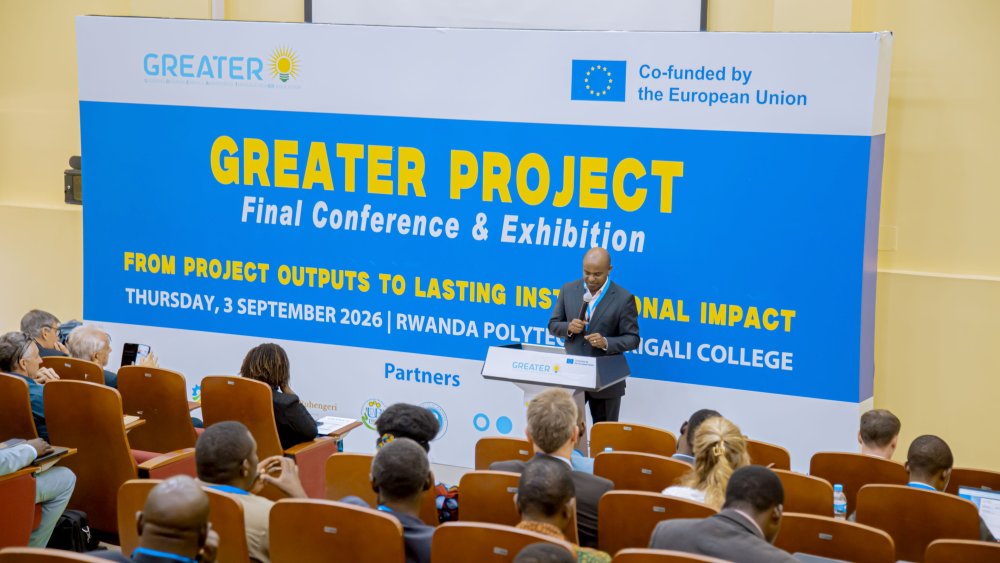
Speaking during the closing of the GREATER project in Kigali on September 3, 2026, Hategekimana Jean Bosco, a renewable energy lecturer at RP Tumba College, said the knowledge he gained at Hochschule Bonn-Rhein-Sieg in Germany had significantly strengthened his practical skills.
“Together with lecturers from Germany, we learned how to build solar panels from scratch. I can now make one from nothing, complete it and have it generate the electricity I need. We also learned another technology that allows us to monitor how much energy a solar panel is generating in real time without having to physically go to where it is installed,” he said.
Hategekimana said the skills would not only enable him to train students but could also contribute to Rwanda’s efforts to reduce energy costs.
He noted that the institution where he teaches spends about Rwf 4 million a month on electricity, while a renewable energy system could potentially reduce the monthly cost to below Rwf 1 million, depending on the system and its performance.
As part of the project, RP Tumba College also developed an initiative to install solar power systems for residents of Muyanza Model Village in Rulindo District who had struggled to access electricity due to limited financial resources.
The institution plans to extend similar initiatives to other communities to promote the use of renewable energy, which can offer a more affordable alternative to conventional electricity sources.
Eng. Gatabazi Pascal, Chief Technical Adviser at the Ministry of Education, said the government is increasingly focused on the quality of graduates rather than simply increasing the number of people completing university and higher education programmes.
“In the past, we focused on the number of university graduates and wanted that number to increase, but now we need to move from numbers to competence. We want a student who graduates from university to have the skills to work and contribute to the country’s development. This means focusing on programmes that respond to labour market needs, trained lecturers and the necessary equipment,” he said.
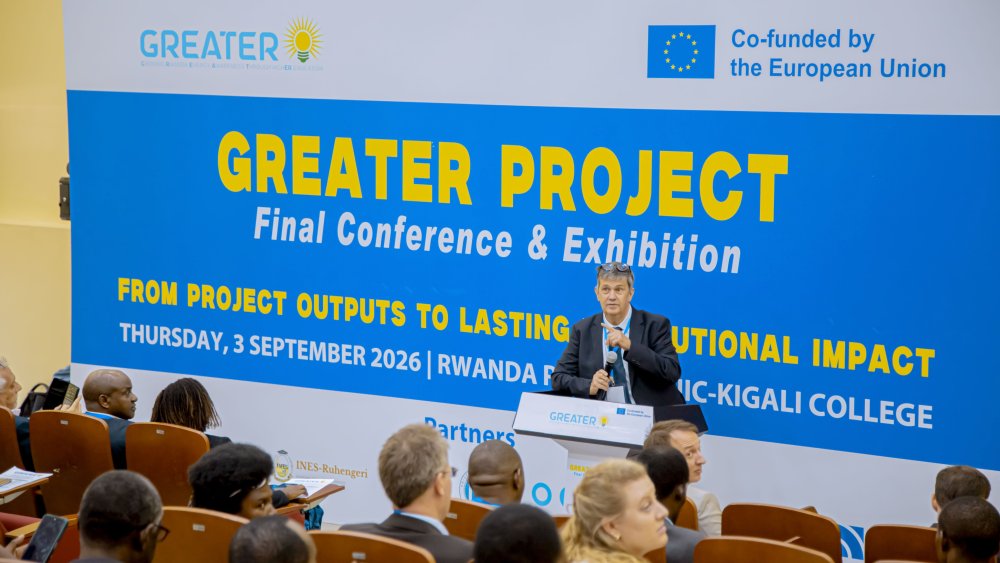
the European Coordinator of Growing Rwanda Energy Awareness Through Higher education (GREATER) project
The European Coordinator of GREATER project Prof. Paolo Ciampolini, a lecturer at the University of Parma in Italy, said Rwanda already has a foundation for teaching renewable energy, but the project sought to strengthen the practical component.
He said this would enable students and lecturers to develop and manufacture renewable energy equipment locally, reducing reliance on imports which is more expensive and can become a barrier to its wider adoption.
Loading comments...
Leave a comment