



The inquiry, conducted by IRMCT Judge Alphons Orie and submitted to the Mechanism’s President, found that Kabuga received at least the same standard of healthcare available in the Netherlands, with his medical condition closely monitored and managed by medical and nursing staff throughout his detention.
Kabuga, who was indicted by the International Criminal Tribunal for Rwanda (ICTR) in 1997, was arrested in France on May 16, 2020, after more than two decades as a fugitive. He was among the individuals accused of bearing significant responsibility for the Genocide against the Tutsi and faced charges including genocide, direct and public incitement to commit genocide, conspiracy to commit genocide, and crimes against humanity.
Following his arrest, Kabuga was transferred on October 26, 2020, to the Hague branch of the IRMCT, where he remained detained while facing trial proceedings.
The inquiry report states that Kabuga’s health was closely monitored from the time of his transfer. Medical assessments identified several health conditions, including vision and hearing impairment, hypertension, type 2 diabetes, osteoporosis, and other age-related ailments. He received treatment, regular medical assessments, and support from medical specialists.
In March 2023, independent medical experts concluded that Kabuga met the clinical criteria for dementia. The report noted that his mental and physical condition gradually deteriorated, requiring increased medical attention and assistance with daily activities.
As his condition worsened, staff adjusted his care arrangements. Medical reports indicated that employees were instructed to approach him quietly and without haste, while measures were introduced to support his mobility, hygiene, communication, and general wellbeing.
Kabuga’s proceedings before the IRMCT began in September 2022. In June 2023, the Trial Chamber found that he was unfit to meaningfully participate in his trial and unlikely to regain the ability to do so. The proceedings were later stayed indefinitely in September 2023.
The inquiry states that Kabuga continued receiving medical care, including regular monitoring of his diabetes, blood pressure, kidney function, cardiovascular condition, and mental health. He was also treated by external medical specialists and was transferred to civilian hospitals on several occasions when serious medical issues arose.
In July 2024, Kabuga was transferred to a specialised section of the Judicial Centre for Somatic Care (JCvSZ), a prison hospital unit designed for elderly detainees with significant medical and nursing needs. There, he received nursing support with daily activities, including assistance with hygiene and food and fluid intake.
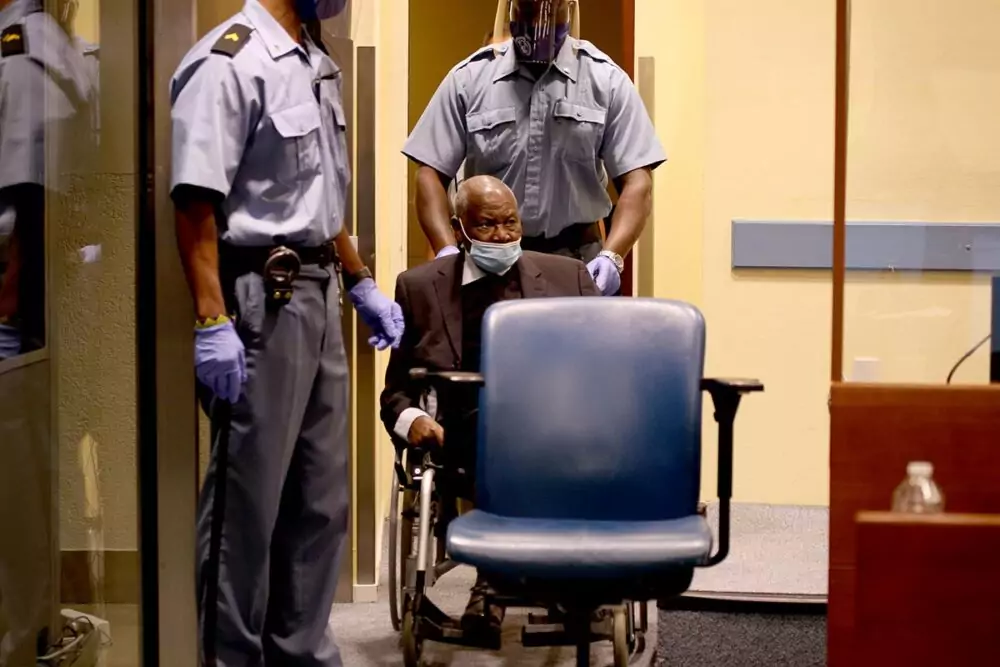
By 2025, Kabuga’s mobility had significantly declined. After several falls and a reduction in his ability to stand and walk with assistance, he was transported in a wheelchair. He was provided with a reclining wheelchair, while a large soft mat was placed beside his bed to reduce the risk of injury from falls.
The inquiry also noted that his cell contained equipment to support his care, including devices to assist with movement between his bed and wheelchair, visual aids to facilitate communication, and a private bathroom with a shower and toilet.
In September 2025, a 24-hour alarm system was activated in his cell after several falls, allowing staff to respond quickly if he required assistance. His hygiene, skincare, medication, and other medical needs continued to be monitored.
Judge Orie’s assessment concluded that the medical and nursing care provided to Kabuga was adequate and that staff at the UN Detention Unit and JCvSZ acted professionally while managing the needs of an elderly detainee with multiple health conditions.
The inquiry also noted that Kabuga’s daughter and his defence lawyer, Emmanuel Altit, did not raise concerns about the medical treatment and care he received while in the Mechanism’s custody. His lawyer stated that Kabuga’s physical and mental health had been managed in a professional and effective manner.
Kabuga died on May 16, 2026, at the JCvSZ while in the custody of the UN Detention Unit. A forensic physician concluded that he died of natural causes, likely cardiac or intracranial, with no indication of unnatural causes.
Twelve days after his death, his remains were transferred from the Netherlands at the instruction of his family, and buried in Waterloo, Belgium.
Loading comments...
Leave a comment