




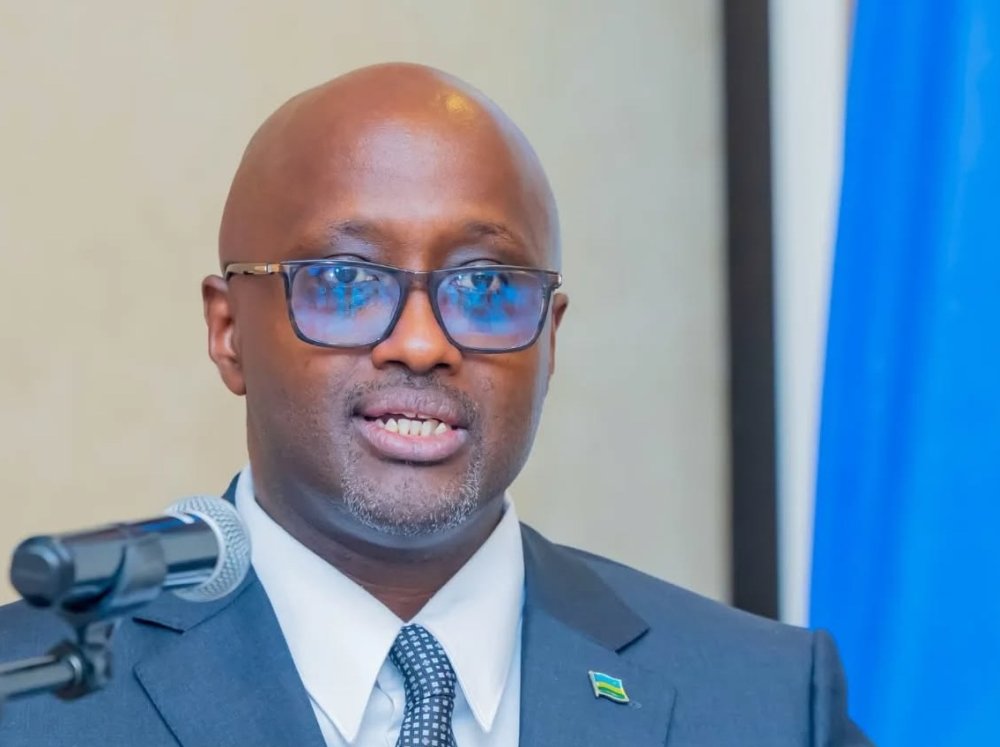
Speaking on The New Times’ Context programme, Nduhungirehe said the agreement does not need to be renegotiated or supplemented with new arrangements, but requires political will from the parties and the mediator to implement its provisions.
“The agreement itself is comprehensive enough. What we need to do is to implement it. We don’t need to renegotiate it because we agree with its content,” he said.
The minister said the Washington Accords built on the Concept of Operations (CONOPS) agreed between Rwanda and the DRC for the neutralisation of the FDLR and the lifting of Rwanda’s defensive measures.
“The Washington Agreement was actually taking the concept of operations that we had agreed on already in Rwanda for the neutralization of the FDLR, genocidal force, and the lifting of Rwanda’s defensive measures,” Amb. Nduhungirehe said.
He rejected a recent protocol announced between the DRC government and the FDLR under which the armed group said it was prepared to disarm and undergo demobilisation and reintegration.
Amb. Nduhungirehe said the FDLR is not a party to the Washington agreement but rather one of the issues the agreement requires to be addressed.
“The FDLR should be neutralized as per the Washington Accords. They are the subject of the Washington Accords. They are not a party to sign protocols,” he said.
He also accused the FDLR of working with the Congolese army and dismissed the recent exchange of communications between the group and the DRC government as a delaying tactic.
“We’ve seen communication between the FDLR writing to the DRC government and the DRC government responding to the letter by the FDLR leaders. It’s just comedy,” he said.
“What we believe is that this is delaying tactics that cannot fool anyone. And it’s not the first time.”
Amb. Nduhungirehe cited previous instances in which the DRC announced plans to neutralise the FDLR but, according to him, failed to follow through.
He recalled that in March 2024, then-DRC Foreign Minister Christophe Lutundula announced that Kinshasa would present a plan to neutralise the FDLR. Four days later, Amb. Nduhungirehe said Lutundula questioned whether authorities knew where the FDLR fighters were.
The minister also referred to March 2026, when DRC military authorities announced plans to begin operations against the FDLR.
“Then two days later, on 31st of March, they sent helicopters to Walikale full of rifles, close to 700 rifles, to the bases of the FDLR. Ammunition, money, mortars, and other weapons to the same FDLR,” he alleged.
Amb. Nduhungirehe said the lack of progress under the Washington agreement is primarily a question of political will.
“The process itself and the agreement are fine. And they are actually excellent when we read the document. But the problem we have is the political will to implement that agreement,” he said.
He said Rwanda had also raised concerns about the role of the United States as mediator, accusing it of becoming increasingly biased in the process.
Amb. Nduhungirehe maintained that Rwanda does not need another agreement to resolve the FDLR issue, but rather tangible implementation of the commitments already made.
Loading comments...
Leave a comment