



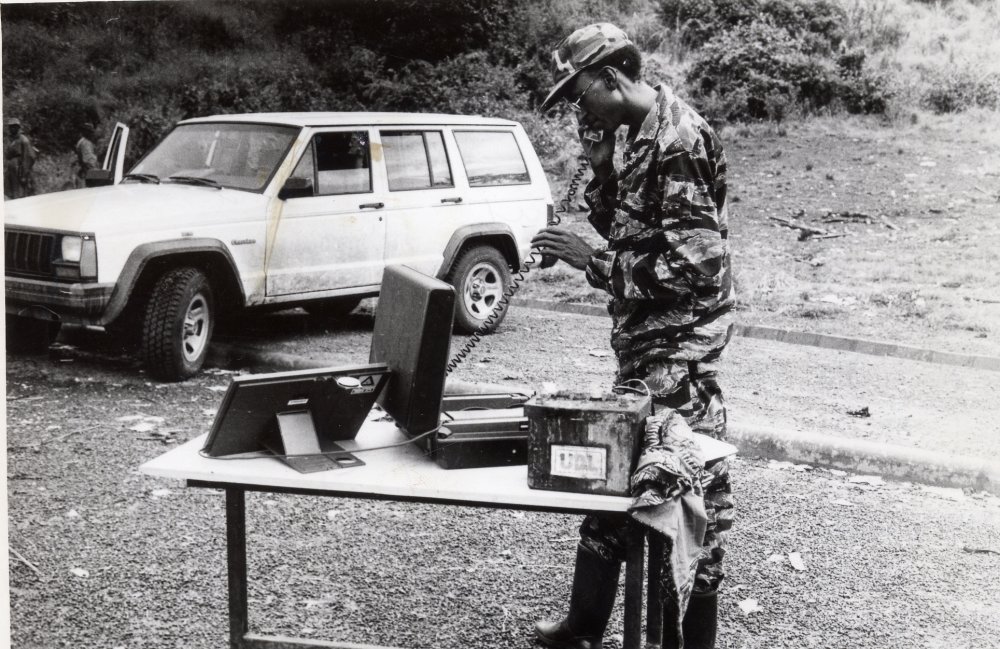
At the time, RPA forces had been fighting Ex-FAR for nearly four years. From the battalion of about 600 soldiers stationed at the CND building in Kigali, they received an urgent order from their commander, Major General Paul Kagame, to move quickly and rescue the Tutsi who were being massacred.
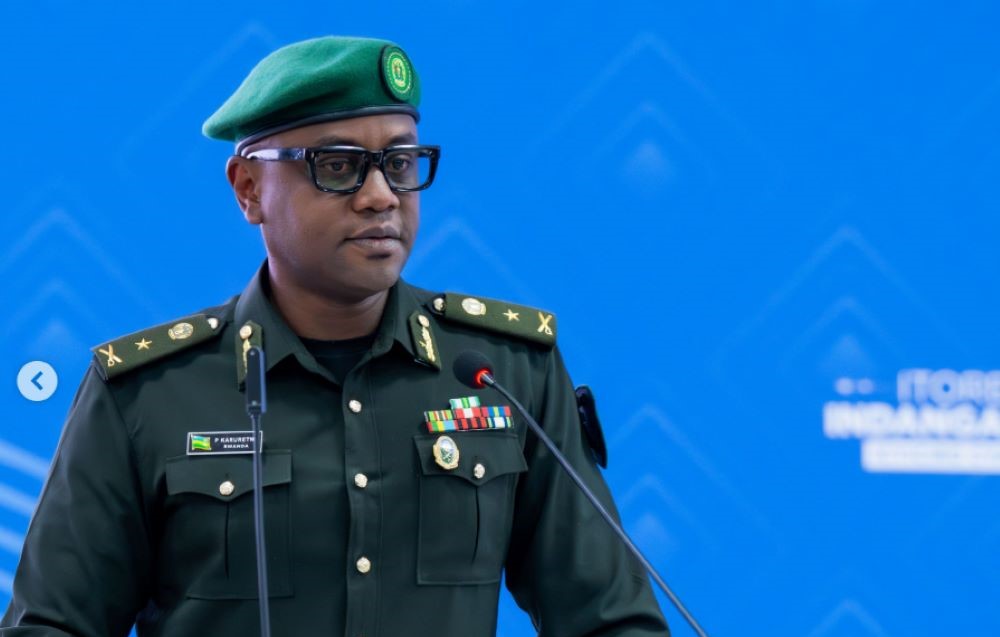
Speaking to Rwanda Broadcasting Agency (RBA) on July 5, 2026, the spokesperson of the Rwanda Defence Force (RDF), Brigadier General Patrick Karuretwa, recalled that in 1994 he was a very young soldier, not yet 20 years old, but old enough to understand the gravity of what was happening around him.
Brig Gen Karuretwa explained that as the RPA advanced toward Kigali, he began witnessing clear evidence of the genocide while passing through Nyacyonga. Bodies of victims murdered in horrific ways were scattered across the area. Some soldiers recognized members of their own families among the dead.
“I remember when we reached Nyacyonga on our way to Kigali. That was when the signs of the genocide became real to me. We saw bodies and the terrible ways in which people had been killed. The reports we had heard on the BBC and other radio stations were now unfolding before our eyes,” he said.
“Among us were soldiers who had originally come from Rwanda. As we advanced, some of them found the bodies of their close relatives—siblings, parents, even fiancées. We witnessed all of this firsthand.”
Brig Gen Karuretwa admitted that, as a young soldier, his immediate reaction was anger. Like many of his comrades, he felt that those responsible for the killings deserved to be killed in return. The RPA had the means to do so, as its soldiers were highly trained and heavily armed.
“To tell you the truth, as a young soldier who was not even 20 years old, I felt enormous anger. Most of us believed that those committing these atrocities should simply be killed. We had weapons, we were trained to fight, and we were soldiers,” he recalled.
He remembered questioning the logic of restraint at the time.
“I asked one of my colleagues, ‘We were trained to use weapons and fight the enemy. If the people who committed these crimes are not the enemy, then who is?’”
Yet, he said, the trust they had in their commanders, particularly in Paul Kagame, made the difference.
“The phrase ‘Afande yavuze’—‘The Commander has spoken’—was an order. We trusted our leaders completely.”
According to Brig Gen Karuretwa, one of the greatest achievements of the RPA leadership during the war to stop the genocide was preventing its soldiers from taking revenge despite the horrors they witnessed and the personal losses many suffered.
“The anger was real. I can honestly tell you that I carried that anger with me into Kigali. But ‘The Commander has spoken.' That meant there was another way this problem would be solved. My job as Patrick Karuretwa, a young soldier at the time, was simply to continue carrying out my duties,” he said.
“We could easily have begun retaliating immediately. It is remarkable that a leadership could formulate such a vision, issue clear instructions, and have everyone follow them. That was extraordinary.”
After the liberation struggle ended on July 4, 1994, Rwanda faced a new challenge: building a national army. This required integrating former Ex-FAR soldiers who had remained in the country into the RPA, which later became the RDF.
Karuretwa acknowledged that, as a young soldier at the time, he struggled to understand why former enemies were being incorporated into the force.
“If you had asked Patrick Karuretwa as a private or corporal during those years whether he understood the decision to integrate Ex-FAR into the RDF, I would have been confused. These were people we had been fighting against,” he said.
“However, when I look at Rwanda today, I see that unity and reconciliation became one of the most important foundations of the country’s recovery. It all started then.”
He noted that even during the liberation struggle, some captured Ex-FAR soldiers were integrated into the RPA while retaining their ranks and being treated with dignity and respect. This reinforced a key message: the enemy was not an individual soldier, but bad leadership.
“It sent a very powerful message to Ex-FAR and to Rwandan society as a whole—that the enemy was not a person. The enemy was not the soldier standing before you; the enemy was bad governance,” he explained.
“If someone left that system and joined us, they were no longer our enemy. It was a powerful message that required a vision many people did not have at the time, especially considering that Ex-FAR soldiers had been taught that the Tutsi were the enemy.”
Karuretwa said President Kagame’s message that the enemy was not the individual soldier but the ideology and leadership behind the violence helped RPA troops understand the true purpose of their struggle.
“That approach helped us greatly because some of those soldiers who joined the RPA and later the RDF became excellent soldiers,” he said.
“Even today, there are commanders serving in leadership positions whom you would never imagine had once been part of a system that viewed Tutsi as enemies. At the time, it was difficult even to imagine such a thing, let alone implement it. But sometimes I ask myself: if we had not done it, where would we be today?”
Today, the Rwanda Defence Force is widely recognized for its professionalism, both within Rwanda and in international peacekeeping missions. Its conduct and achievements are often seen as a reflection of the unity, reconciliation, and progress that Rwanda has built over the past 32 years.

Loading comments...
Leave a comment