




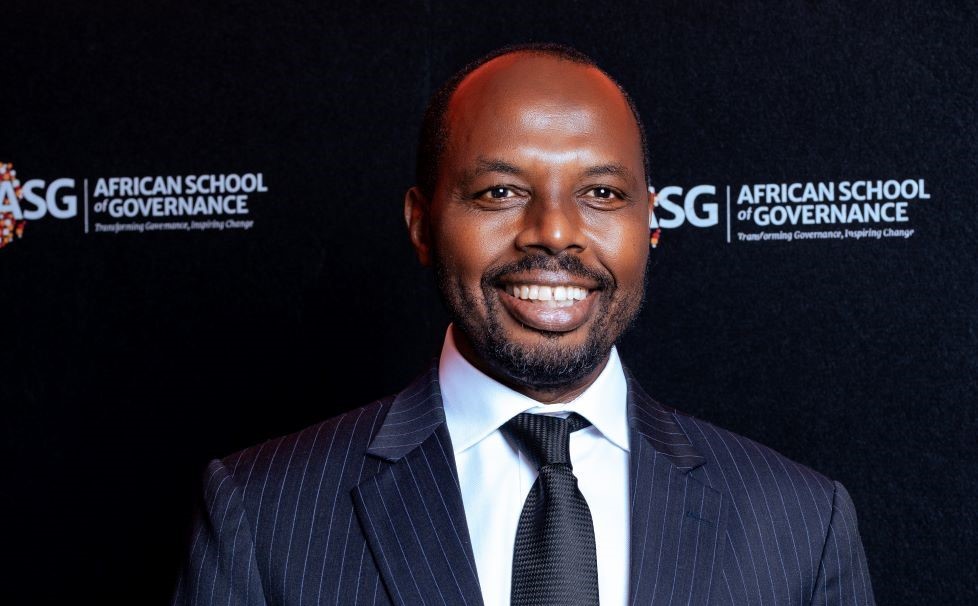
In a recent conversation at Fudan University in China, Gatare said Africa's growing population, resources, and market potential make a strong case for greater regional and continental integration.
"When you look at the political economy of the world today and the dynamics of the world today, you do not see any African state that is big enough, strong enough to compete by itself in the global economy yet," he said. "It's a competitive marketplace."
Gatare argued that Africa continues to be underrepresented in discussions on global governance despite being home to nearly 1.5 billion people.
"A billion and a half people, almost as big as China in terms of people, soon probably more, is not a number of people to be ignored in discussions about global governance," he said.
While acknowledging that a fully unified continental market may still be a long-term aspiration, he noted that regional blocs are already large enough to compete effectively on the global stage.
His remarks also highlighted the mission of the African School of Governance, which seeks to train leaders with a Pan-African outlook and a strong commitment to public service.
"The School of Governance is teaching leaders with a mindset that is Pan-African, but it's also teaching leaders that have a commitment to public service, to their people, to the service of their people," he said.
According to Gatare, leadership should be viewed primarily as a responsibility rather than a privilege.
"When you have that privilege, you have not done much to earn it. It's because of the responsibility you have been bestowed on to serve others."
He said the institution encourages leaders to develop confidence, ambition and a clear vision capable of mobilising communities toward transformation.
Gatare who also serves as Senior Advisor to the President of the Republic of Rwanda, reflected on what he described as Africa's "collective trauma," citing the slave trade, colonialism, struggles for independence and post-independence governance failures as challenges that have shaped the continent's history.
"Many nations have gone through different types of trauma from bad leaders that have divided their communities, set one tribe against another, and squandered a lot of opportunity through mismanagement," he said.
"Now, it doesn't have to continue that way. We have got to break the cycle."
He stressed that leadership is not limited to those holding high office, arguing that responsibility begins at the individual and community levels.
"So many times the focus is put on heads of government and nations, but the responsibility starts with leaders at the community level," he said.
At the African School of Governance, he added, leadership training begins with values and personal responsibility.
"We say that good leadership has got to be values-based."
On development, Gatare described it as a collective effort involving citizens, businesses, communities and governments rather than a process driven solely by the state.
"Development, in our perspective, is an outcome that happens as a result of every member of society contributing," he said.
He noted that development requires citizens to have confidence in their future, supported by security, stability and a shared national vision.
"The role of political leaders is very important," he said. "One, to make society safe, secure, and give confidence to citizens, as well as non-citizens, to aspire and invest in their future."
He added that effective governance depends on consultation rather than decisions made by a single individual.
"There is no single all-knowing individual that will close themselves in a room and emerge out of it with a vision. A vision is set through consultations. That's governance."
During the interview, Gatare also explained why the African School of Governance had engaged with institutions in China.
The school, which was established two years ago, is looking for ideas and experiences that can help shape its teaching philosophy for future African leaders.
"We are looking for inspiration to structure together the best teaching philosophy for the next leaders of our continent, Africa," he said.
Gatare praised China's record in poverty reduction, describing it as a source of inspiration for Africa.
In 2021, China declared the eradication of extreme poverty, lifting 770 million people out of poverty since 1978.
"There is an appreciation of what China has done for itself as a society, transforming the lives of more than a billion people and lifting more than 500 million people out of poverty in one generation," he said.
"Africa is the only place on the planet today which collectively is still behind, caught up in poverty. Where else would we learn about fighting poverty and lifting people's lives than in China, considering what you have achieved?"
He added that China continues to play an important stabilising role in an increasingly uncertain geopolitical environment.
"We came to learn. We came to build relationships and partnerships, to see how you do it here and what lessons we can take for ourselves."
The African School of Governance, co-founded by President Paul Kagame in October 2024, aims to equip emerging African leaders with the knowledge and skills necessary to drive the continent's development.
Based in Kigali, Rwanda, the African School of Governance (ASG) was formally inaugurated on Tuesday, January 14, 2025.
The institution will offer graduate programs in policy, research, governance, leadership, and management, designed to nurture the next generation of visionary African leaders.
Loading comments...
Leave a comment