



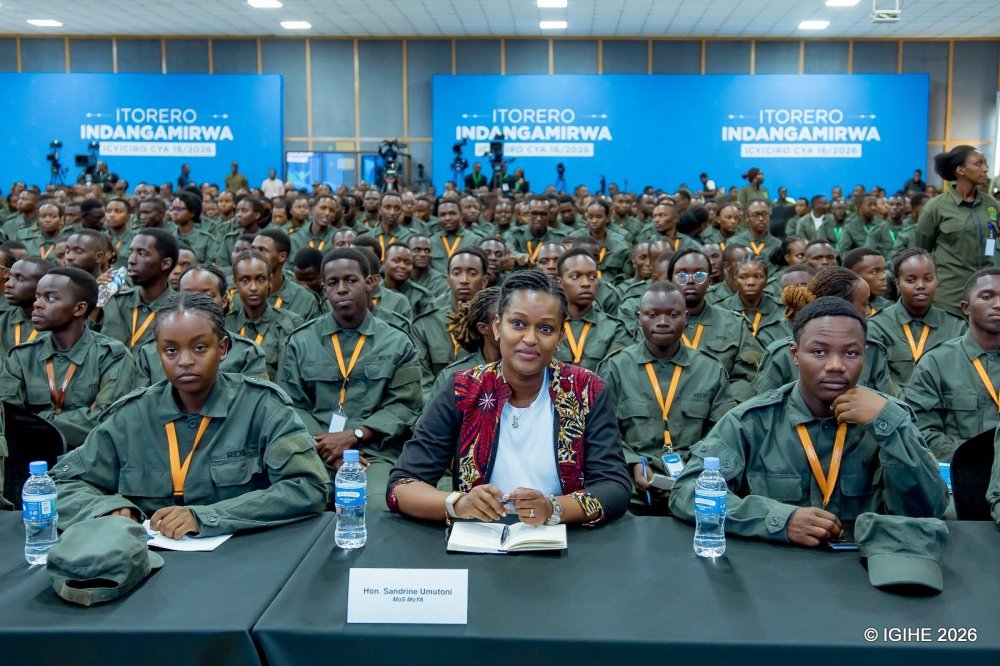
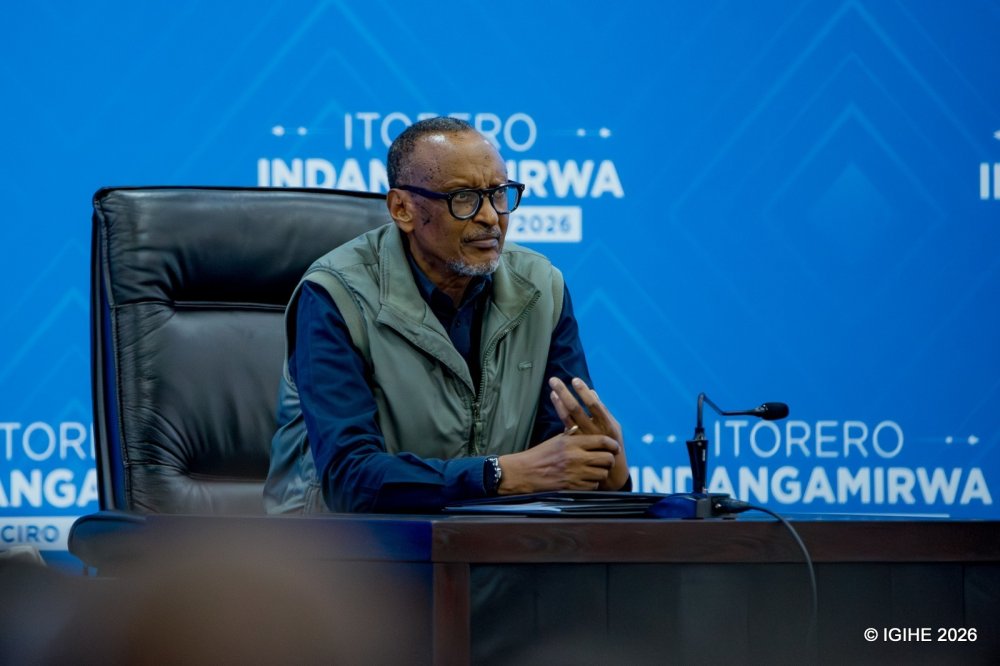
The President made the remarks on July 28, 2026, while meeting with the 16th cohort of Itorero Indangamirwa, the civic and national values training program for Rwandan youth, organized by the Ministry of National Unity and Civic Engagement at Gabiro Combat Training Centre.
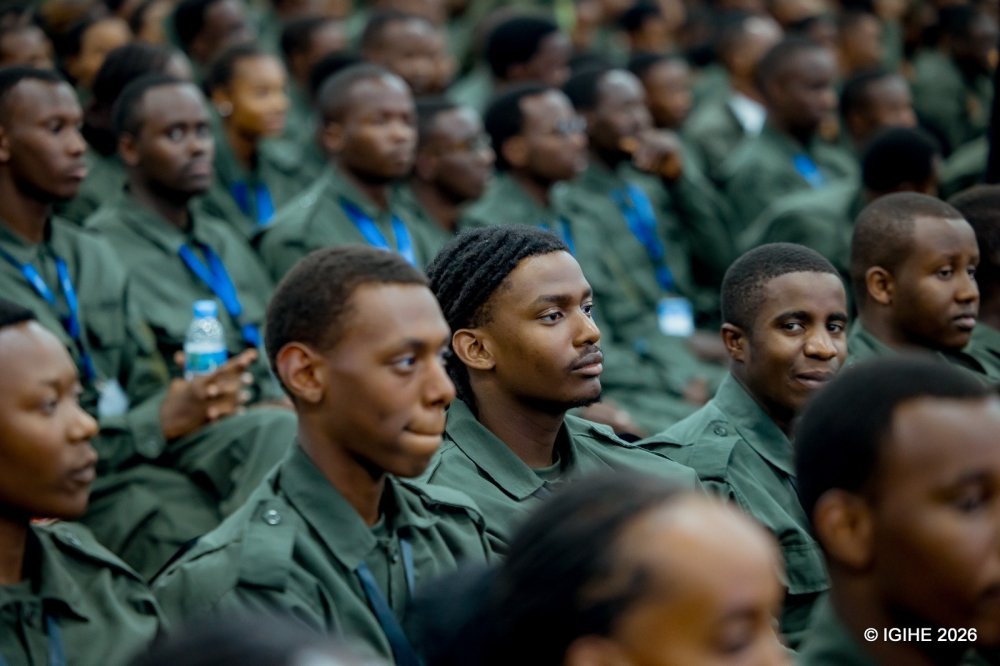
This year’s program has close to 800 participating youth between the ages of 18-23 including Rwandans living abroad, and students from across high schools and higher learning institutions in Rwanda.
Kagame explained to the young people the difficult history Rwanda went through, including the displacement of thousands of Rwandans who fled the country from 1959 following waves of violence targeting sections of the population.
“Unlike you, I did not have the opportunity to start from where you are, being told that there is Itorero and learning what happens there. No, I never attended Itorero. Where I got my lessons was not called Itorero,” Kagame said.
He explained that he lived in Uganda from the age of four or five because of these historical circumstances and began searching for solutions when he was around 20 or 21 years old. By the age of 23, he said, he met others who shared the same concerns and joined efforts to address the issue.
Kagame urged the youth to start thinking early about their interests and those of their families and country, commending them for choosing to attend Itorero, a programme aimed at instilling values among Rwandans.
During the interaction, the President asked the Indangamirwa participants whether they had learned how to accurately use firearms. After they responded that they had, he told them that weapons should only be used when necessary and not against every situation.
He said: “Everything has its time. When the time has not come to resort to weapons, there is no reason to use them. When that time comes, it does not come because of one individual alone.
“It comes when people’s rights have been taken away, when they have been pushed as far as we were pushed, and when they seek other ways to resolve the problem but those options fail. Then it becomes a matter of saying: ‘Now you know? We are going to fight over this.’”
Kagame said that when one person denies another person their rights and prevents a country from living in peace, the first step should be to seek dialogue and peace. However, if that fails, he said, the use of force may become necessary, citing the Rwanda Patriotic Army’s (RPA) liberation struggle that began on October 1, 1990.
He recalled that while he and his colleagues were refugees, they believed they should not remain in exile. However, he said officials from the Habyarimana government who came to Uganda argued that Rwanda was too small to accommodate all refugees returning home.
“But the country is small. These people don’t have a place,” Kagame said.
President Kagame said it was inconceivable that Rwandan refugees could be denied the right to return to their own country while the Habyarimana government believed they, and even their descendants, would remain in exile indefinitely despite having a homeland.
He explained that at the start of the liberation struggle, he told those fighting alongside him that he did not blame the country that had given them refuge, even if it had treated them unfairly, but instead held responsible the government that had refused to allow them to return home.
“My problem was with the person who was supposed to determine my rights in my own country and denied me those rights. That was the person we had to confront, and that is what happened,” Kagame said.
“I would not start a war against those who had hosted us because they had not given us something or had denied us something.
“No. They were free to give us what they wished or not, even if one might consider it unfair. The real responsibility lay with the person who had denied you peace in your own country.
Kagame told the youth that one of the important lessons they should learn is how to defend their rights and understand that no one should dictate how they should live or determine how Rwandans should live.
Loading comments...
Leave a comment