




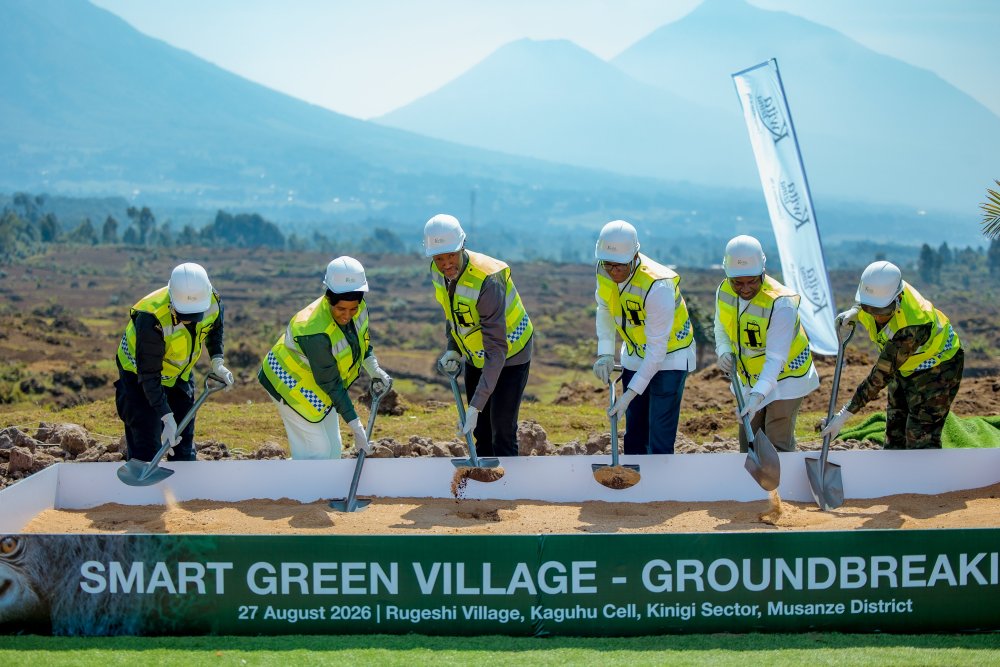
The project, valued at more than $49 million, is expected to provide 547 families with modern homes, basic services and opportunities to improve their livelihoods.
The Smart Green Village will combine climate-smart agriculture, renewable energy and tourism-related economic opportunities.
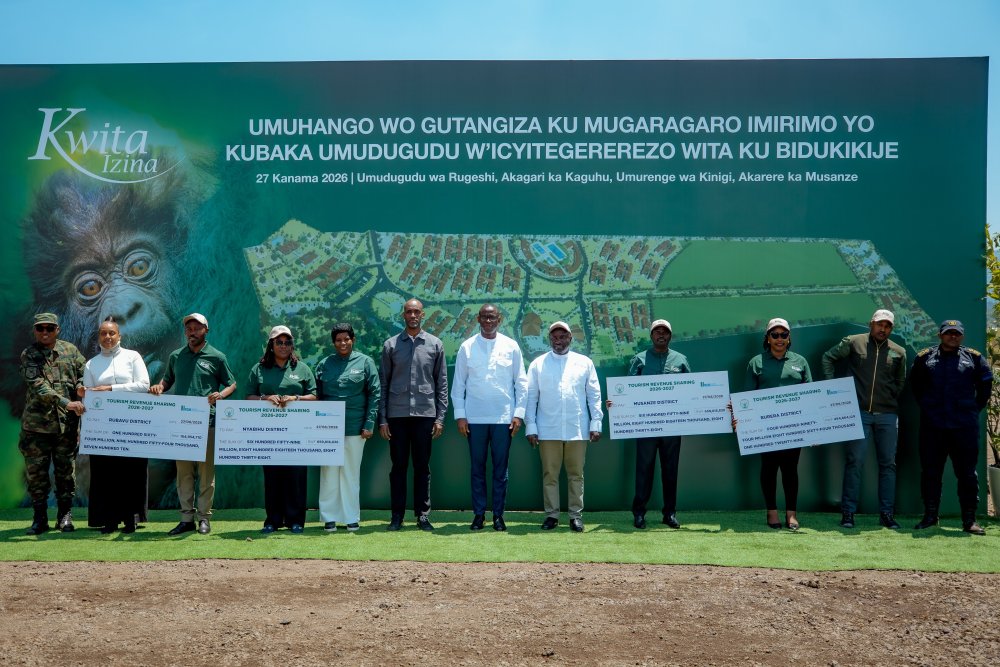
The launch of the construction works coincided with the announcement of funds to be distributed to districts surrounding Volcanoes National Park under Rwanda’s Tourism Revenue Sharing Programme.
The two initiatives highlight Rwanda’s approach of involving communities in environmental conservation and tourism development.
The activities are part of events leading up to the 21st edition of Kwita Izina, the annual gorilla naming ceremony scheduled for September 4, 2026, under the theme, “Conservation is Life: Sustaining the Future.”
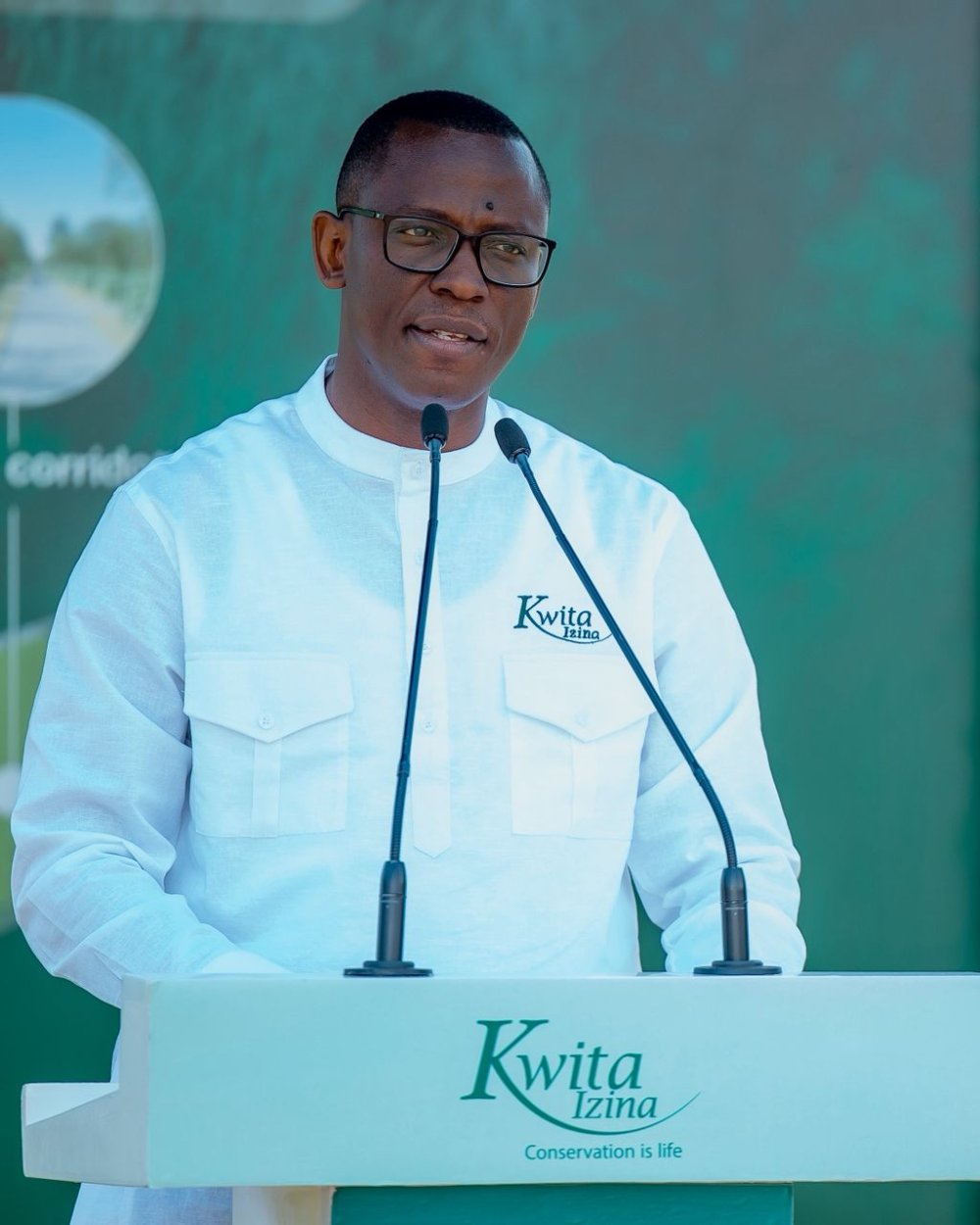
Minister of Local Government Dominique Habimana said community development should go hand in hand with environmental protection.
“This project demonstrates Rwanda’s commitment to putting citizens at the centre of development, while building communities with good infrastructure, services, welfare, cleanliness and security.
“The houses and infrastructure being built here belong to the people. I encourage residents to take ownership of them, participate in their development and protect them so that this village continues to be a clean, safe and sustainable place where families can prosper,” he noted.
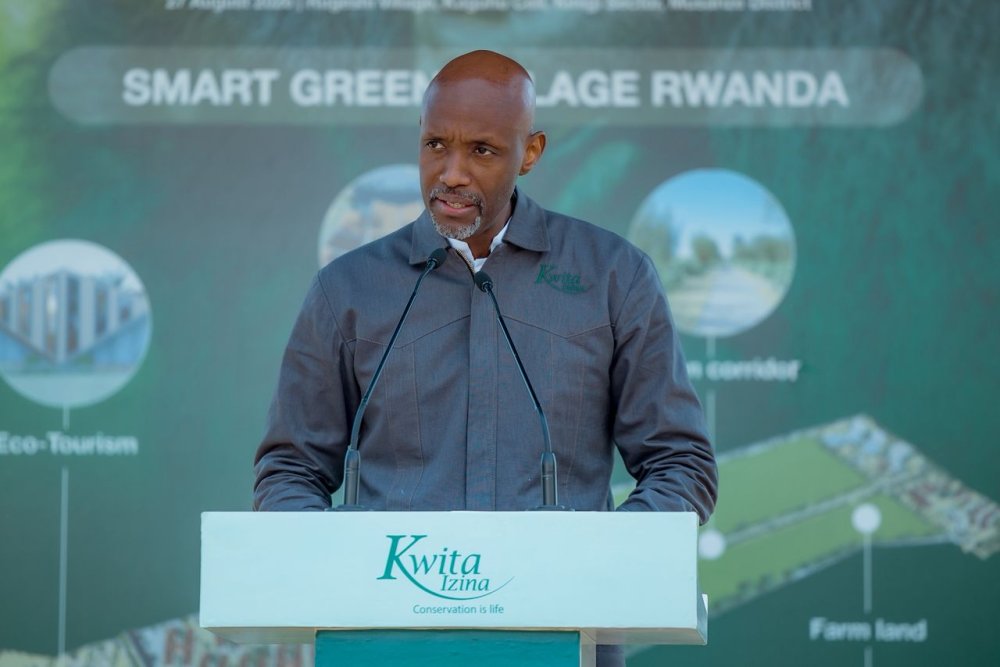
Rwanda Development Board (RDB) Chief Executive Officer Jean-Guy Afrika said the village demonstrates that environmental conservation and community development should advance together.
“It will provide families with good houses, modern infrastructure, basic services and economic opportunities, while promoting sustainable agriculture, resilience to climate change and environmental protection.”
Project linked to Volcanoes National Park expansion
The Smart Green Village is part of plans to expand Volcanoes National Park by nearly 3,740 hectares and establish a 6,620-hectare buffer zone.
The wider programme is expected to improve the livelihoods of more than 17,000 people from nearly 3,400 families, increase wildlife habitat, conserve biodiversity, promote tourism and create new economic opportunities for communities living around the park.
The programme is estimated to cost nearly $300 million and will be implemented over 10 years.
The first phase covers nearly 450 hectares and will affect 547 families living in the area planned for the park expansion.
The Government of Rwanda acquired 50 hectares in Rurembo where the Smart Green Village is being built. Compensation for the land has already been paid, while compensation for families living in the area to be incorporated into the park is also being paid.
The families relocated to the new village are expected to benefit from improved access to basic services, safer living conditions and new opportunities for economic development.
Esther Mukamakuza, one of the future beneficiaries, said the project had given residents a sense that they could set goals and make decisions that contribute to the development of their families.
“We learned that this new village will bring positive changes to our lives. We will have schools, health centres, roads and clean cooking methods, which will make things easier for women and families. We are grateful to see a future where our needs are considered and where we can also contribute to the development of our families,” she said.
Four districts receive nearly Rwf2 billion
Every year, Rwanda shares part of tourism revenue with communities living around national parks that generate the revenue.
Under the Tourism Revenue Sharing Programme, 10% of tourism revenue generated from national parks is invested in development projects benefiting surrounding communities.
The four districts surrounding Volcanoes National Park have been allocated more than Rwf1.98 billion.
Burera District will receive Rwf495 million, Musanze Rwf659.8 million, Nyabihu Rwf659.8 million and Rubavu Rwf164.95 million.
RDB said the funds will support community development activities in the four districts, ensuring that tourism revenue continues to reach people living around the park.
Northern Province Governor Maurice Mugabowagahunde said benefits from Volcanoes National Park reach communities through employment, businesses and tourism revenue sharing.
“Since this programme started, 838 projects worth Rwf8.6 billion have been supported, demonstrating that the park belongs to the people and contributes to their development.
“The expansion of Volcanoes National Park and this project will help address the shortage of agricultural land while reducing conflicts between people and wildlife. They will provide people with more space to live and farm safely, while creating better ways of protecting the environment,” he noted.
Over the past 20 years, more than Rwf23 billion has been invested in communities through the tourism revenue sharing programme, supporting projects in education, healthcare, access to clean water and social welfare.
Kwita Izina is an annual ceremony that brings together Rwandans and friends of Rwanda to name newborn mountain gorillas, drawing from the longstanding Rwandan cultural tradition of naming children shortly after birth.
Since 2005, Kwita Izina has grown into an international platform celebrating Rwanda’s conservation efforts and recognising the role of communities and partners in protecting mountain gorillas and their habitat.
The 21st Kwita Izina ceremony, during which 22 baby gorillas will be named, will take place on September 4, 2026, in Kinigi, Musanze District.
Loading comments...
Leave a comment