




The six-month strategy, spanning June to November 2026, aims to mobilise 518 million U.S. dollars to scale up rapid detection, cross-border surveillance, and containment measures across the region.
The intervention follows the declaration of the outbreak as a Public Health Emergency of International Concern by the WHO on May 16, 2026, a day after both the Democratic Republic of the Congo and Uganda confirmed localised transmission.
Currently, there are no licensed vaccines or approved therapeutics specifically targeting the Bundibugyo species of the virus, making rigorous public health infrastructure and early symptomatic care the primary lines of defence.
In the Democratic Republic of the Congo, health authorities have documented 381 confirmed cases and 64 deaths across 25 health zones in three provinces. The vast majority of the caseload is concentrated in Ituri province, which accounts for 359 cases and 50 deaths, while North Kivu has recorded 19 cases and South Kivu has registered three.
Frontline teams in the country are currently monitoring more than 4,000 active contacts alongside 116 suspected cases under investigation.
The virus has also crossed international borders into neighbouring Uganda, where 15 confirmed cases and one death have been reported, primarily concentrated within urban pockets of Kampala and Wakiso. At least 12 individuals remain hospitalised under strict isolation protocols, while response teams track 668 identified contacts.
Operational challenges in the field remain high, particularly in eastern DRC, where response efforts are consistently complicated by localised insecurity, population displacement, and dense informal mining networks.
Addressing a joint press conference, WHO Director-General Dr. Tedros Adhanom Ghebreyesus emphasised that control depends entirely on a unified mechanism.
He noted that the only way to beat this outbreak is through close partnership under the leadership of the affected nations, guided by a single plan, budget, and team.
He added that containing Ebola relies heavily on political commitment, sustained financing, and community trust, warning that without active local participation, contact tracing falters and transmission continues.
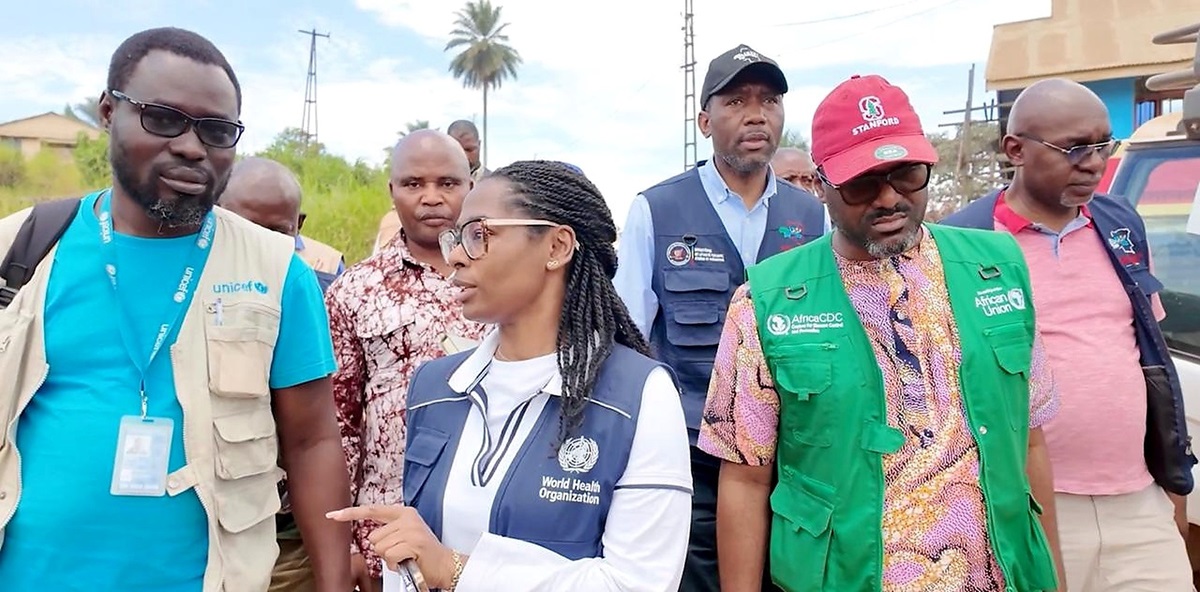
The operational framework coordinates efforts under a unified "One Response" approach. Resources from the budget will be utilised to strengthen emergency coordination, improve diagnostic laboratory capacities, secure local clinic infection controls, and optimise logistics.
To prevent a wider regional fallout, international partners have already begun accelerating regional logistics, including a 45-ton delivery of emergency medical cargo, diagnostics, and personal protective equipment mobilised via regional coordinating channels.
Africa CDC Director-General Dr. Jean Kaseya noted that because Ebola moves fast, the continent must move faster.
He stated that the joint plan provides a clear framework to act with speed and unity to save lives, support affected states, and shield neighbouring communities. The strategy also outlines critical readiness protocols for 10 adjacent, high-risk priority countries to ensure early detection if the virus spreads further.
While health officials have urged member states to increase screening and public health measures at points of entry, the WHO currently assesses the global risk as low. The agency maintains a high alert status at national and regional levels but continues to advise against any international travel or trade restrictions.
Loading comments...
Leave a comment