



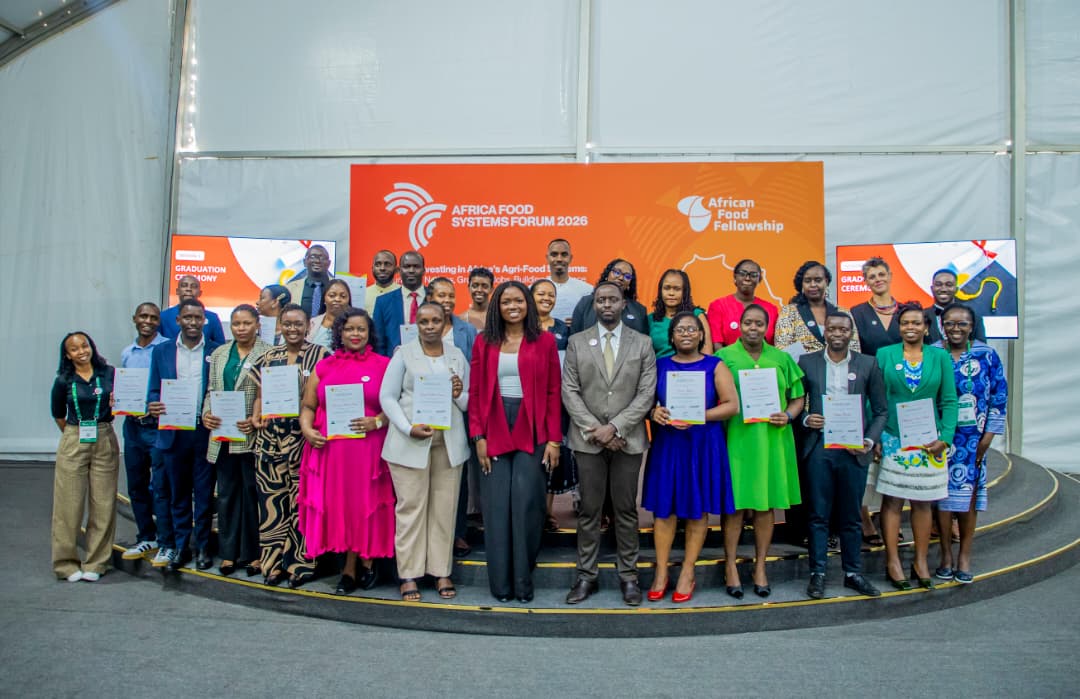
The latest graduates completed a 10-month programme focused on equipping leaders to address complex challenges facing Africa’s food systems, including food waste, food safety, market access, agricultural financing and climate-smart agriculture.
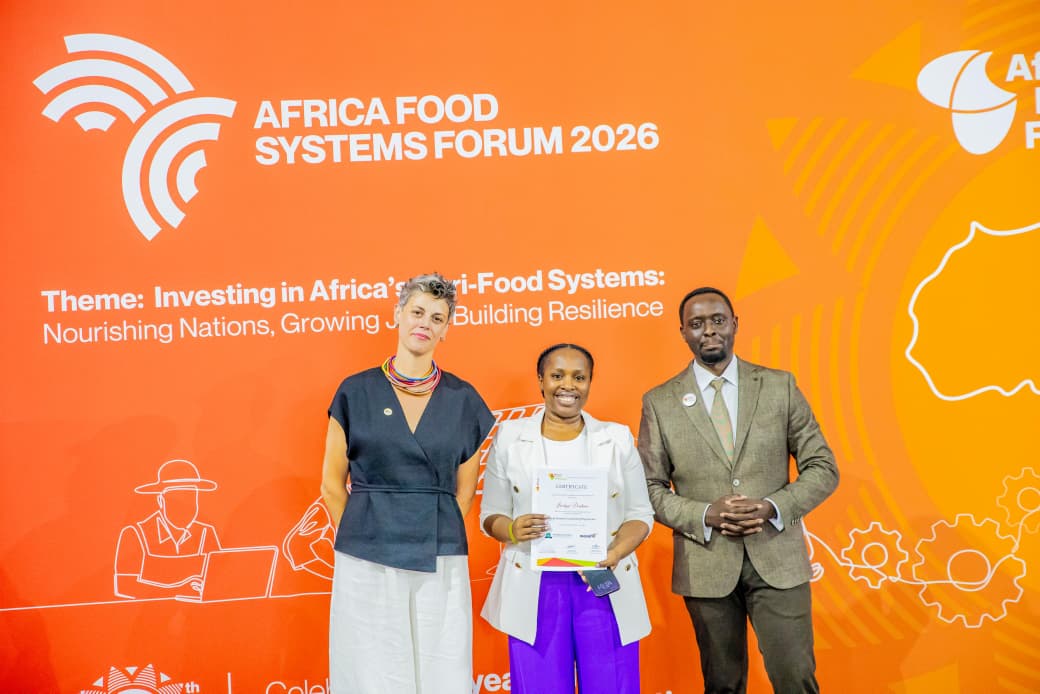
The graduation ceremony was held on Monday in Kigali as part of the launch of the Africa Food Festival, organised on the sidelines of the 2026 Africa Food Systems Forum.
The new graduates join a growing network of nearly 400 fellows from Rwanda, Kenya and Zambia, representing more than 200 organisations working across Africa’s food systems.
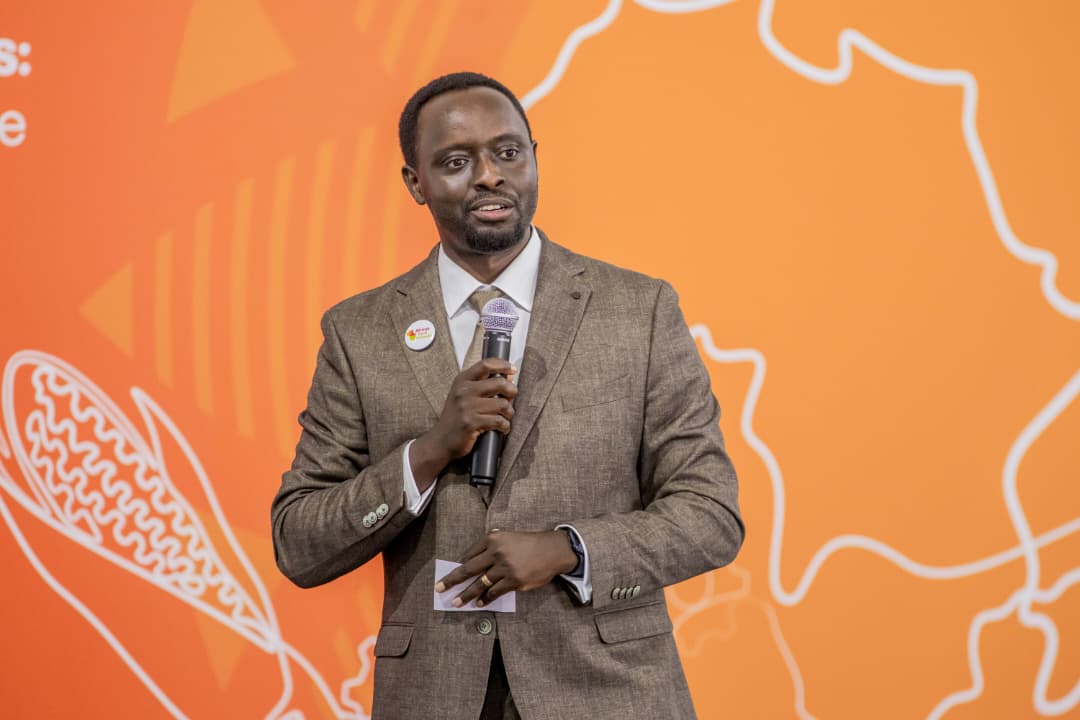
Pascal Murasira, Executive Director of the African Food Fellowship, said the organisation plans to significantly expand the network over the next decade.
“Today we have about 400 fellows who come from 203 organisations in three countries. We are targeting that by 2035 we will be in 15 African countries and will be a network of 2,750 leaders,” he said.
Murasira said the fellowship's next phase would focus on strengthening leadership and infrastructure while using technology and partnerships to expand its reach.
He highlighted that the programme had evolved from a leadership initiative launched in 2021 into a wider alumni network that is increasingly becoming a critical mass within food systems in the countries where it operates.
An evaluation published in July found that fellows reported improvements in their leadership skills and ability to act, although it also identified a gap in translating those gains into the next stage of impact.
Murasira said the fellowship would therefore place greater emphasis on leverage, including the use of technology to enable a small team and its partners to achieve more, as well as partnerships at national, continental and global levels.
“We are trying to achieve much more as a network,” he said.
Turning leadership into action
Anysie Ishimwe, Lead of the African Food Fellowship in Rwanda, stressed that the programme was built on the belief that investing in leaders is critical to transforming complex food systems.
She said Africa’s food systems face problems that cannot be addressed by a single institution or programme because they often have multiple causes and require coordinated action among different actors.
Ishimwe pointed to childhood malnutrition as an example, noting that responsibility for the problem cuts across health, education, families, farmers, markets and other actors.
She highlighted that fellows are therefore trained in systems thinking, foresight and scenario planning to help them understand both current challenges and how food systems could evolve in the future.
“Every ecosystem leader eventually encounters a problem larger than themselves,” Ishimwe said, explaining that such challenges often exceed the capacity, budgets or expertise of individual organisations.
The fellowship seeks to bring leaders from different parts of the food system together so they can identify shared challenges and build partnerships rather than attempting to solve complex problems independently.
Ishimwe cited the experience of a fellow who had spent years promoting regenerative and conservation agriculture but struggled to increase adoption.
The fellow later brought together 14 organisations into a coalition, which helped shape a national target to increase land under conservation agriculture from about 1,200 hectares to nearly 100,000 hectares by 2028–2029.
For Ishimwe, the example demonstrates the value of networks in turning individual ideas into broader action.
She said the fellowship is not intended to produce “brilliant individuals working alone” but to build a network that allows leaders to identify who they need to work with when tackling complex challenges.
From training to practical action
The fellows are also leaving the programme with projects targeting specific challenges across Rwanda’s food system.
Among the initiatives is Kamanzi Jean Pierre’s project to strengthen market access for smallholder farmers by linking them with agribusiness buyers and expanding contract farming in the chilli value chain.
The project targets more than 500 smallholders over two to five years, while its maize component has recorded an estimated 25–35% increase in farmer incomes and payments made two to four weeks faster.
Manasseh Manirakinga is developing a Poultry Centre of Excellence to equip secondary-school graduates with practical poultry production, business management and entrepreneurship skills.
The initiative aims to train more than 500 young people over two to five years and support the creation of youth-led poultry enterprises.
For Manirakinga, the fellowship has changed how he approaches food systems challenges.
“The FSA journey has been challenging but strengthened my systems-thinking approach, refined the Centre of Excellence concept, expanded my network, and increased my confidence in designing a scalable solution,” he said.
Other fellows are also tackling specific challenges. Joselyne Dushime is developing a hydroponic agriculture investment playbook to help investors, financial institutions and entrepreneurs evaluate and finance hydroponic projects in Rwanda. The project seeks to address gaps in local investment evidence, business models and risk assessment tools.
In nutrition, Pacifique Umuhire is developing NutriRwanda, a Kinyarwanda-first, offline-friendly nutrition application offering local meal ideas, voice tips and household guidance to help users make healthier food choices. The project aims to reach 200,000 users over two to five years.

129 Rwandans have graduated
The latest cohort brings the total number of people who have graduated from the African Food Fellowship programme in Rwanda to 129.
The fifth Rwanda cohort is part of the fellowship’s broader network spanning Kenya, Rwanda and Zambia, with nearly 400 fellows representing more than 200 organisations.
Ishimwe urged the new graduates to take the knowledge and connections gained through the 10-month programme into their organisations and wider networks.
She said the transformation of Africa’s food system would require multiple leaders working across institutions rather than relying on a single organisation or intervention.
“The effect we mentioned, hopefully, will start to show the changes, because we all believe this: Africa’s food system will not be transformed by one institution, and definitely not by one innovative programme,” she said.
The fellowship now plans to use its growing network, technology and partnerships to scale its work beyond the three countries where it currently operates, with the long-term goal of reaching 15 African countries and 2,750 leaders by 2035.
Loading comments...
Leave a comment