




The outbreak has been reported in the eastern provinces of Ituri, North Kivu, and nearby areas. Health authorities report a case fatality rate of 26.7%.
So far, 148 patients have recovered and returned to their families, while 326 others remain under medical care in designated treatment centres. Between 24 and 25 June, health teams screened 1,175 people showing symptoms similar to Ebola, while 142,503 travellers were tested at border points.
Authorities also report progress in contact tracing, which has now reached 82.8%. This improvement is expected to strengthen efforts to contain the spread of the virus.
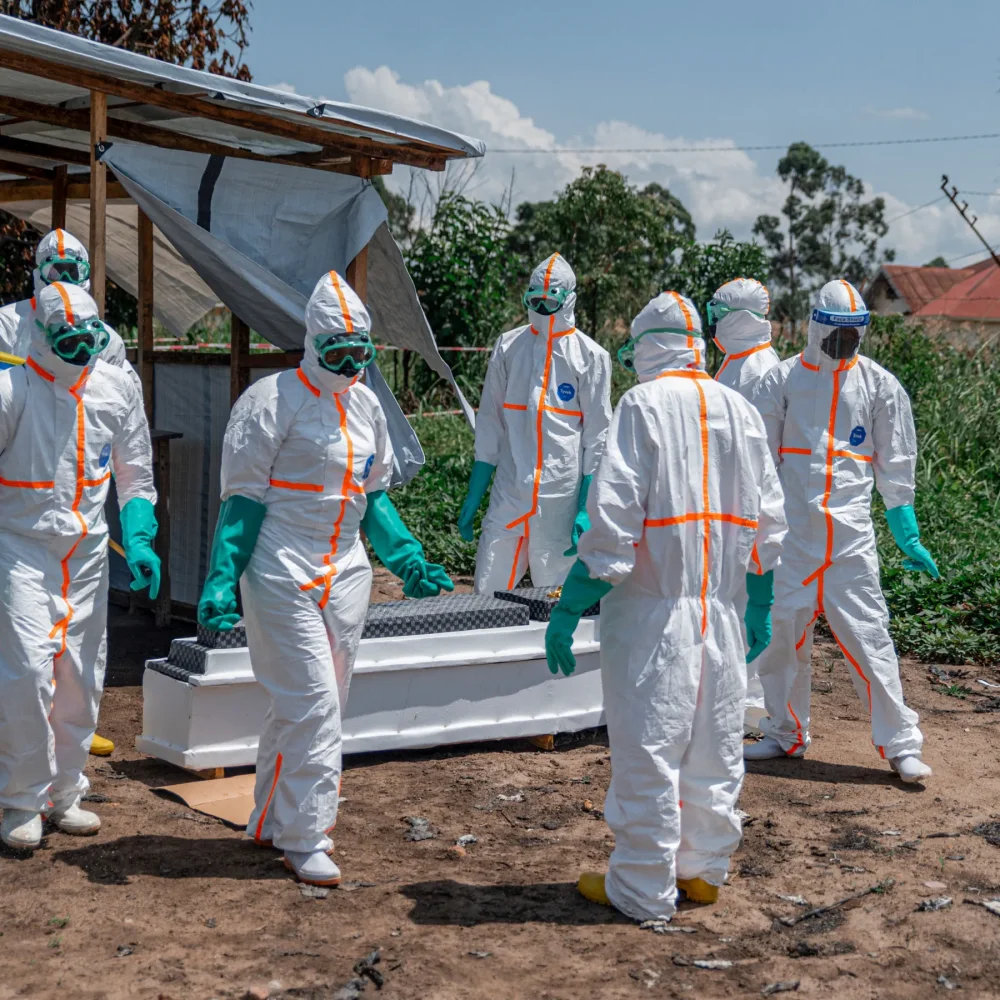
The outbreak was first declared on May 15 in Mongbwalu, in Ituri. This marks the 17th recorded Ebola outbreak in the country, and one of the most significant in recent years.
The current outbreak is caused by the Bundibugyo strain of Ebola, which has also spread to Uganda, where 20 cases have been confirmed, including two deaths. In France, one case has also been reported, involving a doctor who recently travelled from eastern DRC.
The World Health Organization (WHO) has warned that the Bundibugyo strain poses a serious international concern, noting that there is currently no confirmed treatment or vaccine for it.
Officials further stress that ongoing conflict and insecurity in eastern DRC are making response efforts more difficult, as medical teams struggle to access affected areas. Limited public awareness in some communities is also slowing down efforts to control the outbreak.
Loading comments...
Leave a comment