






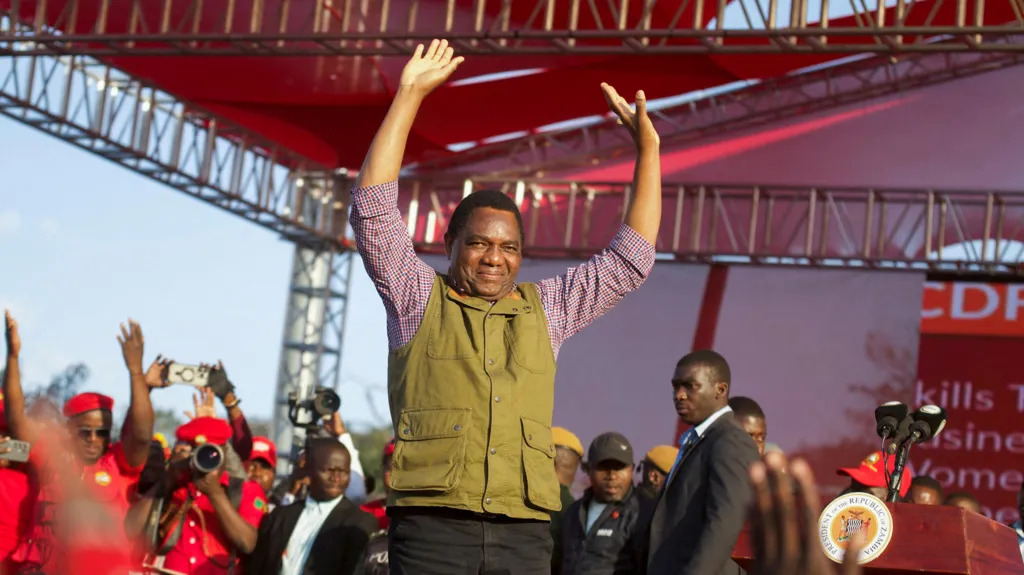
The Electoral Commission of Zambia declared Hichilema president-elect early on Tuesday, after the incumbent won a clear majority over his main challenger, Brian Mundubile, who received about 38% of the vote. The remaining candidates trailed well behind the two leading contenders.
Under Zambia’s electoral system, a presidential candidate who receives more than 50% of the vote wins in the first round without the need for a runoff.
“I therefore declare Hichilema Hakainde S to be president-elect of the Republic of Zambia,” commission chairperson Mwangala Zaloumis said.
Hichilema, 64, said he was “truly humbled by the trust” placed in him and pledged to continue working for citizens who had supported opposition candidates.
“We hear you, and we will continue to work for you,” he said.
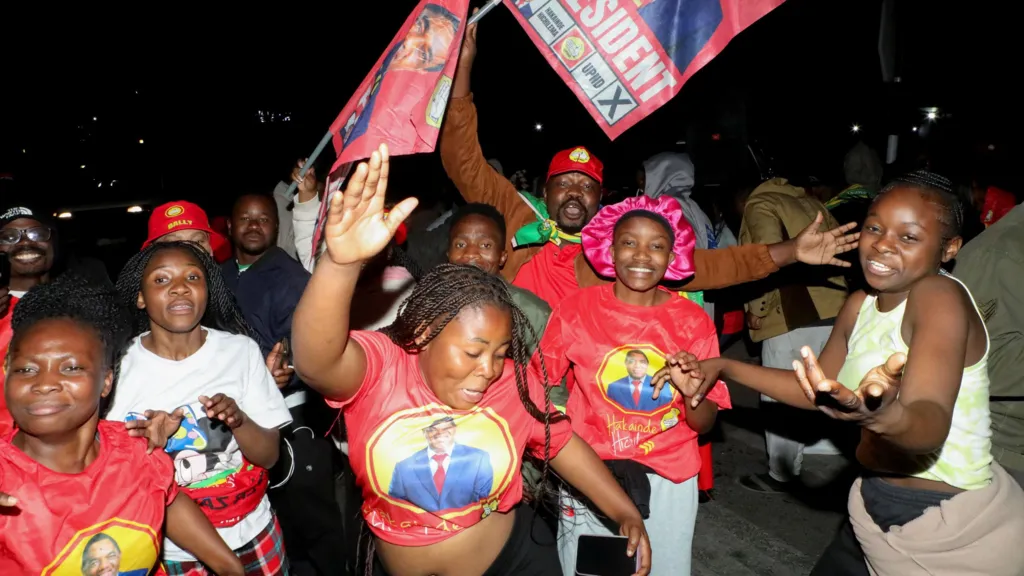
Hundreds of Hichilema supporters gathered in Lusaka following the announcement, wearing the red colours of his United Party for National Development and celebrating with singing, dancing and firecrackers.
The election was, however, marked by allegations of irregularities and tensions between the government and opposition. Mundubile had questioned the results, alleging discrepancies between polling-station records and officially announced figures and calling for an independent investigation. His campaign also raised concerns over events surrounding the vote-counting process.
The electoral commission temporarily suspended the counting of votes a day after polling, citing reports of violence against election officials and the theft of marked ballot papers in some areas. The suspension was lifted later the same day.
The government had also accused opposition figures of involvement in an alleged armed insurrection, claims Mundubile and his National Reconciliation Party for Unity and Prosperity rejected. Eleven people, including senior opposition figures, were arrested in a raid shortly after voting.
International observers described election day as largely peaceful but raised concerns about the wider electoral environment. The European Union observation mission cited late legal changes, restrictions on opposition activity, media access and unequal campaign conditions, saying these factors had affected the fairness of the contest.
Zambia has nevertheless maintained a record of peaceful transfers of presidential power since the return to multiparty democracy in 1991, with successive changes of government taking place through elections.
Loading comments...
Leave a comment