






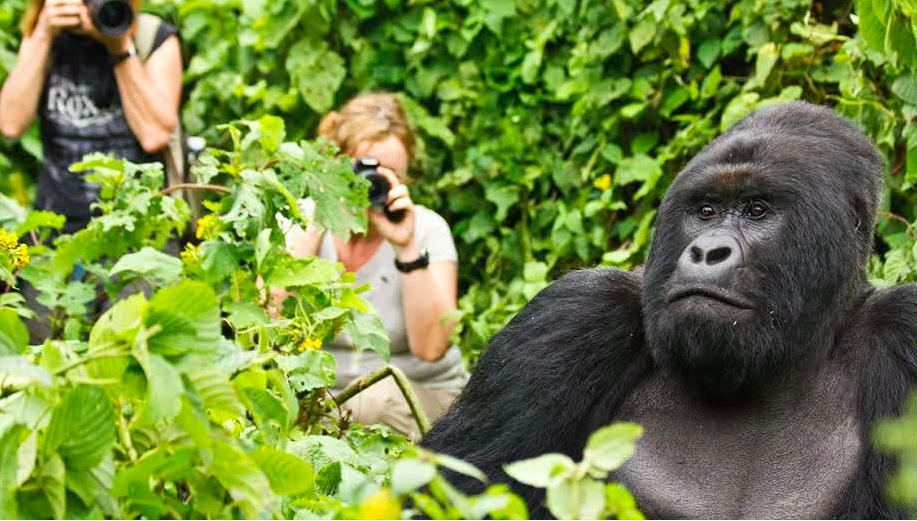
The connection between conservation and tourism is particularly evident in the country’s mountain gorilla tourism, which remains one of Rwanda’s most valuable tourism offerings.
According to the Rwanda Development Board’s (RDB) 2025 annual performance report, Rwanda’s tourism sector generated $685 million in revenue in 2025, nearly four times the $164 million recorded in 2021.
Tourism revenue rose to $455 million in 2022 as the sector recovered from the effects of the Covid-19 pandemic, before reaching $620 million in 2023 and $647 million in 2024.
In 2025, tourism revenue increased by 6% compared with the previous year, supported by growth in visitor numbers and air travel. Revenue from air travel rose by 9% to $594 million.
Gorilla tourism accounted for a significant share of those earnings, generating $248 million in 2025, an increase of 7%.
Rwanda received 1.49 million visitors during the year, up from 1.36 million in 2024, representing a 9% increase. Visitors arriving by air increased by 23%.
The growth illustrates how the conservation of a species once considered highly vulnerable has become closely intertwined with Rwanda’s tourism ambitions.
From 430 gorillas to more than 1,100
When Rwanda introduced Kwita Izina as an annual gorilla-naming ceremony in 2005, about 430 mountain gorillas were estimated to live in the Virunga Massif.
More than two decades later, the population has grown to more than 1,100 mountain gorillas across the Virunga Massif, which is shared by Rwanda, Uganda and the Democratic Republic of Congo.
The increase has followed years of conservation efforts involving governments, conservation organisations, researchers, veterinarians, park rangers and communities living around protected areas.
“Thanks to the leadership of Rwanda, the dedication of conservationists and the commitment of our communities, mountain gorillas have come back from the brink. Today, there are more than 1,000 mountain gorillas worldwide, including more than 600 in the Virunga Massif,” Prime Minister Dr. Justin Nsengiyumva remarked during last year’s 20th anniversary of the baby gorilla naming ceremony, reflecting on the species’ recovery.
For Rwanda, protecting the gorillas has gone beyond preserving an endangered species. It has created a tourism attraction that brings international visitors into the country and generates revenue that can in turn support conservation and communities.
Kwita Izina grows beyond gorilla naming
The story of this relationship is perhaps best captured by Kwita Izina.
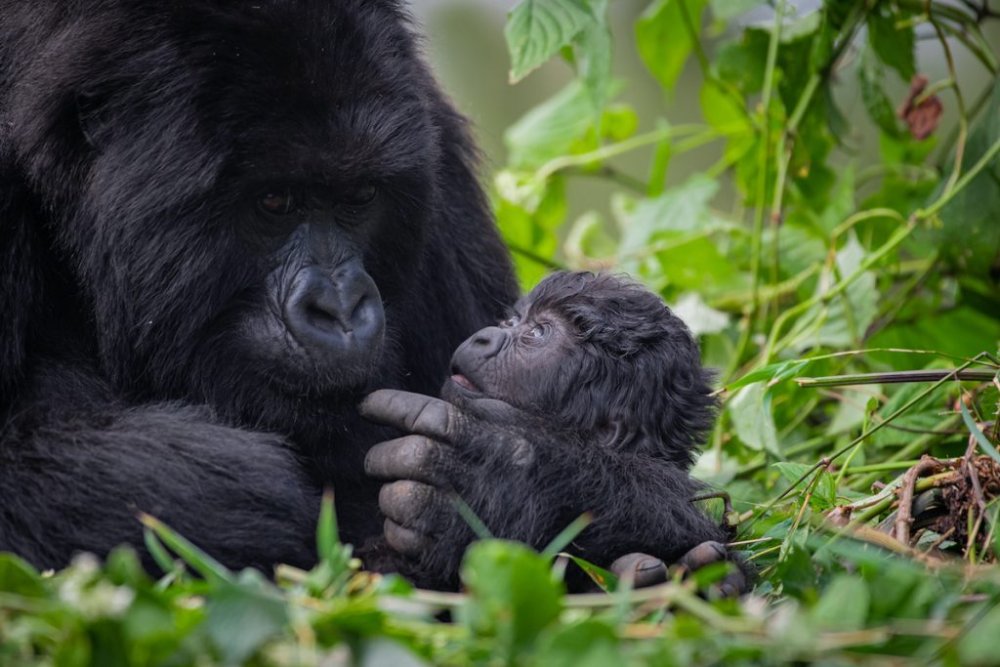
The 2026 ceremony will take place in Kinigi, Musanze District, on September 4, when 22 baby gorillas will be given names. Up through 2025, a total of 438 gorillas have been named since the event became an annual ceremony in 2005.
Over the years, Kwita Izina has evolved beyond the naming of gorillas. It has become a platform bringing together conservationists, researchers, government officials, business leaders and international visitors to discuss wildlife protection and the role of communities in conservation.
"For over two decades, Kwita Izina has showcased Rwanda's belief that conservation is not simply about protecting wildlife. It is about creating opportunities for people, supporting communities, growing tourism and ensuring that future generations inherit a healthy and thriving natural environment," RDB stated recently ahead of the 2026 edition.
The event has also become an important avenue for promoting Rwanda as a destination and highlighting the economic value of protecting its natural heritage.
Tourism growth beyond gorillas
While gorilla tourism remains an important source of revenue, Rwanda has continued to diversify its tourism products.
Visits to friends and relatives generated $180 million in 2025, an increase of 19%, while educational travel generated $64 million after growing by 17%. Business tourism contributed $112 million.
The diversification has helped broaden the sector while gorilla tourism continues to anchor Rwanda’s wildlife offering.
Bringing tourism benefits to communities
Rwanda has also sought to ensure that the economic value created by conservation reaches communities living near national parks.
Through its tourism revenue-sharing programme, 10% of tourism revenues is allocated to communities living around protected areas.
The funds are invested in projects such as schools, health centres, water infrastructure and other community facilities.
RDB says more than Rwf23 billion has been invested in nearly 1,300 community projects since the programme began.
The model is designed to strengthen the relationship between communities and conservation by ensuring that people living alongside protected areas benefit from the tourism economy generated by wildlife.
Expanding Volcanoes National Park
The next phase of Rwanda’s conservation efforts is also expected to expand the space available for wildlife.
Rwanda is implementing a $259 million, 10-year project to expand Volcanoes National Park by 3,740 hectares and establish an additional 6,620-hectare buffer zone.
The project includes the $30 million Smart Green Village in Rurembo, which is being developed for families relocated from areas designated for the park’s expansion.
The village will include water and electricity, schools, health facilities, farmland and livestock facilities.
The project is expected to improve the livelihoods of more than 17,000 people, including 547 households that will relocate to the village, while reducing human-wildlife conflict by 80%.
The expansion reflects the broader approach Rwanda has taken to conservation, combining the protection of natural habitats with efforts to address the needs of communities living around them.
As Rwanda prepares for another Kwita Izina ceremony, the annual event offers more than a celebration of newborn gorillas.
It represents a conservation journey that has helped Rwanda build one of its most recognisable tourism products, while creating a model in which wildlife protection, tourism revenue and community development are increasingly connected.
Loading comments...
Leave a comment