



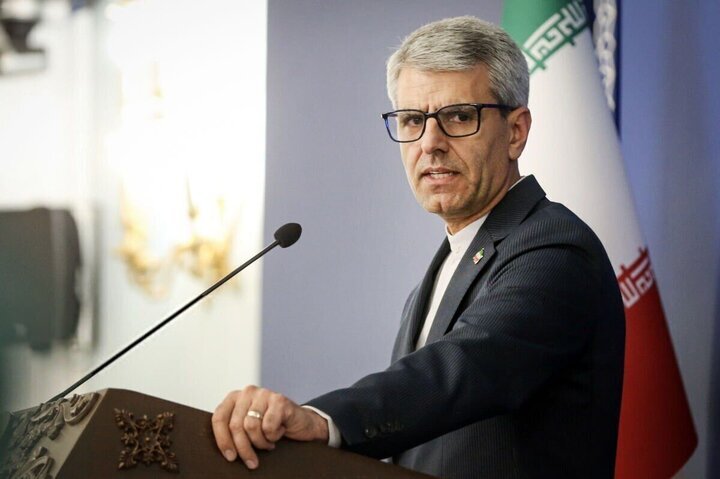
Baghaei made the remarks at a weekly press conference in response to anti-Iran comments by GCC Secretary-General Jasem Mohamed Albudaiwi during a UN Security Council meeting in New York on Friday, convened at Bahrain's request.
Albudaiwi said Iran had launched over 7,000 missiles and drones against Gulf states since Feb. 28, and that the GCC holds Iran fully responsible for the attacks and their consequences. He listed the GCC's demands to the UN Security Council, including "requiring Iran to provide full compensation for the damages resulting from its attacks in accordance with international law and Human Rights Council Resolution 61/1."
Baghaei said that regional countries that "actively participated in the military aggression" against Iran and made available their territories for use by the "aggressors" cannot demand reparations.
The Iranian spokesperson said there is "clear evidence" that the losses and damages inflicted upon Iran directly or indirectly during the 40-day war originated from certain countries in the region, stressing that under international law and UN General Assembly Resolution 3314, "any country that has played a role directly or indirectly in the U.S.-Israeli military aggression against Iran is considered an accomplice to the aggressors and bears responsibility for the crimes committed."
He said Iran is the party demanding reparations and has carried out the necessary documentation in that regard.
Baghaei reiterated that Iran's self-defense measures "were purely defensive in nature and targeted exclusively U.S. military bases and assets that had been used to launch attacks" against the country, stressing that Iran had taken no action against these countries' sovereignty.
On February 28, Israel and the United States launched joint attacks on Tehran and other Iranian cities. Iran responded with waves of missile and drone attacks targeting Israel and U.S. bases and assets in the region, and tightened its grip on the Strait of Hormuz.
Loading comments...
Leave a comment