



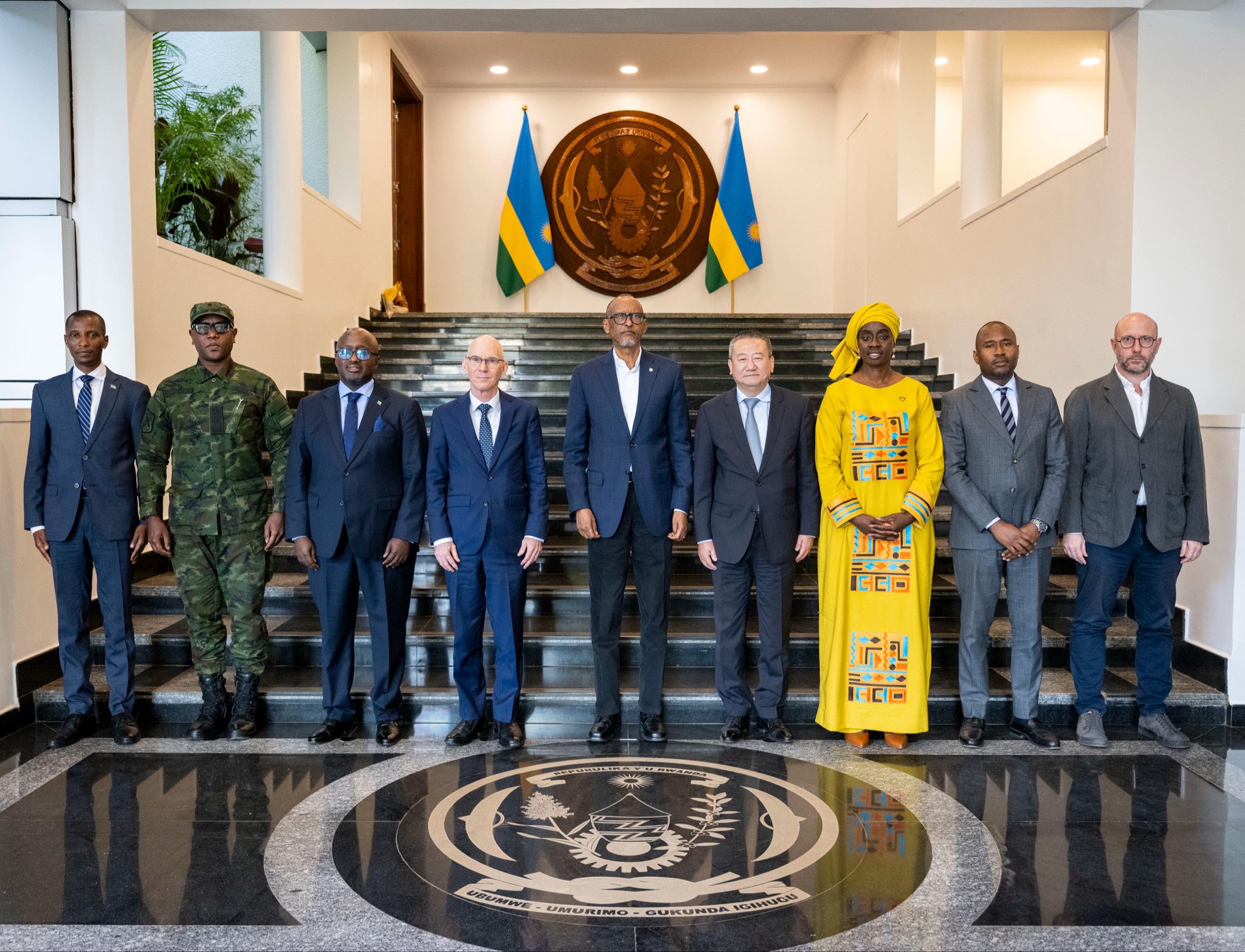
According to the Office of the President, the meeting at Urugwiro Village focused on the need to address the root causes of the conflict in eastern DRC and its impact on Rwanda’s security.
The talks come amid continued international efforts to find a lasting solution to insecurity in eastern DRC, where several armed groups remain active.
MONUSCO, established in 2010 after succeeding the UN Mission in the DRC (MONUC), has a primary mandate to protect civilians under threat of physical violence, support efforts to stabilise the country, facilitate humanitarian access and assist with disarmament and reintegration of armed groups. Its mandate also includes supporting peace processes and strengthening state institutions.
The mission has, however, faced longstanding criticism over its effectiveness in protecting civilians and containing armed groups despite its prolonged presence in eastern DRC.
A 2019 UN Strategic Assessment found that after initial operational successes in 2013, the intensity and effectiveness of MONUSCO's offensive operations steadily declined over the subsequent years, contributing to the resilience of armed groups and worsening insecurity in parts of eastern DRC. The mission also experienced a growing crisis of legitimacy among local populations, with widespread perceptions of ineffectiveness triggering anti-UN protests that peaked in 2022.
MONUSCO has continued to operate in areas where it can access, conducting patrols, supporting the Congolese authorities and facilitating humanitarian assistance. In 2026, the mission has also been involved in monitoring ceasefires and supporting disarmament efforts involving armed groups, including the FDLR.
FDLR remains a key security concern
For Rwanda, one of the longstanding security concerns linked to the conflict is the presence of the Democratic Forces for the Liberation of Rwanda (FDLR), an armed group formed by remnants of forces and militias involved in the 1994 Genocide against the Tutsi.
The group has operated in eastern DRC for more than three decades. Rwanda has also repeatedly raised concerns over the FDLR’s continued presence as a threat to its national security and over the group's role in spreading genocidal ideology and persecuting Congolese Tutsi communities.
The issue was also addressed in the June 27, 2025 peace agreement between Rwanda and the DRC, signed with US support. Among the agreement's provisions was the dismantling of the FDLR by the DRC and the subsequent removal of Rwanda's defensive measures.
Rwanda has maintained that it cannot remove those measures while the FDLR remains operational, arguing that doing so would expose the country to a security threat.
A July 2026 report by UN experts cited competing estimates of the FDLR's strength. While the group claims to have more than 10,000 fighters, the report said the figures were not considered reliable. UN and intelligence estimates put the group's total strength at between 3,500 and 4,500 fighters.
Speaking at a press conference on August 24, Kagame said the DRC government lacked the political will to address the FDLR question, accusing Kinshasa of alternating between acknowledging the group's existence and denying it.
He said Rwanda would continue to prioritise its security regardless of the circumstances.
“The handling and mishandling of this problem over many years is known. The actors are known,” he remarked, adding, “We behave in a manner that protects us at any cost. We will do anything that contributes to that protection, day or night,” he stressed.
Loading comments...
Leave a comment