




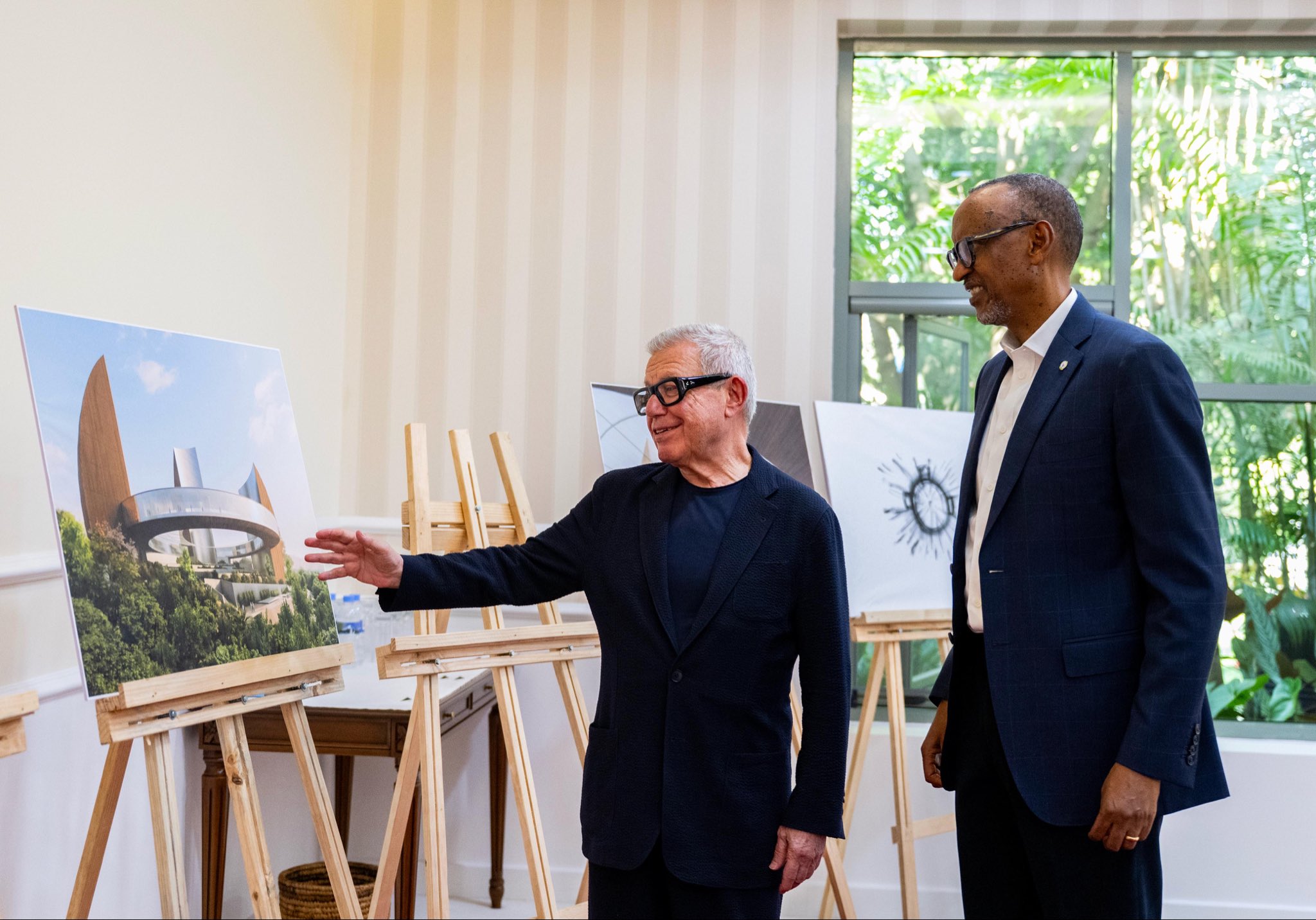
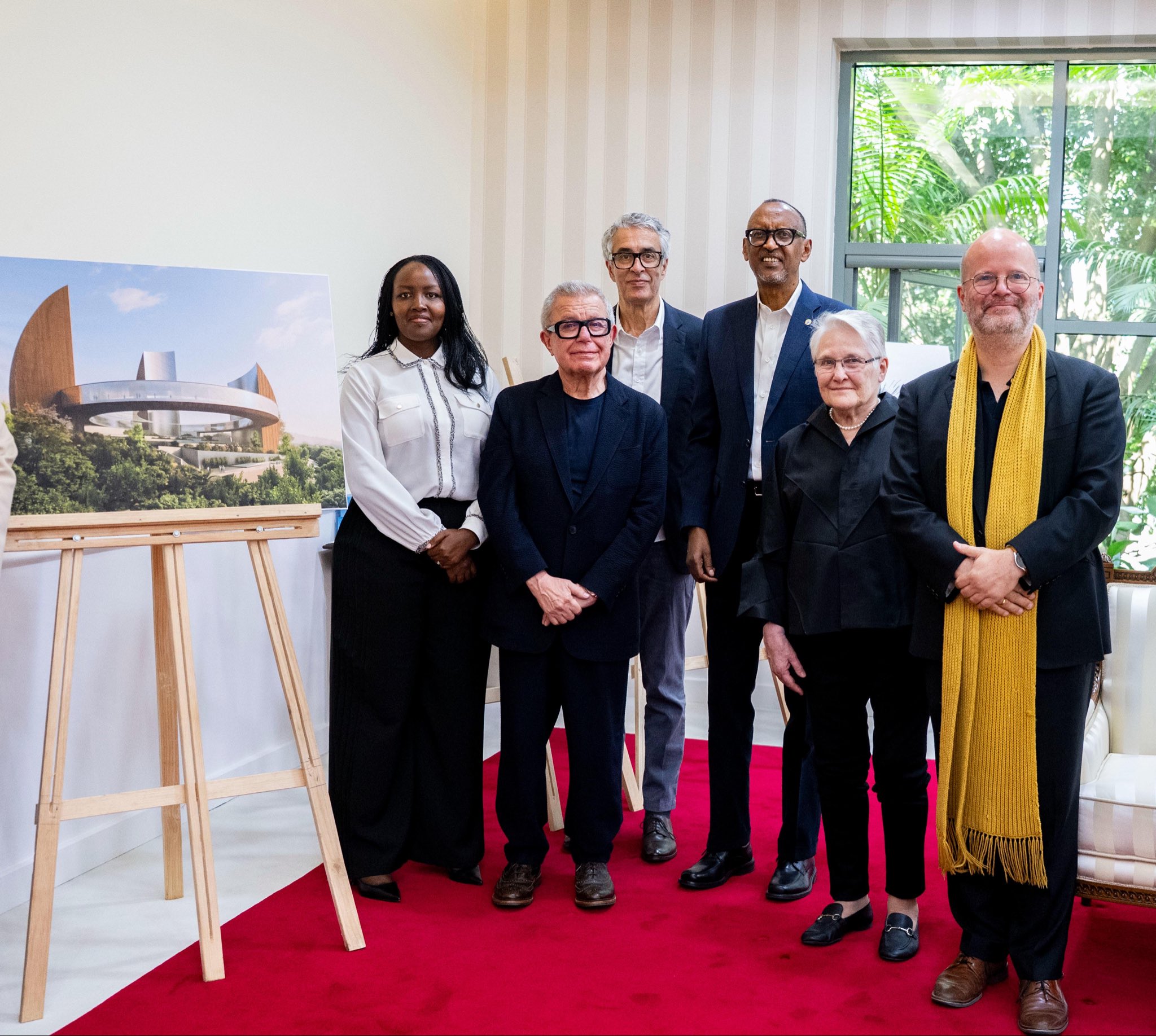
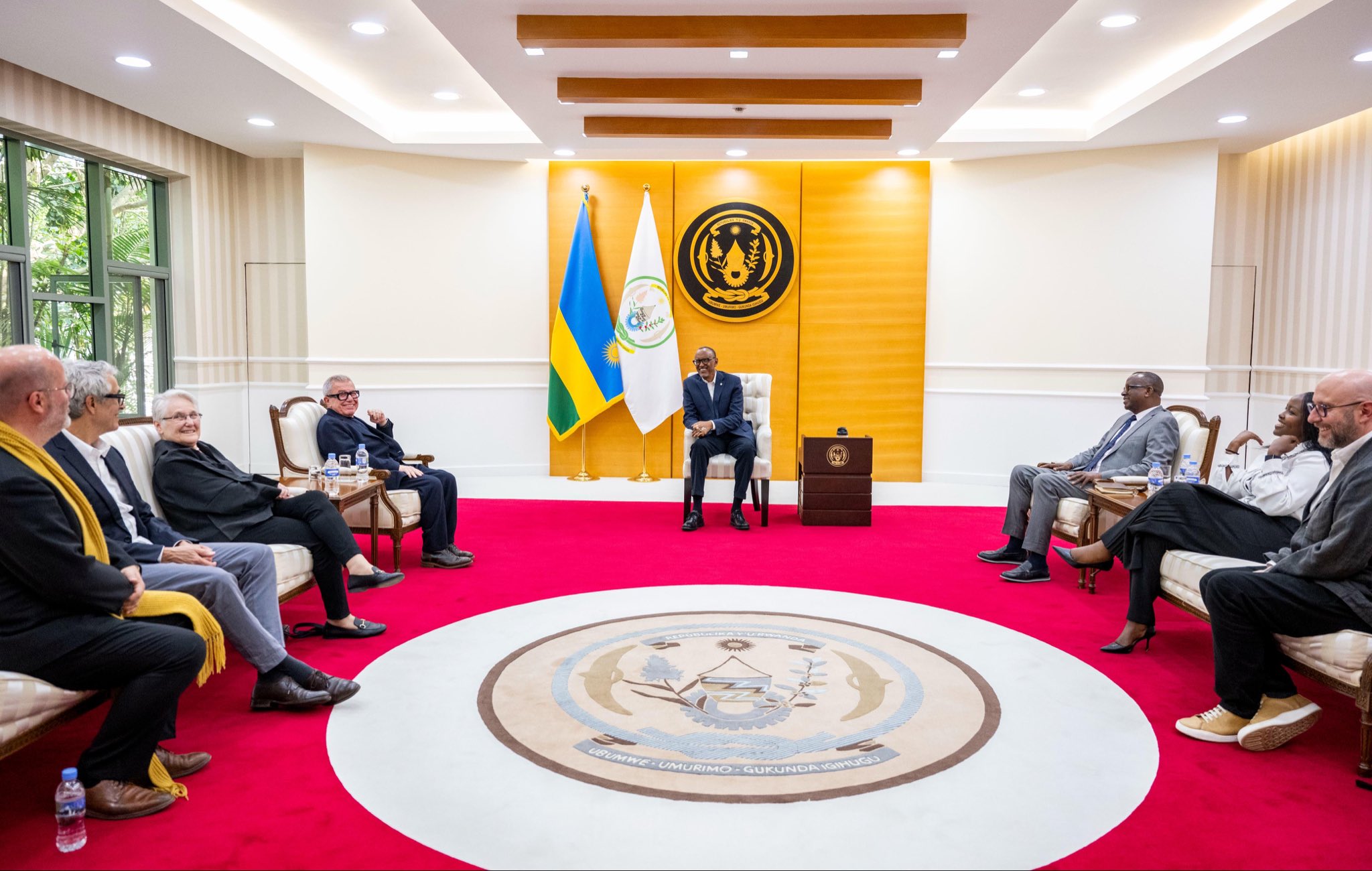
According to the Office of the President, the meeting took place at Urugwiro Village and brought together Daniel Libeskind, Founder and Principal Architect of Studio Libeskind; Nina Libeskind, Co-founder of Studio Libeskind; Stefan Blach, Partner at Studio Libeskind; and Holm Keller, Chairman of the kENUP Foundation.
The planned monument is expected to transform the Kigali Genocide Memorial in Gisozi, where more than 250,000 victims of the 1994 Genocide against the Tutsi are laid to rest, into a powerful space for remembrance, education, and reflection through cutting-edge technology and a deeply immersive, personal visitor experience.
The involvement of Studio Libeskind signals the project's global significance. The New York-based architectural firm is widely regarded as one of the world's leading practices in memorial architecture, renowned for designing spaces that confront historical trauma while promoting reflection, resilience, and healing.
Daniel Libeskind, who was born in Poland in 1946 to Holocaust survivors, has built an international reputation for what has become known as the “architecture of memory.” His designs draw on philosophy, literature, music, and history to create emotionally powerful spaces that tell stories through geometry, light, and movement.
Together with Nina Libeskind, who co-founded Studio Libeskind in 1989 and oversees its international operations, the firm has delivered some of the most important remembrance and memorial projects of the modern era.
Among its most celebrated works is the Jewish Museum Berlin, completed in 2001, which catapulted the studio onto the global stage. The museum's distinctive zigzag form and its series of empty concrete “Voids” were designed to symbolize the absence left by the destruction of Jewish life during the Holocaust, creating an architectural experience that immerses visitors in the weight of history.
The studio also gained international recognition after winning the competition to develop the master plan for the World Trade Center site in New York following the September 11, 2001 attacks. Libeskind's vision, known as “Memory Foundations,” sought to preserve the memory of the victims while enabling the site's renewal, incorporating key symbolic elements that remain central to the area today.
More recently, Studio Libeskind designed the Dutch Holocaust Memorial of Names in Amsterdam, which commemorates all 102,000 Dutch victims of the Holocaust through a labyrinth of engraved bricks bearing individual names. In Canada, the firm designed the National Holocaust Monument in Ottawa, where fractured geometric forms and dramatic spatial experiences evoke themes of loss, displacement, and hope.
The planned National Genocide Monument in Kigali will build on this legacy of memorial architecture, bringing world-class expertise to Rwanda's efforts to preserve the memory of the 1994 Genocide against the Tutsi and educate future generations.
While details of the final design have yet to be unveiled, the project is expected to create a powerful new destination for remembrance and learning, using immersive storytelling, innovative technology, and architectural symbolism to honor the lives lost and reinforce the enduring lessons of “Never Again.”
The discussions between President Kagame and the Studio Libeskind team mark a significant step forward in the development of what could become one of the world's most important contemporary memorial sites, placing Rwanda alongside other nations that have used architecture as a powerful tool for remembrance, reflection, and collective healing.

Loading comments...
Leave a comment