




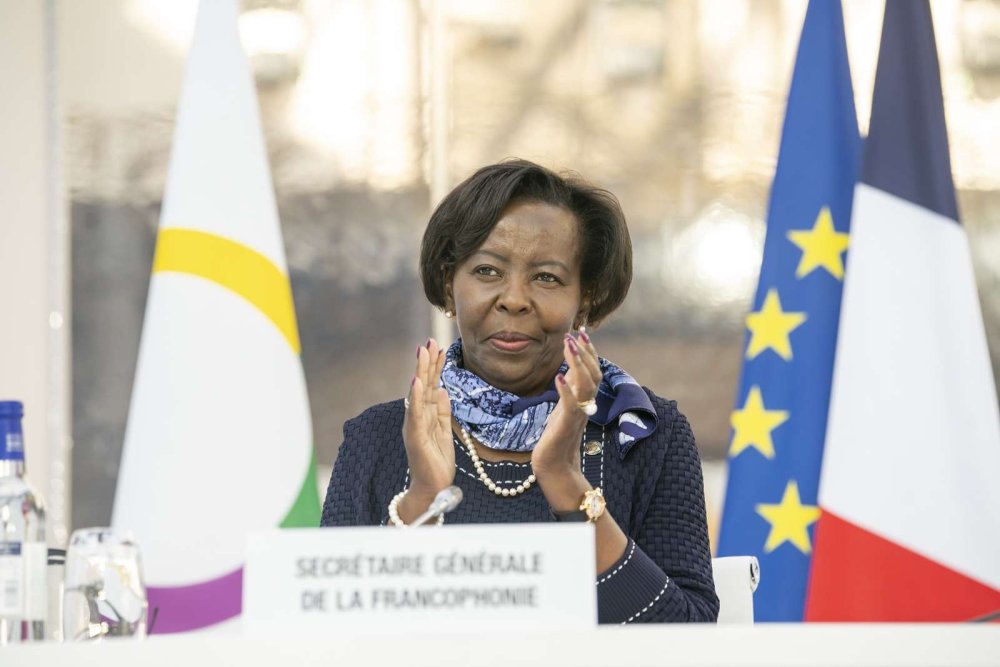
As Mushikiwabo explained to the media in February 2026, her decision to seek re-election followed consultations with the Rwandan government.
In November 2025, she had received requests from several member states encouraging her to run again, citing the achievements recorded during her two terms in office.
Although observers believe the election, scheduled for November 2026 in Phnom Penh, may favor Mushikiwabo due to the support she has received from many member states, she has emphasized that the race will be competitive. She noted that all candidates possess the qualifications required for the role, but none has given her reason to doubt her own prospects.
Winning the position of OIF Secretary-General requires broad support from member states, a factor often influenced by a candidate’s accomplishments both at home and on the international stage, as well as within the organization itself.
When Mushikiwabo assumed office in January 2019, she pledged to strengthen the OIF’s role in global affairs, positioning it as a platform for dialogue among nations and a promoter of human values.
She stressed that solidarity and cooperation remain the organization’s most important principles.
At the time, the OIF comprised 88 states and governments, including 54 full members and 34 associate or observer members.
French speakers worldwide numbered around 300 million, more than half of whom lived in Africa.
Mushikiwabo inherited an organization facing significant financial challenges and internal tensions linked to concerns over financial management during the tenure of former Secretary-General Michaëlle Jean.
The former Canadian leader had faced criticism over spending that reportedly included $500,000 on renovations to her official residence in Paris and $20,000 on a piano.
One of Mushikiwabo’s first priorities was to reform the institution internally and restore cohesion within the organization.
However, the COVID-19 pandemic, which disrupted the global economy and international cooperation, affected many of the OIF’s planned initiatives.
Countries became increasingly focused on addressing domestic challenges as travel restrictions and the suspension of international meetings hampered collaboration.
Like many international organizations, the OIF also struggled with delayed or insufficient contributions from member states.
While operational needs continued to grow, particularly in areas such as youth empowerment, women’s development, and education, available resources often failed to keep pace.
During her second term, member states agreed to increase their contributions to strengthen the organization’s capacity to fulfill its mandate.
Outstanding arrears were reduced, while countries including Rwanda, Egypt, Vietnam, and Djibouti decided to double their annual contributions.
The increase in member contributions paved the way for a larger organizational budget.
During a ministerial meeting held in Yaoundé, Cameroon, in November 2023, ministers approved a gradual increase in the OIF budget, allocating €45.7 million for 2024, €46.1 million for 2025, €46.5 million for 2026, and €46.9 million thereafter.
At the OIF Ministerial Conference held in Kigali in November 2025, member states approved a substantial increase in the 2026 budget to €71.7 million to support expanded programming across the organization.
Despite the increase, Mushikiwabo noted that available resources still fall short of meeting all the organization’s ambitions.
As a result, member states granted her exceptional authority during the Kigali meeting to seek external funding from major international partners and corporations, including companies such as TotalEnergies.
Leveraging this mandate, the OIF has planned partnerships with institutions such as the African Development Bank to support digital skills training initiatives, including the D-Clic programme. The objective is to increase the number of young people benefiting from digital training from 20,000 to 100,000 by 2026.
According to the OIF’s annual report, 1.7 million people benefited from the organization’s programmes in 2025. Around 90,000 women across member states received capacity-building support, while 300 women-led projects were funded. In 2024 alone, 50 projects received support worth €3.7 million.
The number of states and governments within the OIF reached 90 in 2025. Meanwhile, the French-speaking population continues to expand, reinforcing the organization’s global influence. Today, more than 396 million people speak French worldwide, while over 170 million are learning the language.
As Mushikiwabo prepares to seek another mandate, supporters point to the transformation of an organization once facing financial strain and internal divisions into one with stronger finances, broader membership, and expanding development programmes across the Francophone world.
Loading comments...
Leave a comment