



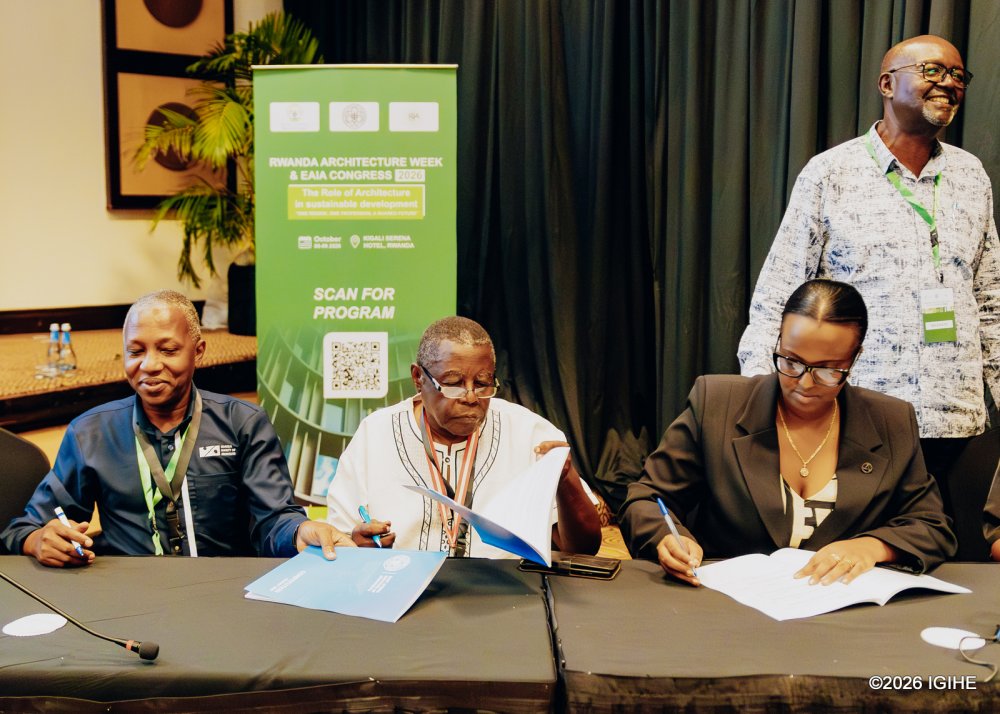
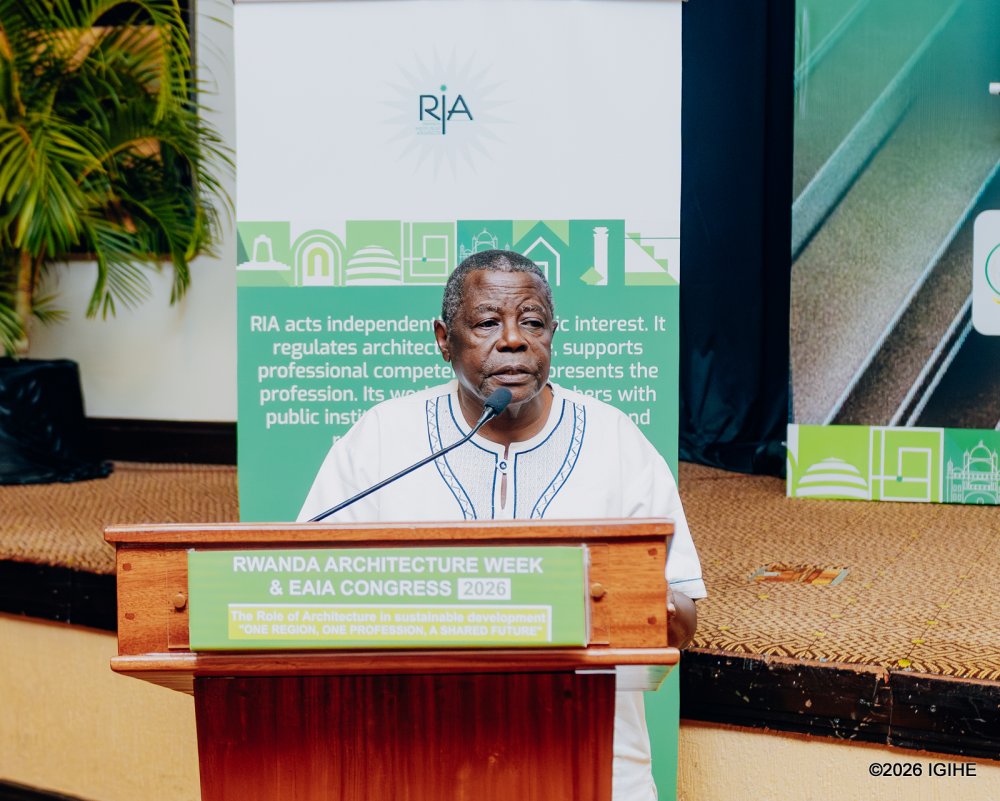
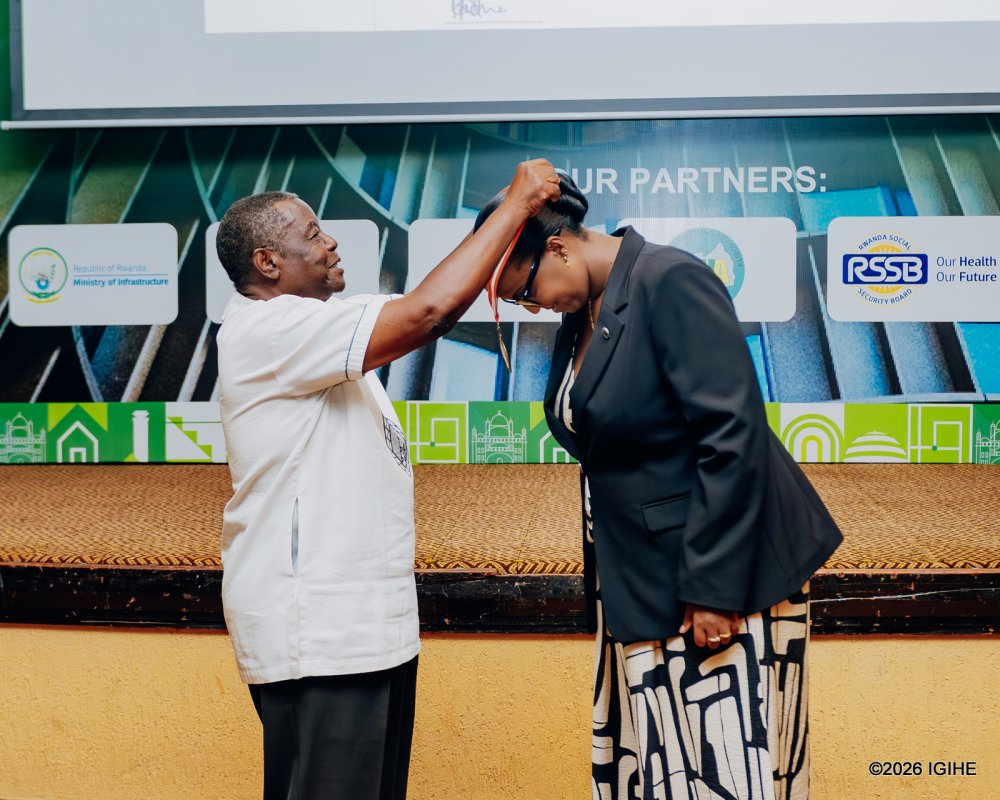
Rwanda succeeded Tanzania following a handover ceremony held on October 9 during the EAIA Congress in Kigali, which brought together leaders and members of the institute.
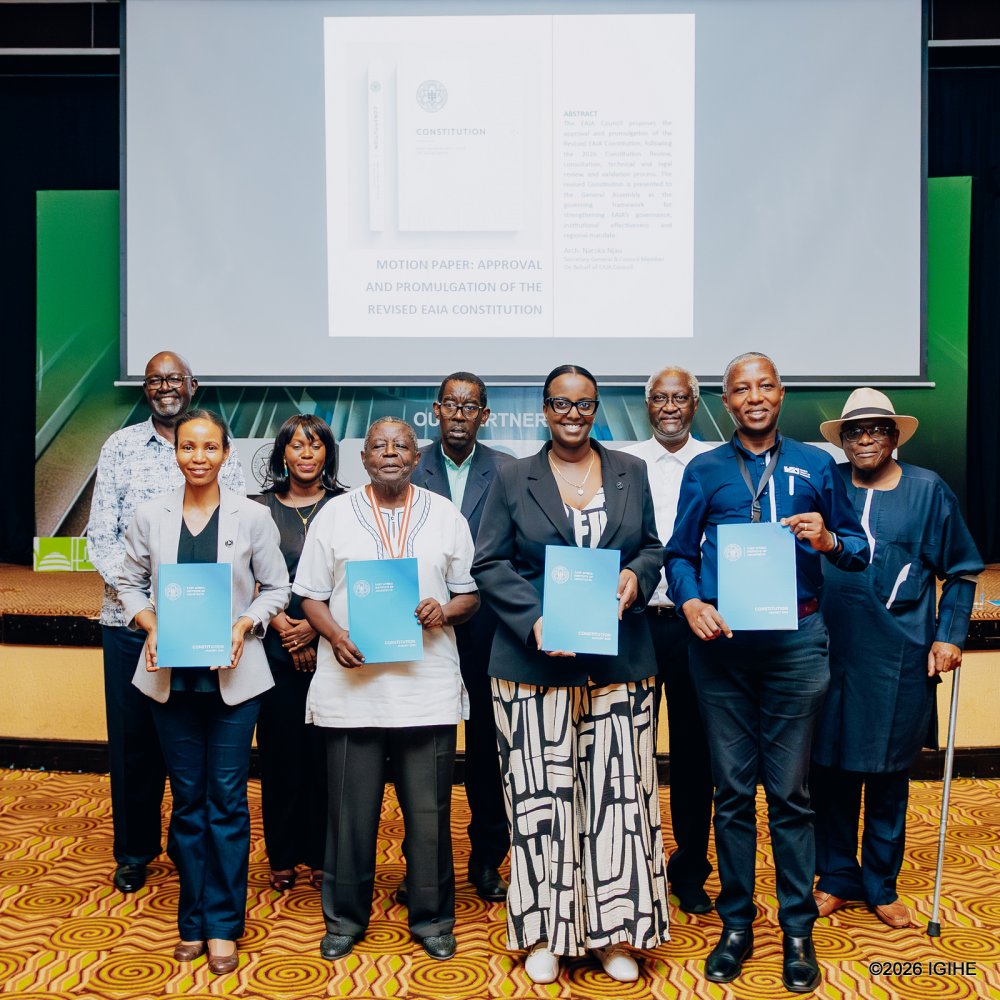
The ceremony also saw the approval of amendments to the EAIA constitution and the presentation of a draft five-year strategic plan outlining the institute’s priorities.
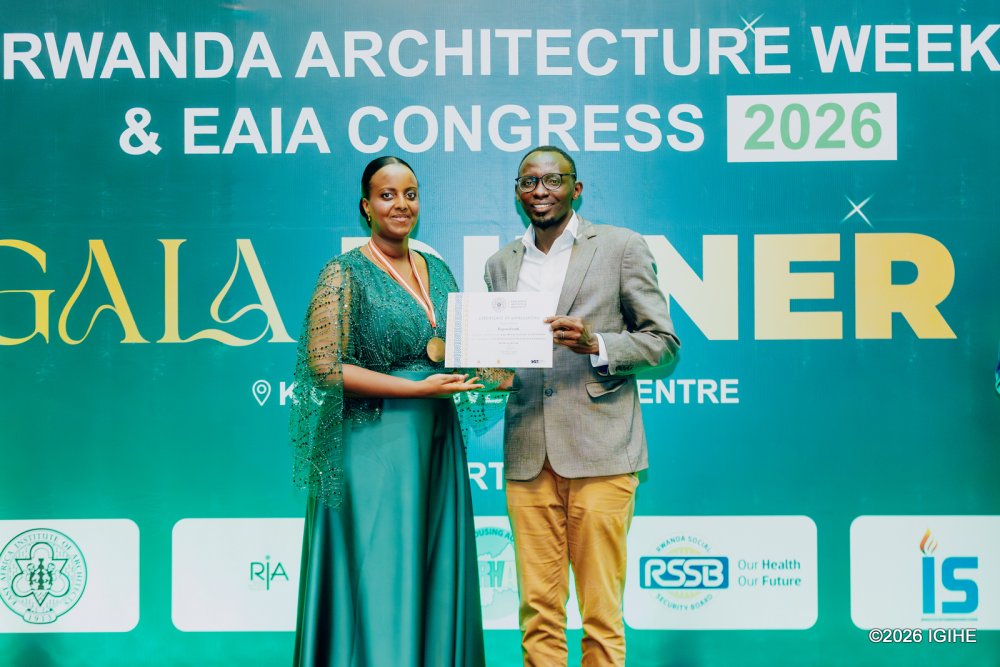
Awards were also presented to outstanding students who participated in a competition organised by an EAIA commission, bringing together architecture students from universities across the region.
In her remarks, Nishimwe thanked the outgoing leadership for its achievements and expressed appreciation to members for entrusting her with the responsibility of leading the institute.
“We appreciate the outgoing committee for its outstanding work, and we thank our members for the confidence they have placed in us. We will build on your achievements and accept this responsibility with a commitment to serving the entire region, for the benefit of every architect and the future of our profession,” she said.
Nishimwe said achieving the institute’s objectives would require collective commitment rather than the efforts of an individual leader or committee.
“Achieving our goals will not depend on one person or one committee, but on all of us working together as one region united by a common profession. We must strengthen the sharing of professional knowledge and experience, improve cooperation among ourselves, and champion the value and development of architects, because the development of the region is not the responsibility of one country alone,” she said.
The new leadership plans to strengthen the architectural profession, raise its profile and expand the role of architects in promoting sustainable development across East Africa.
Nishimwe said she would prioritise raising awareness of the value of architects and ensuring they play a meaningful role in promoting environmentally sustainable construction.
She added that the initiatives would help East African countries align their development efforts with international sustainable development goals.
The institute also intends to deepen cooperation among architects in the region and strengthen engagement with other construction professionals, government institutions and organisations involved in the sector.
Another priority is harmonising professional ethics and standards of practice across member countries to establish a more consistent framework for the profession.
The new leadership will also seek closer cooperation with institutions responsible for registering architects and other bodies involved in regulating the profession.
Nishimwe said the institute would further promote policies and legislation that support the profession, improve the quality of architectural education and training, and expand opportunities for members to share knowledge and experience.
She said implementing these priorities would help East African countries work more closely together while strengthening the quality, recognition and contribution of architecture to sustainable regional development.
Uganda is expected to succeed Rwanda in leading the EAIA under its rotational leadership arrangement, which allows member countries to take turns heading the regional body.





Loading comments...
Leave a comment