




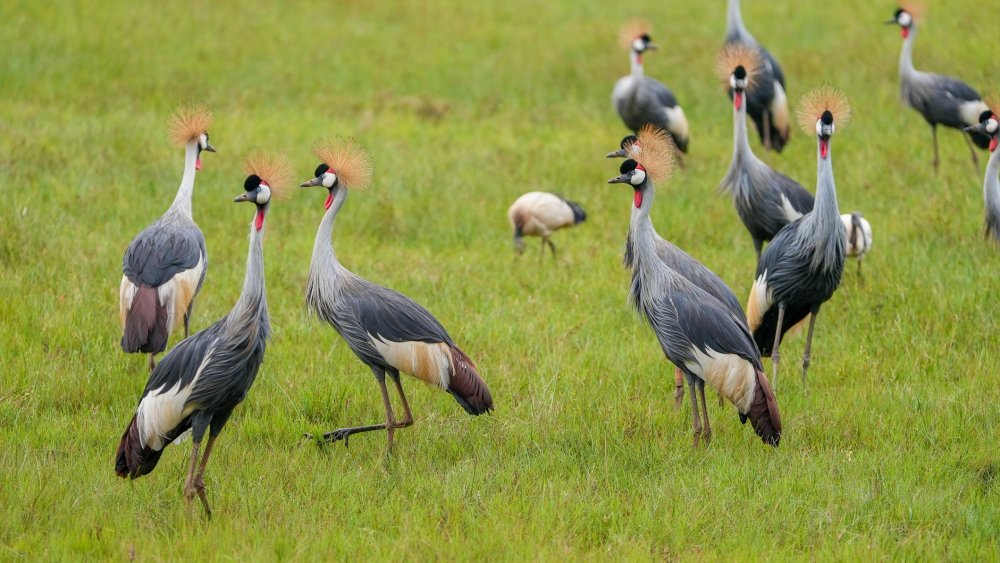
Figures released by the Rwanda Wildlife Conservation Association (RWCA) on August 14, 2026, show that Rwanda recorded 1,438 cranes in 2026, up from 487 counted in the first national census in 2017.
The latest figure represents an increase of 951 cranes, or 195%, meaning the population has nearly tripled in less than a decade.
RWCA began its conservation efforts in 2015 after finding that the number of cranes in the wild had fallen to fewer than 300. The organisation focused on stopping the illegal capture of the birds, including those taken from the wild and kept in homes, gardens and hotels, before being rescued and taken to appropriate care facilities.
In 2017, RWCA conducted Rwanda’s first national crane census, recording 487 birds. Since then, annual censuses have provided data on changes in the crane population and other information used to guide conservation efforts.
The population has continued to grow in recent years. In 2025, Rwanda had 1,245 cranes, meaning about 200 more were recorded in 2026 alone.
Rugezi wetland drives recovery
RWCA says Rugezi Wetland, which stretches across Burera and Gicumbi districts, has played a major role in the recovery of Rwanda’s crane population.
Only 71 cranes were recorded in Rugezi in 2017. By 2026, that number had risen to 378, an increase of 307 birds.
The wetland now accounts for more than a quarter of all cranes recorded in Rwanda.
The increase has been linked to efforts to restore and protect Rugezi Wetland, as well as collaboration with communities living around it to encourage their participation in environmental conservation.
RWCA has 75 wetland guardians working in Rugezi on a daily basis. They monitor the cranes, report illegal activities, help restore degraded parts of the wetland and work with local communities to reduce activities that could damage the ecosystem.
Despite the increase in numbers, RWCA says cranes remain classified as a threatened species on the International Union for Conservation of Nature (IUCN) Red List, meaning continued conservation efforts are needed to protect the population.
Because cranes can move across national borders, RWCA expanded its conservation efforts beyond Rwanda in 2025 by signing agreements with four organisations in Burundi, Tanzania and Uganda.
The agreements aim to strengthen protection of cranes across borders, particularly birds that have been observed moving from Rwanda into neighbouring countries.
Loading comments...
Leave a comment