




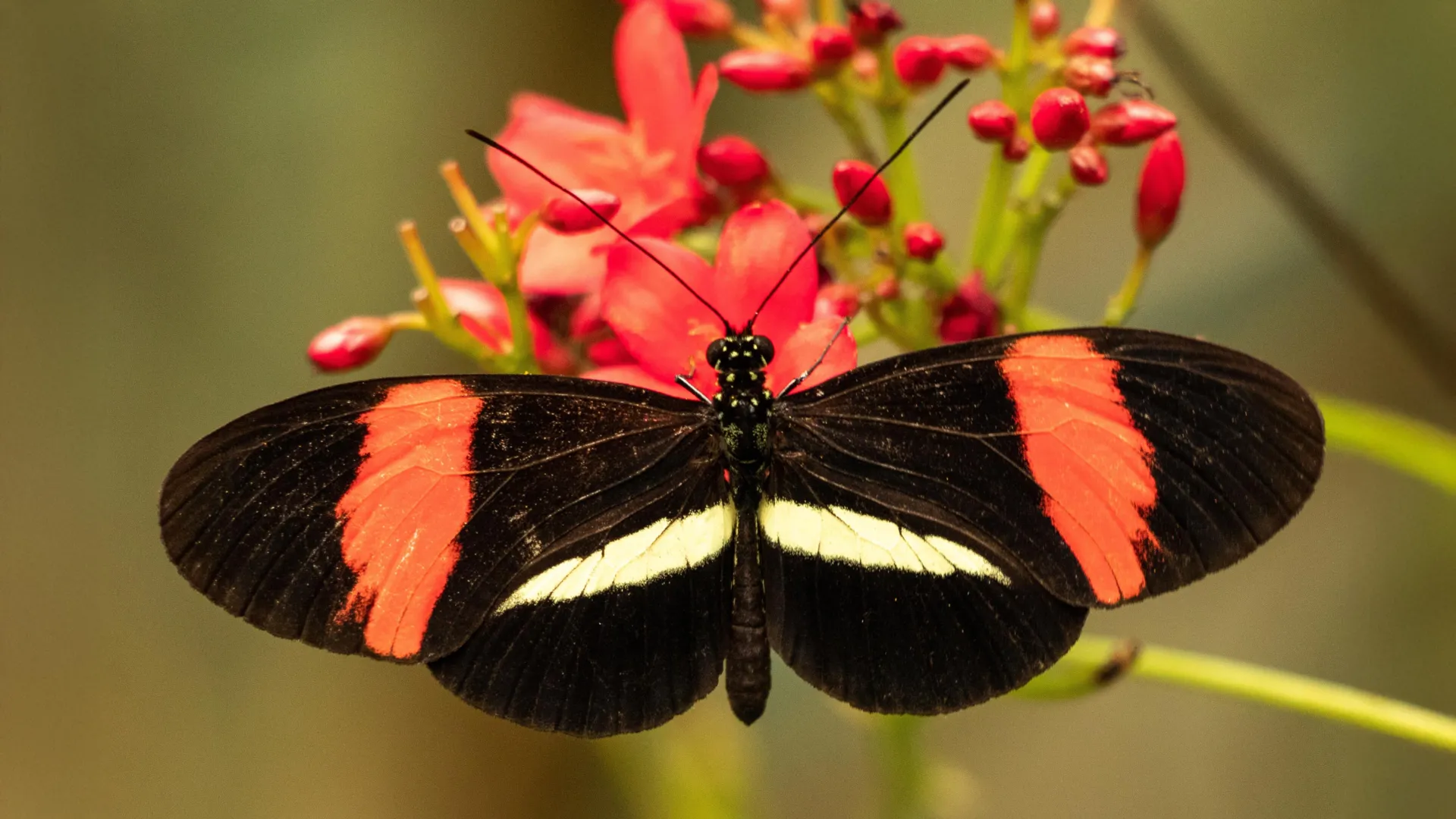
According to a new study led by researchers from the University of Bristol and published in Nature Communications, certain butterflies in the Heliconius genus show unusually long lifespans and remarkably slow signs of ageing compared to their close relatives.
Most butterfly species live only a few weeks in their adult stage. However, Heliconius butterflies stand out for their extraordinary longevity. Some individuals can survive for nearly a year, up to 25 times longer than related species.
For example, Heliconius hewitsoni has been recorded living up to 348 days, while a closely related species, Dione juno, survives for only about 14 days. This dramatic difference suggests that Heliconius butterflies have evolved a unique biological strategy that supports extended life.
Even more striking is evidence that some of these butterflies may barely age in the traditional sense. In experiments measuring physical performance, older individuals of Heliconius hecale showed no significant decline in strength compared to younger ones.
This contrasts sharply with other butterfly species, which typically show clear deterioration as they age. These findings suggest that certain Heliconius species may resist the usual biological wear and tear associated with ageing.
One widely discussed explanation for their long life is their unusual diet. Unlike most butterflies that feed mainly on nectar, Heliconius butterflies also consume pollen, which provides additional nutrients such as amino acids. Researchers believe this dietary adaptation may contribute to their improved body maintenance and slower ageing.
However, the study also found that even when pollen is removed from their diet, these butterflies still live longer than their relatives, indicating that diet alone does not fully explain their longevity.
Scientists now believe that both ecological factors and deep evolutionary changes are involved in shaping the lifespan of these insects. Their ability to maintain muscle function and body condition over time makes them especially valuable for studying the biology of ageing.
Researchers suggest that Heliconius butterflies could become an important model for future longevity research. By comparing long-lived species with short-lived relatives, scientists hope to uncover the genetic and biological mechanisms that control ageing. Such insights could one day contribute to understanding how ageing works across the animal kingdom, including in humans.
Ultimately, this discovery highlights how even small creatures like butterflies can provide powerful clues about life, health, and the possibility of slowing the ageing process.
Loading comments...
Leave a comment