




The support will back key elements of Rwanda’s National Ebola Preparedness and Contingency Plan, with a focus on strengthening surveillance and early detection systems, improving Infection Prevention and Control (IPC), and enhancing Water, Sanitation and Hygiene (WASH) services in high-risk areas, including border points.
The programme will also support risk communication and community engagement initiatives aimed at ensuring that communities have access to clear and accurate information on prevention measures and disease transmission.
In parallel, the UK will provide an additional £800,000 to Burundi to support its Preparedness and Response Plan for Viral Haemorrhagic Fevers, targeting similar priority areas, including surveillance, IPC, WASH, and public awareness.
Across the region, the UK will also invest in strengthening data and information management systems to improve risk monitoring and enhance coordination in the event of outbreaks. The programmes will be implemented through partners working in support of national government plans under the UK’s Tackling Deadly Diseases in Africa Programme (TDDAP2).
The British High Commission said the initiative builds on recent collaboration in responding to public health emergencies and reflects the UK’s commitment to supporting partner countries in strengthening health security and preventing outbreaks before they escalate.
Development Director at the British High Commission in Kigali, Billy Stewart, said the support is aimed at protecting lives through stronger preparedness systems.
“At the heart of this support is a simple goal: saving lives,” he said. “By strengthening preparedness, improving prevention measures, and supporting communities with clear information, the UK is helping Rwanda and Burundi reduce the risk of Ebola outbreaks and protect their people.”
The announcement comes as health authorities across the region continue to monitor Ebola outbreaks affecting parts of East and Central Africa, involving the Bundibugyo strain, a particularly concerning variant for which there is currently no approved vaccine or specific antiviral treatment.
Health officials say this makes surveillance, early detection and rapid response critical to containing the disease. Recent data indicates that the Democratic Republic of Congo has reported 635 confirmed cases and at least 127 deaths, while Uganda has recorded 19 confirmed cases and two deaths, with infections reported in Kampala, Wakiso, and western border districts.
In Rwanda, officials have moved to reassure the public that robust prevention systems remain in place. Speaking during a June 6 briefing, Prime Minister Dr Justin Nsengiyumva said the country has strengthened surveillance, prevention and response systems to guard against potential importation of the virus while maintaining normal economic and social activity.
“The Ebola outbreak continues to be reported in the eastern region of Africa. However, Rwanda has strengthened its prevention measures and monitoring, and we are confident in protecting the lives of our citizens without disrupting economic activities and the normal social life of the population,” he said.
Health Minister Dr Sabin Nsanzimana said Rwanda’s preparedness strategy is built on five pillars: public awareness and communication, surveillance, detection capacity, response capability, and human resources. He added that Rwanda has strengthened early detection systems, particularly at border points, with the ability to return test results within hours.
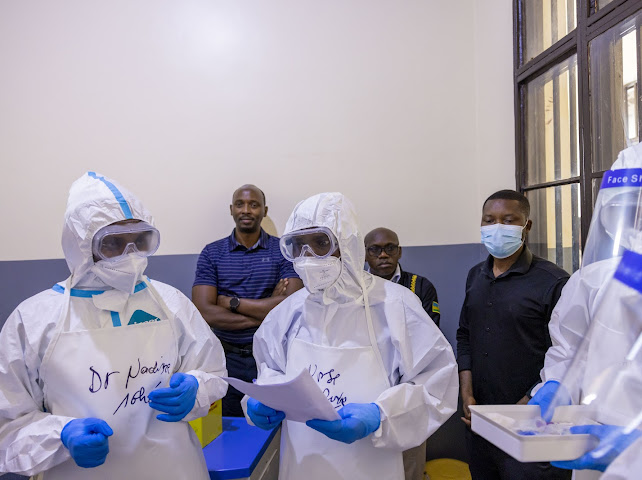
He also noted that ongoing simulation exercises and training for health workers and emergency responders are part of efforts to ensure rapid and coordinated response in the event of an outbreak.
The Ministry of Health and the Rwanda Biomedical Centre continue to monitor developments in neighbouring countries closely and have urged the public to remain vigilant, observe hygiene practices, and report symptoms early.

Loading comments...
Leave a comment