



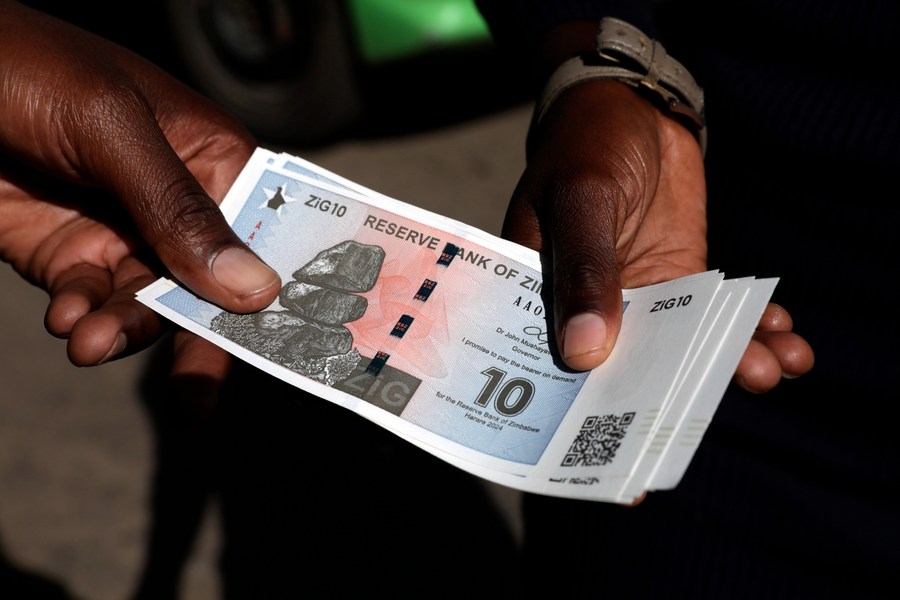
Introduced in April 2024, the ZiG was designed to restore confidence in the domestic currency and promote monetary stability. However, many Zimbabweans remain reluctant to hold their savings in it, preferring the US dollar for everyday transactions.
According to the Reserve Bank of Zimbabwe (RBZ), annual inflation measured in ZiG stood at 3.7 per cent in September 2026, while monthly inflation was 0.54 per cent. Despite the relatively low inflation rate, the currency continues to face challenges in gaining widespread public acceptance.
Zimbabwe abandoned its domestic currency in 2009 following a period of hyperinflation that wiped out savings and undermined public confidence. Although a local currency was reintroduced in 2018, subsequent instability reinforced concerns about its ability to preserve purchasing power.
A report published by Al Jazeera examined the difficulties facing Zimbabwe’s latest attempt to strengthen its domestic currency, highlighting the experiences of workers and businesses still wary of the ZiG.
Primary school teacher Charles Mbwandarikwa told Al Jazeera that he exchanges the ZiG portion of his salary quickly rather than keeping it, following losses suffered during previous currency crises.
He lost his pension savings when Zimbabwe’s currency collapsed in 2009. After the reintroduction of a local currency in 2018, he said the value of his salary fell from the equivalent of $540 to $40 by the end of that year.
Economist Cornelius Dube told Al Jazeera that demand for the currency remained weak. “ZiG has to be available in a ratio relative to its demand. Demand for ZiG is currently very subdued,” he said.
Dube said reducing dependence on the US dollar was possible, but would require patience. “History shows that it is possible to de-dollarise, though it’s not easy. It takes time,” he said.
He also argued that policymakers should encourage confidence in the domestic currency rather than force people to abandon the dollar.
“Policy should not try to force a conversion but should create the necessary incentives which will eventually see both businesses and consumers being indifferent to holding ZiG or US dollars,” Dube said.
Zimbabwe’s experience highlights the difficulty of rebuilding confidence after repeated currency crises. While lower inflation can support monetary stability, the ZiG’s long-term prospects will also depend on whether households and businesses believe it can reliably preserve the value of their earnings and savings.
For the government, the challenge is not simply to increase the circulation of the ZiG, but to convince Zimbabweans that holding and using the currency is a dependable choice.
Loading comments...
Leave a comment