



International conflicts and supply chain disruptions expose the vulnerability of energy markets, while competition for critical minerals essential to the energy transition is reshaping global power relations.
For Africa, these developments have far-reaching implications for economic transformation, industrialisation, political autonomy and long-term development.
Despite the continent’s vast energy resources, many African countries continue to face significant constraints in energy access, infrastructure, investment and technological capacity.
This creates a strategic paradox: Africa possesses resources that are increasingly vital to the global economy, yet it does not always have the financial, technological and institutional capabilities required to fully harness them for its own development.
The central challenge, therefore, is not simply to secure access to energy, but to strengthen Africa’s capacity to shape its own energy future. This requires regional integration, investment in infrastructure, local value addition and stronger cooperation to ensure that energy resources contribute to industrialisation, economic resilience and sustainable development.
Energy access must deliver development
The scale of Africa’s energy access challenge remains significant. According to the World Bank’s 2026 reporting on progress towards Sustainable Development Goal 7, more than 560 million people in Sub-Saharan Africa lacked electricity in 2024. Approximately 970 million people in the region also lacked access to clean cooking.
These figures highlight the need to look beyond connection numbers. A health facility needs dependable electricity to operate essential equipment and store medicines. Farmers require power for irrigation, processing and refrigeration, while small businesses need predictable energy costs to remain productive.
A connection offers limited benefit if electricity supply is unreliable or households cannot afford consumption. Clean cooking must also be integrated into national energy plans, with solutions assessed against the full cost of equipment and recurring energy use.
Energy policy should support the transformation of agriculture, manufacturing, mining, digital services and small and medium-sized enterprises. Electrification must be accompanied by access to equipment, skills, working capital and markets if it is to generate jobs and improve productivity.
For mineral-producing countries, local value addition deserves serious attention. Processing and component production can create domestic economic opportunities, but projects must be assessed against electricity prices, workforce skills, transport costs and market demand. The objective should be to build competitive businesses rather than establish processing capacity that cannot be sustained.
Financing choices and regional cooperation
Expanding energy access requires financing that countries can sustain. The World Bank reported that international public clean energy finance to developing countries reached US$ 24.6 billion in 2024,while flows to least developed countries fell by 11% to US $3.7 billion.
Governments should assess proposed investments against realistic demand, expected revenues and public budget obligations. Contracts should clarify who bears construction, currency and demand risks, while financing arrangements should avoid creating unmanageable public liabilities.
Utilities also need sufficient revenue to operate and maintain networks. Better billing, reduced technical and commercial losses, transparent performance standards and targeted assistance for vulnerable households can help balance affordability with reliable service delivery.
There are encouraging signs of progress. In June 2026, the World Bank reported that Mission 300, a joint initiative with the African Development Bank, had connected more than 50 million people across 40 countries towards its goal of connecting 300 million people by 2030.
Sustaining such progress requires measuring not only new connections but also reliability, affordability and productive use.
Regional cooperation is equally important. Interconnected power networks and regional electricity markets can allow countries to share resources, diversify supply and make better use of available capacity. However, these arrangements require clear rules for pricing, payments, shortages and interruptions, alongside contingency plans to manage dependence on external suppliers.
Resilience must also be built into national energy systems. Investment in transmission, distribution, maintenance and energy efficiency should accompany new generation capacity. Governments should protect critical infrastructure and ensure that hospitals, water services, communications networks and security operations have appropriate contingency arrangements.
Turning energy resources into strategic advantage
Geopolitical tensions, volatile markets and disrupted supply chains can transmit energy shocks across borders. Fuel-importing economies face higher import bills and transport costs, while exporters must manage uncertain revenues. Meanwhile, the transition towards cleaner energy is changing investment priorities and demand for critical minerals.
The ISCA report Global Energy Dynamics and Implications for Africa by Miller and Ali (2026) examines energy within the broader pursuit of development, security and sovereignty.
It highlights opportunities in renewable energy, mineral value chains, storage, smart grids and entrepreneurship, alongside challenges involving infrastructure finance, regional trade and external dependency.
African governments should assess energy agreements by the lasting services, skills and productive capabilities they create. Diversifying supply sources, financing and technology partnerships can strengthen negotiating capacity and reduce exposure to individual external partners. Energy sovereignty should guide mutually beneficial cooperation without overlooking the importance of international partnerships.
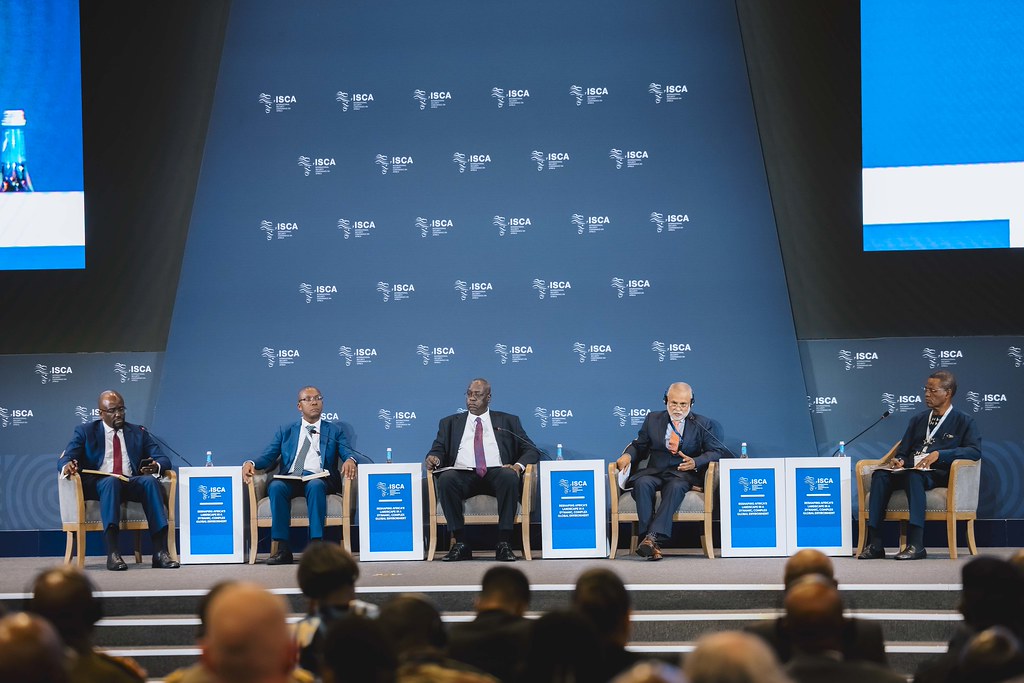
The ISCA Discussion Series on Contemporary Energy Dynamics and Strategic Options for Africa, scheduled for 28 October 2026 at the Kigali Marriott Hotel, provides a platform to connect these challenges with practical policy choices.
The broader priority, however, extends beyond any single discussion. Governments, investors and regional institutions must translate policy commitments into measurable outcomes, including more reliable electricity, affordable household energy, stronger domestic technical capabilities and expanded regional electricity trade.
As a platform for research, dialogue and policy engagement on African security challenges, ISCA can help connect energy choices with wider development and security priorities.
Africa’s energy resources will not automatically translate into prosperity or strategic autonomy.
Their value will depend on the quality of institutions, the sustainability of financing, the strength of regional cooperation and the ability to turn energy into productive capacity. The decisions made today will help determine whether the continent’s energy wealth becomes a foundation for lasting security and development.
The author, Dr. Eric Ndushabandi serves as the Director of Research and Publication at the International Security Conference on Africa (ISCA)
Loading comments...
Leave a comment