



Since joining Shenge in 2023, Kefa has received formal assessment, physiotherapy, specialised learning support and tailored nutrition. Today, he can sit, walk, play, communicate and interact with others independently, participating far more fully in everyday life.
His mother's journey has also changed. Now a member of the Shenge Cooperative, Specioza is building her own income through its tailoring and agricultural enterprises.
"Shenge has been a lifeline for my family. They helped me see my son's potential when I felt lost and reminded me that he was a valuable child like any other. And my neighbours no longer call him a useless fool," she says.
Kefa’s story should not be an exception. It demonstrates what is possible when a child receives the right support, a family is strengthened, and a community learns to recognise ability. However, many children with disabilities across Rwanda, particularly in rural and underserved communities, still need greater access to similar opportunities.
Access to healthcare, rehabilitation, inclusive education and social support remains an important priority for improving their wellbeing and participation in society. Their parents and caregivers also often face considerable financial and emotional pressures. The scale of the need is underscored by the 2022 National Census, which recorded 391,775 persons with disabilities, with children aged 0–17 accounting for approximately 19.3% of this population (RPHC5, 2022).
Closing this gap requires more than goodwill or one-off donations. It requires sustained investment, community-centred systems, and strategic partnerships that turn national inclusion commitments into everyday reality.
In northern Rwanda, Shenge Children Organisation is showing what that looks like and calls for stronger backing from the wider development community.
A holistic model rooted in the community
Based in Burera District, Shenge is a humanitarian organisation supporting children with disabilities from vulnerable households. Its work rests on a simple conviction: children with disabilities do not need pity; they need equitable access to inclusive environments and the conditions to thrive.
What sets Shenge apart is its recognition that you cannot sustainably support a child without strengthening their family and surrounding community.
Rather than working in silos, Shenge integrates four pillars of support, alongside advocacy and community awareness initiatives aimed at challenging stigma and championing disability rights at the grassroots.
The first pillar is health and rehabilitation, through which children receive medical assessments, physiotherapy, referrals and ongoing follow-ups. The second is special-needs education, which focuses on building foundational learning skills and self-confidence. The third is nutrition, with tailored daily meals provided at the centre to support each child's wellbeing. The fourth is parent empowerment, which equips caregivers with vocational skills and supports the formalisation of their economic activities through the Shenge Cooperative, with the goal of building household resilience.
Isolated interventions rarely stick. A child who receives school supplies but no medical care will still fall behind. A mother who understands her child’s needs but has no income cannot sustain that support. By working with the child, the household and the community together, Shenge builds a pathway to inclusion that lasts.
Turning inclusion into measurable change
Since 2018, Shenge has supported 136 children, 50 of whom are currently enrolled in its programmes. Of these, 28 have developed the skills and confidence needed to transition into mainstream schools. The organisation has also trained more than 100 parents, with 77 now members of the Shenge Cooperative, where they are actively generating income.
The distinction matters. True inclusive education is not about adding a child to a school roster; it is about identifying their individual learning needs, adapting instruction and building bridges into broader society. The shift among parents matters just as much. Caregivers who once faced isolation now have a peer network and practical guidance, changing not only how they care for their children, but also how their neighbours view disability.
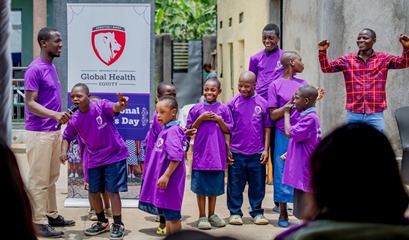
Shenge’s collaboration with organisations such as the University of Global Health Equity (UGHE) demonstrates the value of combining local support and community trust with academic, research and clinical expertise to strengthen the quality and impact of care. Similarly, its collaboration with BPN Rwanda to strengthen the Shenge Cooperative through entrepreneurship training, capacity building and executive coaching highlights the importance of partnerships in building resilient communities.
What Shenge is building next
Shenge’s next chapter is to build an integrated rehabilitation centre in Burera District, purpose-designed to meet the needs of children with disabilities and their families. The facility is estimated to cost USD 1,000,000, inclusive of furniture and equipment, and is expected to serve more than 800 people annually. The current funding gap stands at USD 900,000.
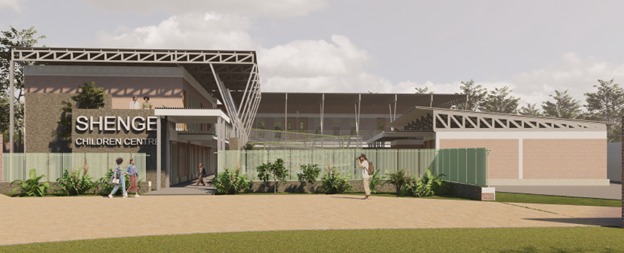
To make this possible, Shenge has four institutional priorities: the construction and equipping of the custom-designed rehabilitation facility, strengthening the workforce in special-needs care, diversifying revenue beyond short-term donations, and structuring every partnership around practical programme outcomes and shared accountability.
Five ways to partner with Shenge
Partnering with Shenge is not an act of charity; it is a high-return approach towards delivering shared development goals. Five groups are uniquely positioned to contribute to this effort.
Government and public institutions, particularly ministries and local authorities responsible for education, health and social protection, can work with Shenge to strengthen early identification and referral pathways, expand inclusive classrooms and align national disability frameworks with grassroots realities. This could include teacher training at Shenge to provide hands-on experience, as well as adapting curricula to reflect realities on the ground.
International NGOs and development partners can support Shenge as global aid shifts towards locally led development. Rather than establishing parallel programmes, they can invest in joint initiatives, technical assistance and multi-year funding to scale existing interventions. One proposed opportunity is a three-year programme worth USD 450,000, covering more than 800 beneficiaries annually.
The private sector can also move beyond transactional corporate social responsibility by co-investing in digital inclusion and vocational training for parents or contributing cash and in-kind support towards construction of the rehabilitation centre. Businesses could sponsor one or more of the facility's five blocks, with each block, including furniture and equipment, estimated at USD 225,000. Such contributions would help address the USD 900,000 funding gap, with opportunities for named recognition and employee volunteering days.
Universities and research institutions can partner with Shenge on disability research, community health screenings, teacher training and impact documentation. These collaborations would generate local evidence on effective and scalable approaches to disability inclusion.
Foundations and philanthropists can provide flexible, predictable funding to strengthen grassroots initiatives. Beyond sponsoring individual children or providing medical supplies, philanthropic contributions can support the core systems that enable Shenge to plan for the long term, retain specialised staff and establish its integrated rehabilitation centre. Potential arrangements include a core-funding package of USD 150,000 annually for three years or a named contribution towards the centre.
An invitation to build together
Rwanda’s development ambitions depend on ensuring no citizen is left behind, and children with disabilities cannot be treated as an afterthought. Inclusion does not happen through policy alone; it happens when a child is equipped to learn, a parent is empowered to earn, a teacher is trained to adapt, and a community sees ability instead of limitation.
Governments bring policy alignment, development agencies bring technical scale, businesses bring innovation, universities bring evidence, and philanthropists bring catalytic capital. Shenge brings the community, the model and the children.
The question for potential partners should no longer be “How much can we donate?” It should be “What can we build together, and how do we sustain it?”
Partner with Shenge. Invest in potential, strengthen families, and build inclusive communities, because a society that unlocks the future of its most vulnerable children builds a stronger future for all.
To discuss a partnership or arrange a visit to the centre in Burera District, contact Shenge at [email protected] or through its social media accounts.
The authors, Alice Higiro and Fedesi Murisa, are founders of Shenge Children Organisation.
Loading comments...
Leave a comment