



One of the earliest widely publicised examples involved US President Donald Trump's granddaughter, Arabella Kushner, daughter of Ivanka Trump and Jared Kushner. In February 2016, Ivanka shared a video of Arabella reciting Chinese poetry, which attracted considerable attention in China. In April 2017, Arabella, then five, and her younger brother Joseph performed a Chinese folk song and recited classical Chinese poetry for Chinese President Xi Jinping and his wife, Peng Liyuan, during their visit to the United States.
In 2017, MacKenzie Bezos, then married to Amazon founder Jeff Bezos, also spoke about incorporating Mandarin lessons into their children's education, alongside Singapore mathematics, sports and other activities.
More recently, on May 14, 2026, Tesla CEO Elon Musk posted on X that his son was learning Mandarin. The comment attracted further attention when Musk brought his six-year-old son, X, to Beijing during US President Donald Trump's visit to China.
Although these examples involve different families and periods, they reflect growing recognition of Mandarin's potential value in education, business and international engagement. While some parents introduce the language to their children as an investment in future opportunities, others are drawn to it through professional interests, academic pursuits, travel and cultural curiosity.
China's position in the global economy provides an important context for this interest. In 2025, its total imports and exports of goods reached 45.47 trillion yuan (approximately $6.48 trillion), representing a 3.8% increase from the previous year. Its trade network covered more than 240 countries and regions, with trade growing in over 190 of these markets. These figures illustrate the country's extensive commercial relationships and its continued importance in global trade.
However, the growing interest in Mandarin should not be understood simply as a response to China's economic strength. It also reflects changing educational priorities, expanding international partnerships and the recognition that linguistic and cultural understanding can help people navigate an increasingly interconnected world.
A language connected to global opportunity
The economic case for learning Mandarin is particularly evident in international trade. China is a major source of manufactured goods, machinery, electronics and industrial equipment, while its domestic market offers opportunities for businesses seeking to reach consumers in the country. In 2025, trade between China and African countries reached a record $348 billion, marking a 17.7% increase from 2024, according to official figures.
These connections create practical reasons for entrepreneurs, employees and professionals to learn Mandarin. Communicating directly with Chinese suppliers and business partners can help people discuss product specifications, negotiate prices, clarify expectations and develop relationships over time. Although interpreters and translation technologies facilitate international business, understanding the language can help people recognise cultural nuances and participate more directly in discussions.
The advantages extend to employment. Chinese companies operating internationally need people with different professional skills, and Mandarin can complement qualifications in engineering, logistics, finance, technology, journalism and business administration. An engineer who understands Mandarin, for instance, may find it easier to engage with Chinese technical teams, while a journalist who speaks the language can access Chinese media, interview sources and follow developments without relying entirely on translated material.
Translation and interpretation also offer professional opportunities. International projects require people who can facilitate meetings, translate documents and help teams communicate across linguistic boundaries. Learning Mandarin alongside another professional qualification can therefore widen career options, particularly for young people preparing to enter competitive labour markets.
Education is another important motivation. Students who learn Mandarin can prepare for scholarships, academic exchanges and further studies in China. Others pursue the language because of an interest in Chinese history, literature, music, film and contemporary society. The language can therefore serve both as an academic pursuit and a skill that complements professional development.
The interest is also visible on digital learning platforms. According to Duolingo's 2025 Language Report, Chinese was the fastest-growing language studied on the platform in 12 countries, including Brazil, Argentina, France, Germany, Indonesia, Mexico, Poland, South Korea, Spain, Thailand and Türkiye. It was also the second-fastest-growing language in the United States. Globally, Chinese ranked eighth among the platform's most-studied languages.
Although these figures reflect activity among Duolingo users rather than the total number of Mandarin learners worldwide, they illustrate the geographical reach of interest in the language.
For African countries, these developments have particular relevance. As trade and investment links with China expand, language skills can help local businesses engage with suppliers, customers and investors. Rwanda, for example, recorded bilateral trade with China worth $849 million in 2025, while its exports to the Chinese market increased by 42% to $227 million.
The expanding relationship creates opportunities for Rwandan professionals and businesses to strengthen their engagement with Chinese partners. However, Mandarin should not be viewed as a qualification that automatically guarantees employment or economic success. Its value depends on how learners combine it with other competencies and apply it in practice.
Beyond commerce: Understanding people and cultures
Economic relationships explain much of the interest in Mandarin, but they do not fully capture its value. Language is also a means of understanding how people express themselves, interpret their experiences and relate to others.
Music, films, literature and digital content offer accessible entry points for people discovering a new language. Chinese songs performed by people from other countries, for example, can attract audiences who may never have considered studying Mandarin formally. Learning lyrics, pronunciation and meanings introduces people to unfamiliar expressions and cultural references, sometimes encouraging them to explore the language further.
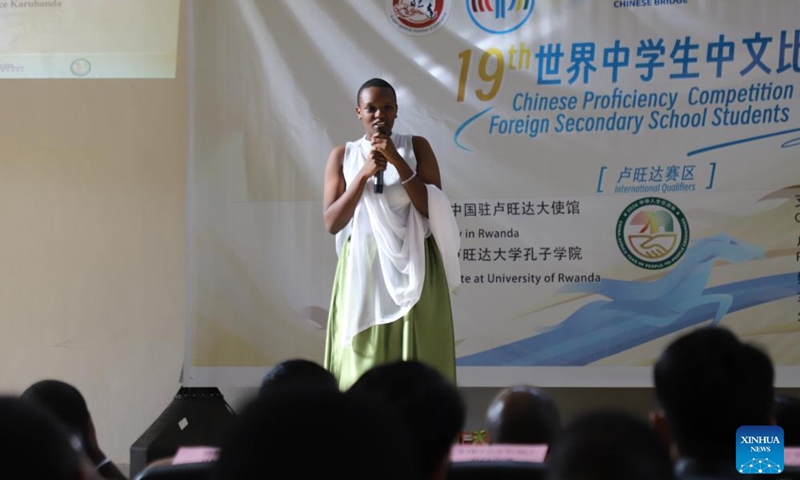
Rwanda offers an example of how cultural interests can develop into wider connections. The Rwanda Youth Group, a group of Rwandans singing Chinese songs has attracted more than 10 million followers on Chinese social media platforms, introducing Chinese audiences to Rwandan and African culture.
Their experience illustrates how language and digital platforms can create opportunities for cultural exchange while allowing individuals to reach audiences far beyond their home countries.
For young Africans, such cultural exchanges can broaden educational horizons and encourage interest in academic exchanges, scholarships and research partnerships. At the same time, cultural exchange should not be a one-way process. As more Africans study Mandarin, there is an opportunity for Chinese audiences to learn about African languages, histories and contemporary societies. Greater familiarity with each other's cultures can contribute to relationships based on mutual understanding rather than limited knowledge of one another.
Learning languages in a changing technological world
The growing interest in Mandarin also raises an important question about the future of language learning: if artificial intelligence and digital translation tools can increasingly facilitate communication across languages, why should people still invest time in learning another language?
Translation applications have made it easier to understand unfamiliar words, interpret documents and communicate with people who speak different languages. Advances in artificial intelligence are making these tools increasingly sophisticated, reducing some of the barriers that previously made international communication difficult.
However, translating information and communicating directly are not the same experience. Translation technology can help convey the meaning of a sentence, but language proficiency allows people to participate more naturally in conversations, recognise expressions and understand the context in which words are used.
It also provides access to information in its original form. People who understand Mandarin can engage directly with Chinese media, academic publications, literature and online discussions. This is particularly valuable for researchers, journalists, students and professionals seeking information from sources that may not be readily available in other languages.
Humour, idioms, historical references and everyday expressions also carry meanings shaped by particular cultural experiences.
Understanding these nuances requires more than translating individual words. Rather than making language learning unnecessary, technological advances can complement it by providing additional tools for practising pronunciation, developing vocabulary and accessing learning materials.

Preparing the next generation for a connected world
The interest among prominent families in introducing Mandarin to their children also reflects a broader discussion about education and the skills younger generations may need.
Early exposure to another language can help children develop multilingual communication skills and become familiar with different linguistic and cultural environments. For parents, this can be an investment in their children's education, particularly when future academic and professional opportunities may involve working across countries and cultures.
Educational institutions and governments therefore have a role in making language programmes accessible and connecting classroom instruction with practical experiences. For African education systems, this means expanding language-learning opportunities while ensuring that students also acquire the professional and academic competencies needed to apply them.
A student who combines Mandarin with engineering, business, journalism, agriculture or information technology, for example, may be better prepared to participate in international projects involving Chinese partners.
Adding Mandarin to one's linguistic abilities provides another means of engaging internationally while maintaining existing linguistic and cultural connections.
Ultimately, the growing interest in Mandarin reflects changing educational and professional priorities in a world where economic relationships, technological developments and cultural exchanges increasingly cross national borders. China's international role provides practical reasons to learn the language, but its value extends beyond trade and employment to education, research and cultural understanding.
For Rwanda, elsewhere in Africa and around the world, Mandarin offers an additional way to engage with these opportunities. Its greatest value lies not simply in speaking another language, but in developing the ability to communicate across cultures, understand different perspectives and build relationships that can support meaningful international cooperation.


Loading comments...
Leave a comment